


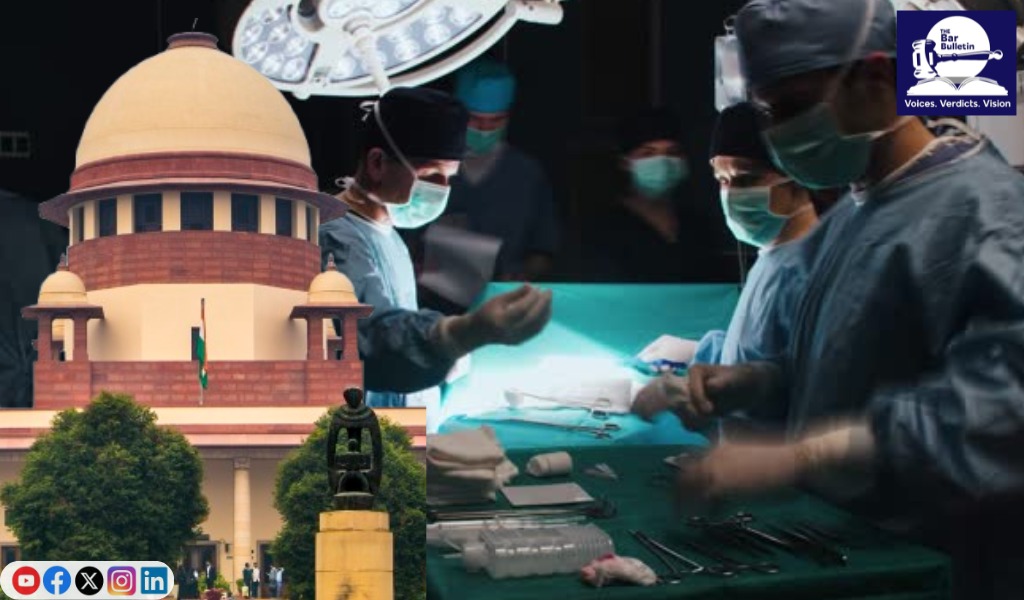

The Supreme Court has issued a series of pivotal directions urging the Union and State governments to harmonize and strengthen India’s organ transplantation framework.
The Bench, led by Chief Justice BR Gavai and Justice Vinod Chandran, underscored critical inconsistencies in the ways states implement the Transplantation of Human Organs and Tissues Act, 1994 (THOTA) and its 2011 amendments, which has resulted in disparities in access and allocation of organs nationwide.
The Court highlighted that while THOTA was ratified by every State, several key states and union territories (including Andhra Pradesh, Karnataka, Tamil Nadu, Manipur, Nagaland, Andaman & Nicobar Islands, and Lakshadweep) have not yet adopted the 2011 amendments or the Transplantation of Human Organs and Tissues Rules, 2014 or established State Organ and Tissue Transplant Organisations (SOTOs). The Court urged all non-compliant states to implement these rules promptly, emphasizing that the absence of uniform regulations and infrastructure directly impedes life-saving transplant procedures.
The Bench further directed the Centre to take proactive leadership in developing national guidelines for fair allocation, including criteria that counteract caste and gender-based disparities. To curb commercialization, the Court called for stronger donor protections and welfare safeguards, especially for live donors, based on consultations with the National Organ and Tissue Transplant Organisation (NOTTO) and the Indian Society of Organ Transplantation (the petitioner).
Recognizing the need for comprehensive data and transparency, the Bench also ordered amendments to death certificate forms to ensure brain death cases are documented, and whether families were offered the option of organ donation is recorded. Strict penalties were prescribed for hospitals failing to report or comply with mandated procedures.