


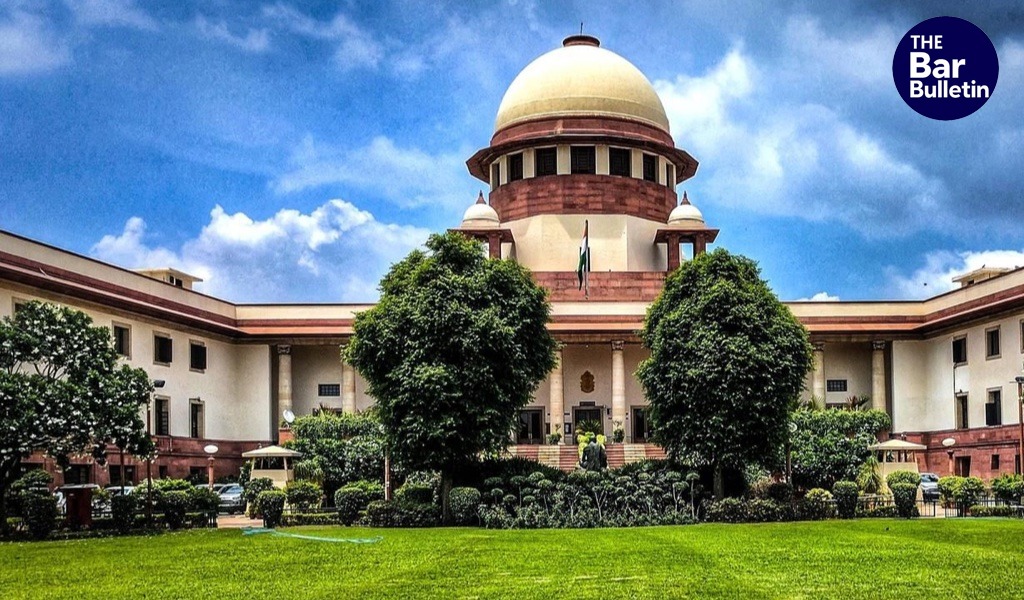

In a batch of appeals before the Supreme Court against the judgments of the Madras High Court, the Delhi High Court, and the Kerala High Court regarding the eligibility of certain candidates claiming the benefit of OBC reservation in Civil Services Examination, a Bench comprising Justice Pamidighantam Sri Narasimha and Justice R. Mahadevan dismissed the appeals and upheld the impugned judgments by the High Courts.
Respondent 1 secured an All India Rank 174 in the Civil Services Examination, 2012 under the OBC category. His father was employed with HCL Technologies and was drawing a salary, which exceeded the prescribed creamy layer limit. Although he was recommended by UPSC as a general merit candidate and allocated to the Indian Police Service against an unreserved vacancy, respondent 1 sought benefit of OBC reservation and allocation to the Indian Foreign Service treating him as OBC (non-creamy layer) candidate.
He filed an application before Central Admisitrative Tribunal (CAT), Chennai seeking directions for the same. A similar application was also filed by another student who was treated as falling within the creamy layer. CAT held that as per the Office Memorandum dated 08-09-1993, income from salary and agricultural income stood excluded from the income/wealth test for determining the creamy layer status. It was also held that the clarificatory letter directing inclusion of salary income of PSU and private sector employees under Category II(C) resulted in hostile discrimination.
Aggrieved, the Union of India approached the Madras High Court by way of three petitions, which were dismissed on ground of failure of the Union to form a comparability test which resulted in placing wards of PSU employees at a disadvantage compared to ward of government servants. Another ground for failure was that inclusion of salary income of PSU employees under Category II-C led to hostile discrimination since salary income of parents in government service after attaining 40 years of age, was not considered for creamy layer determination.
The Delhi High Court, by the impugned judgment dated 22-03-2018, disposed of writ petition by holding that the 1993 Office Memorandum contemplated consideration only of income from ‘other sources’ for applying the income/wealth test where equivalence had not been established. It was also held that the clarificatory letter dated 14-10-2004 impermissibly introduced salary income as a determinative factor and lacked rational basis. The High Court set aside a clarificatory letter dated 14-10-2004 and direction re-verification of the creamy layer status of the petitioners as per the 1993 memorandum. Thereafter, the Union issued a speaking order but again rejected the claim of non-creamy layer status by taking into account parental salary.
A contempt petition was filed by some respondents before the Delhi High Court in which notices were issued. Thus, the Union filed preferred the present appeal.
The appeal against the judgment of the Kerala High Court was because of its denial to interfere with an order dated 13-10-2020 by the CAT, Ernakulam Bench. In the impugned judgment, it was held that under Category II of the 1993 memorandum, mere parental service in a PSU could not lead to creamy layer exclusion, among other things.
The Court noted that since the equivalence of posts in PSUs, banks, and other organisations vis-à-vis government posts had not been formally determined, the Department of Personnel and Training (DoPT) applied the income/wealth test under Category VI of the 1993 memorandum read with the 2004 letter. The DoPT assessed the parental income of the candidates and classified them as falling within the creamy layer of OBC, rendering them ineligible for OBC reservation benefits.
Referring to the constitutional framework and the judicial evolution, the Court stated that three guiding propositions were that:
• Caste may serve as an initial identifying marker, but cannot be the exclusive determinant.
• Economic condition is a relevant and rational refining criterion.
• Reservation policy must balance social justice with broader societal interests.
The Court stated that the doctrine of exclusion of the ‘creamy layer’, crystallised by this Court in Indra Sawhney & Ors. v. Union of India & Ors. 1992 Supp (3) SCC 217, formed the constitutional foundation of the 1993 office memorandum and that the subsequent framework must be understood as an operational mechanism to give effect to that binding constitutional mandate.
The Court noted that the Schedule appended to the 1993 memorandum enumerated specific categories for exclusion and operationalised the status-based criteria, while providing residual income/wealth test under Category VI. However, the Court stated that the memorandum provided that pending comparability of posts, the income/wealth test under Category VI along would be applicable.
The Court stated that the specific criteria for disentitlement under II C, namely direct recruitment to a post equivalent to Class I/Group A, or promotion to such post before one attains the age of 40, would remain inoperative until equivalence is determined. Thus, the Court said that in absence of the evaluation, the entire category II C cannot be automatically be deprived of reservation and that exclusion, if any, could only be under Category VI, which operates as a residual filter.
Regarding the 2004 letter of clarification, the Court said that the same was issued to address practical issues that had arisen in implementation and it recognized that where equivalence of posts in PSUs and similar organisations had not been evaluated, creamy layer status must be determined based on the income/wealth test.
The Court stated that the 1993 office memorandum read with the 2004 letter, preserves the primacy of status-based exclusion and confines economic exclusion to the structured parameters of Category VI. It was said that salary income cannot be mechanically aggregated in a manner that defeats the constitutional objective articulated in Indra Sawhney (supra).
Whether the 2004 letter can have any overriding effect over the 1993 office memorandum, which lays down the criteria for exclusion from the benefit of reservation for OBCs by identifying the creamy layer.
While dealing with this issue, the Court found it clear that certain categories of persons, namely wards of those holding Class I/Group A or Class II/Group B posts in civil services of the central and state government were excluded. It was stated that the income/wealth test was prescribed as an additional criterion of exclusion. The Court stated that these criteria were to apply mutatis mutandis for exclusion from reservation for students whose parents were working in PSUs, Banks, Insurance organisations, Universities, etc. as well as those holding equivalent positions in private employment.
It was said that unless equivalence of posts is formally evaluated, the entitlement of candidates whose parents work in organisations other than Class I or Class II of the central or state civil services, would be decided by the income/wealth test.
The Court stated that the 2004 letter must be construed as one explaining or supplementing the foundational guidelines laid down in the 1993 memorandum since a clarificatory instruction cannot introduce a substantive condition that does not exist in the parent policy. After perusing the letter, the Court found that income from salaries, agriculture, or other sources cannot be clubbed for applying the income/wealth test to determine the creamy layer status of a candidate.
It was said that income from salaries alone cannot decide whether a candidate falls within the creamy layer since the status as well as the category of post is essential. Hence, the Court stated that the 2004 letter may be understood as reinforcing the scheme of the 1993 memorandum, provided it is construed as explanatory and not as alternating substantive framework. The Court held that overemphasis on the 2004 letter to make income alone determinative without regard to parental status or service category would defeat the structural framework of exclusion under the 1993 memorandum and would be unsustainable in law.
Whether there can be hostile discrimination between government and PSU employees when both occupy posts of the same grade/class.
In answer to this issue, the Court said that excluding children of those employed in PSUs or private employment only on basis of their income derived from salaries without referring to their posts, would be hostile discrimination between parties of similar standing and attract the rigour of the equality doctrine under Articles 14, 15, and 16.
The Court said that if this exercise is not done in a rational, non-arbitrary, reasonable, and equal manner, it would lead to the illegal exclusion of genuine claimants and deserving persons within the OBC category from the benefit of reservation. It was clarified that any interpretation of the 1993 office memorandum or the 2004 letter that results in unequal treatment of similarly placed OBCs would not only be illegal but constitutionally impermissible.
Thus, the Court found no infirmity in the impugned judgments. While dealing with various intervention applications, the Court directed the appellants to create such supernumerary posts, as required, to accommodate candidates who satisfy the non-creamy layer criteria as per the present judgment, subject to their eligibility. The appellants were directed to consider all claims within 6 months, while dismissing the civil appeals.
Appearances:
For Appellants – Mr. Arvind Kumar Sharma, AOR, Mr. Tushar Mehta, Solicitor General, Ms. Aishwarya Bhati, A.S.G., Mrs. Alka Agrawal, Adv., Mr. Apoorva Kurup, Adv., Mr. Navanajay Mahapatra, Adv., Mr. Madhav Sinhal, Adv., Mr. Mayank Pandey, Adv., Ms. Sansriti Pathak, Adv., Mr. Santosh Ramdurg, Adv., Mr. Yogesh Vats, Adv., Mr. Shreekant Neelappa Terdal, AOR
For Respondents – Mr. Basavaprabhu Patil, Sr. Adv., Mr. Sanjay Hegde, Sr. Adv., Mr. Vikram Hegde, AOR., Ms. Hima Lawrence, AOR, Ms. Chinmayi Shrivastava, Adv., Mr. Trishan Dollny, Adv., Mr. Ankit Tiwari, Adv., Mr. Arijit Sukla, Adv., Mr. Ashish, Adv., Mr. Tanay Hegde, Adv., Mr. Roy Abraham, Adv., Ms. Reena Roy, Adv., Mr. Adithya Koshy Roy, Adv., Mr. Akhil Abraham Roy, Adv., Mr. Saraswata Mohapatra, Adv., Mr. Himinder Lal, AOR, Mr. Basavaprabhu Patil, Sr. Adv., Mr. T. Raja, Sr. Adv., Mr. M.T. Arunan, Adv., Mr. M.A. Aruneshe, Adv., Mr. Arijit Sukla, Adv., Mr. Prateek K. Chadha, AOR, Mr. Sreekar Aechuri, Adv., Mr. Aniket Chauhaan, Adv., Mr. Shashank, Adv., Mr. Shantanu Lakhotia, Adv., Mr. Divyaveer Singh, Adv., Mr. Harsh Parashar, AOR, Mr. A. Sirajudeen, Adv., Dr. N. Visakamurthy, AOR, Mr. Vardhman Kaushik, AOR, Mr. Arindam Sarin, Adv., Mr. Mayank Sharma, Adv., Mr. Dhruv Joshi, Adv., Mr. Vinay Kaushik, Adv., Mrs. P. S. Vijayadharni, Adv., Mr. Nishant Gautam, Adv., Mr. Varinder Kumar Sharma, AOR, Mr. Sanjay Singh Thakur, Adv., Mr. Hitesh Kumar Sharma, Adv., Mr. Vijay Prtap Singh, Adv., Mr. Akhileshwar Jha, Adv., Ms. Shreya Jha, Adv., Mr. Anupam Kumar, Adv., Ms. Manju Jetley, AOR, Mr. Vibhav Mishra, Adv., Ms. Megha Gaur, Adv. Mr. Parmanand Gaur, AOR, Mr. Abhikalp Pratap Singh, AOR, Mr. Ashish Batra, AOR, Mr. Siddhartha Jha, AOR, Mr. Anuroop Chakravarti, Adv., Mr. M.S.vishnu Sankar, Adv., Mr. Prakhar Srivastava, Adv., Ms. Athira G. Nair, Adv., Mr. Aditya Santhosh, Adv., Ms. Dimple Nagpal, Adv. for M/s Lawfic, AOR
