


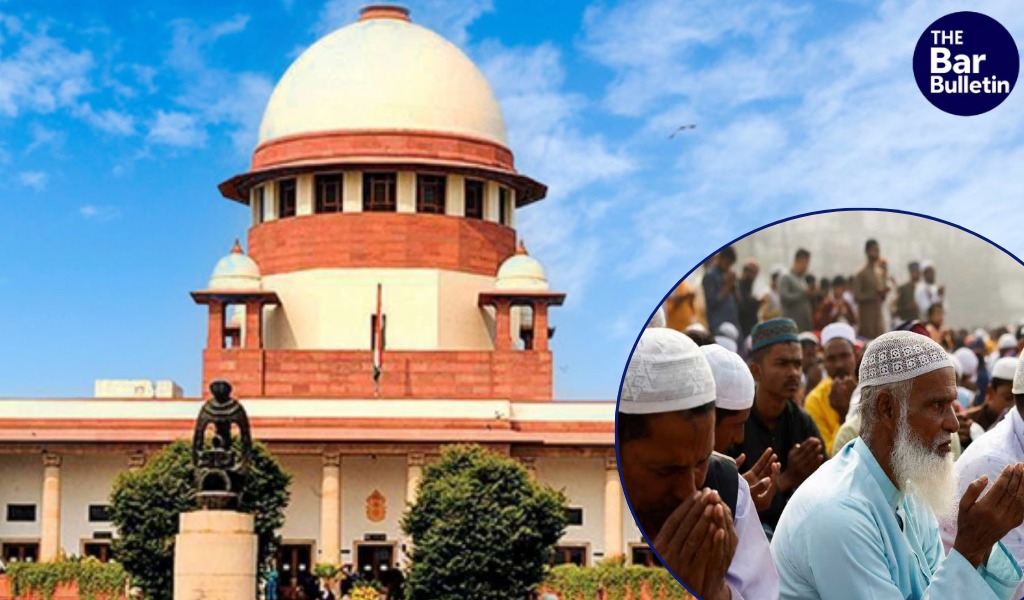

The Supreme Court on Monday expressed reservations about entertaining a plea seeking further sub-categorisation and additional reservation benefits for Pasmanda Muslims.
The petitioner contended that Pasmanda Muslims, described as socially and economically disadvantaged sections within the Muslim community, deserved distinct consideration for reservation benefits. It was argued that internal differentiation exists within the Muslim social structure, including categories such as Ashraf and other historically disadvantaged groups, and economic as well as social backwardness ought to be factored into policy formulation.
The Bench of Chief Justice of India, Justice Surya Kant,Justice Joymalya Bagchi, however, questioned the maintainability and scope of the plea, observing that the issue of reservation policy falls within the legislative and executive domain.
“Ultimately what are you asking for? You want us to legislate on it, providing reservation to a particular set of citizens.”
The court remarked that: “at the cost of other poor muslims, you probably want to promote…where is the data on how many muslims are actually from backward classes?”
The Court was informed that a Constitution Bench is already seized of a matter arising from an Andhra Pradesh judgment concerning the grant of an additional 4.5% reservation to certain backward classes, and it was suggested that broader questions relating to sub-categorisation may be addressed in that context.
The Bench indicated that the present petition may overlap with issues pending before the larger Bench, but clarified that the matter before it specifically concerned the 4.5% reservation extended by the Andhra Pradesh government and not a general sub-classification of Pasmanda Muslims across the country.
During the exchange, the Court also observed that backwardness is not confined to one religious community and Muslims are already included in certain backward class categories depending on state lists. The matter has been adjourned for 4 weeks.