


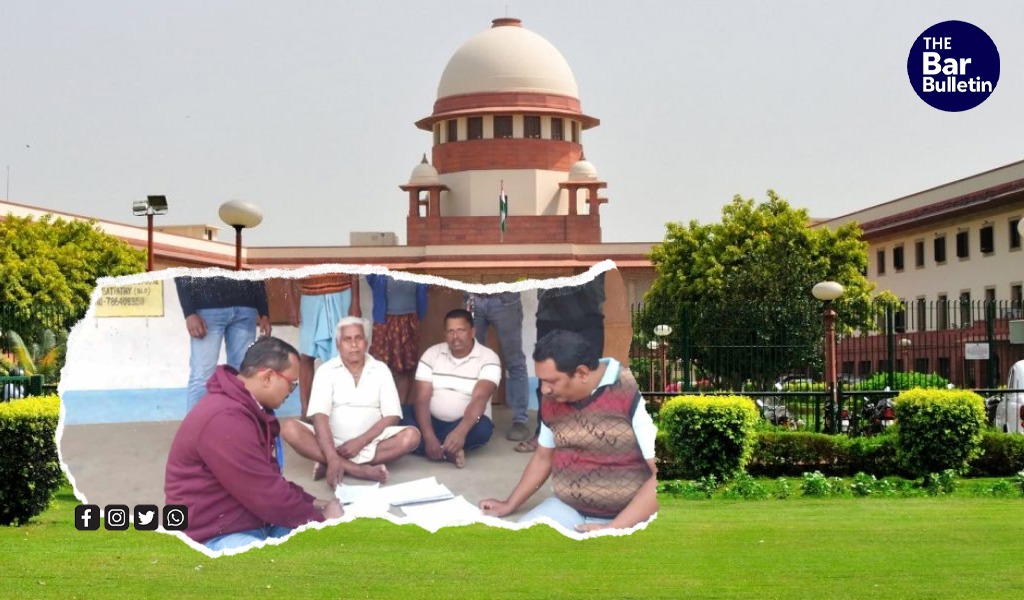

The Supreme Court on Tuesday issued a series of directions in connection with the Special Intensive Revision (SIR) of electoral rolls in West Bengal, after noting that nearly two crore voters have been issued notices for document verification, with around 1.25 crore falling under the category of “logical discrepancy”.
During the hearing, Senior Advocate Kapil Sibal flagged serious logistical gaps, pointing out that while around 1,900 hearing venues were required, only 300 had been approved and no Booth Level Officers (BLOs) had been assigned. He questioned the basis of treating generational age gaps and similar factors as “logical discrepancies”, stressing that all such individuals were already part of the voter rolls. Sibal urged the Election Commission of India (ECI) to publish a detailed list of such discrepancies and fix hearing dates.
Senior Advocate Rakesh Dwivedi, appearing for the ECI, countered that several errors were serious in nature, including instances where as many as 324 voters had been linked to a single individual. He argued that such anomalies warranted scrutiny.
Justice Bagchi observed that over one crore people had been notified, underscoring the immense stress being caused to voters. “We will issue directions where needed,” he said. The Chief Justice of India (CJI) remarked that if corrections were required, there should be no difficulty in carrying them out.
Raising concerns over the parameters being applied, Senior Advocate Divan questioned whether age gaps between parents and children could be a valid basis for heightened scrutiny. The CJI cautioned that adopting such a principle could have serious repercussions, potentially rendering voter entries immune from future corrections.
Taking note of the submissions, the Court directed that the names of persons falling under the “logical discrepancy” category shall be publicly displayed at Gram Panchayat offices, Block offices, and Ward offices. It further ordered that dedicated counters for submission of documents and objections be set up at Block (Taluka) offices. The State was directed to ensure the availability of adequate manpower for the State Election Commission and the ECI, with District Collectors mandated to strictly implement these directions. The Court also stressed the need for proper law and order arrangements during the verification process. It directed that objections must be filed within 10 days of the display of the lists, while allowing an extended period for the submission of documents. Importantly, the Court clarified that wherever documents are found unsatisfactory, the concerned voter must be given an opportunity of being heard, either in person or through an authorised representative.
On the request of Kapil Sibal, the Court further directed that authorities must issue a receipt for documents submitted, along with reasons wherever applicable.