


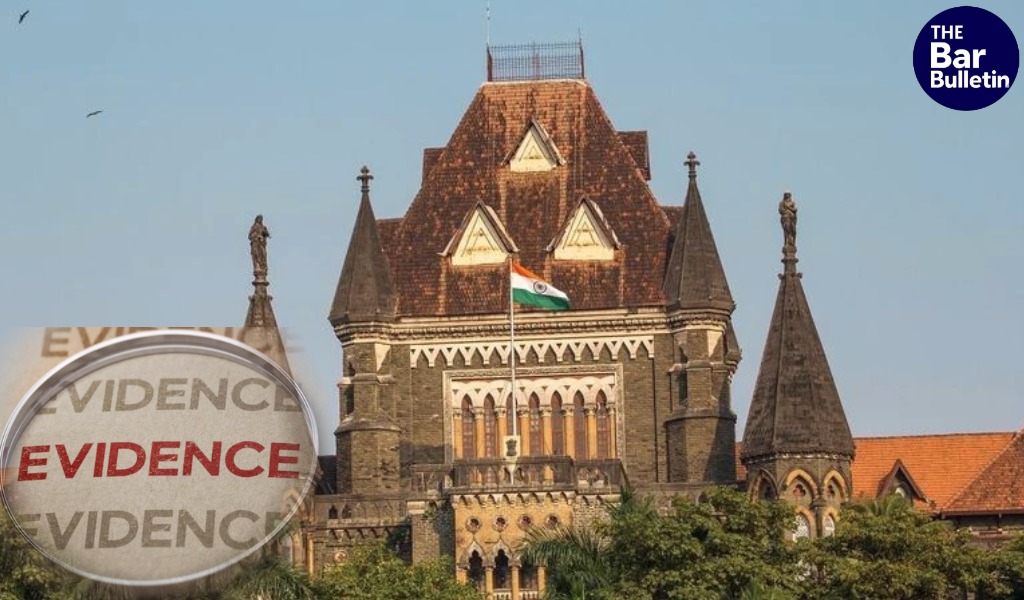

The Bombay High Court (Aurangabad Bench) reiterated that for the presumption of dowry death to apply, the prosecution must first establish the foundational fact that “soon before her death”, the woman was subjected to cruelty or harassment by her husband or his relatives “for, or in connection with, any demand for dowry”.
The Court clarified that the expression “soon before” is a relative term implying a “proximate and live link” between the effect of cruelty based on a dowry demand and the consequential death. The interval between the two should not be too remote. If the prosecution’s evidence regarding the dowry demand is riddled with material discrepancies, improvements, and is not corroborated by independent evidence, it cannot be held as proven beyond a reasonable doubt.
In the absence of credible and consistent proof of cruelty or harassment connected to a dowry demand, the presumption under Section 113-B of the Evidence Act cannot be drawn, even if the death is unnatural and occurs within seven years of marriage, added the Court.
The Court held that the prosecution failed to prove beyond a reasonable doubt that the deceased was subjected to cruelty or harassment for or in connection with a demand for dowry. The evidence led by the prosecution witnesses was disbelieved due to material discrepancies and improvements when compared to the FIR. Consequently, the Court found that the findings of the trial court in acquitting the accused were just and proper.
The Division Bench comprising Justice Sandipkumar C. More and Justice Y. G. Khobragade acknowledged that the death of deceased was an unnatural death caused by poisoning, occurring within seven years of her marriage. However, it noted that the prosecution’s evidence did not reveal that the accused had administered the poison, and significantly, no charge for murder under Section 302 IPC was framed by the trial court.
The Bench found material discrepancies and improvements in the evidence of the prosecution witnesses, who were the father, brother, and mother of the deceased. A major observation was that the First Information Report (FIR) did not mention any settlement of dowry for Rs. 1.50 Lakh, or the part payment of Rs. 1 Lakh. This narrative was introduced for the first time during the testimony of the witnesses, which the court viewed as a significant improvement upon the original complaint.
The Bench pointed out that the prosecution failed to examine any independent witnesses to prove the alleged dowry settlement. The case rested entirely on the testimony of interested witnesses (the deceased’s family), whose evidence was inconsistent, and the prosecution witnesses did not cite specific instances of harassment directly linked to the non-fulfilment of the dowry demand.
Briefly, the deceased, Savita, was married to accused No. 1, Nandkumar Maruti Chavan in 1999. The informant, Shivaji Kankale (father of the deceased), alleged that at the time of marriage, a dowry of Rs. 1.50 Lakh was agreed upon, of which Rs. 1 Lakh was paid. He further alleged that the accused were demanding the remaining Rs. 50,000 to secure a teacher’s job for accused No. 1. It was alleged that due to the non-fulfilment of this demand, the deceased was subjected to harassment and physical abuse by her husband and his relatives. The deceased had reportedly disclosed this harassment to her father, stating there was a danger to her life.
Later, just over a year after the marriage, Savita was brought to a hospital in an unconscious state after consuming poison and was subsequently declared dead. The cause of death was determined to be insecticide poisoning. The informant then lodged a complaint alleging that the accused had harassed his daughter for dowry and murdered her by administering poison.
Accordingly, a crime was registered under Sections 302, 498-A, read with Section 34 of the IPC. However, the trial court framed charges only under Sections 498-A and 304-B (dowry death) read with Section 34 of the IPC. Later, the trial court, acquitted all the accused, which led to an appeal by the State.
Appearances:
Advocate Mr. S. P. Sonpawale, for the Appellant
Advocate Niesh S. Ghanekar, for the Respondent
