


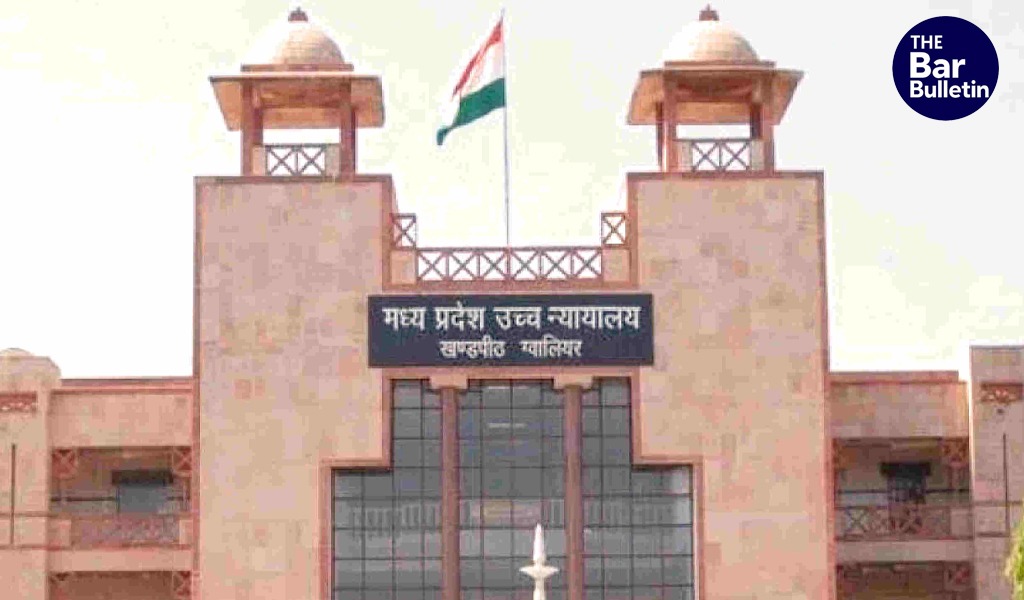

The High Court of Madhya Pradesh (Gwalior Bench) partly allowed the petition, observing that only general and omnibus allegations without any specific act would constitute an abuse of the process of law and the offense of unnatural sex under Section 377 IPC cannot be invoked for acts between a husband and wife during the subsistence of a valid marriage.
The case arose from an FIR registered under Sections 377, 354, 498-A, 323, 294, 506, and 34 of the Indian Penal Code, Sections 3/4 of the Dowry Prohibition Act, and Section 30 of the Arms Act, where the complainant alleged that after her marriage, she was subjected to continuous cruelty and harassment by her in-laws over unsatisfied dowry demands. She further alleged inappropriate conduct by her father-in-laws, physical and sexual abuse, including unnatural acts by her husband.
The petitioner canvassed that the allegations were exaggerated and filed as a counterblast to matrimonial proceedings initiated by the husband. It was also submitted that the complainant had voluntarily left the matrimonial home and failed to mention any serious allegations of sexual assault in her earlier petition for maintenance under Section 125 CrPC. Regarding petitioner No. 4 (sister-in-law), it was submitted that she was assigned no role in the statement recorded under Section 164 CrPC. Opposing the plea, the State and the complainant asserted that the allegations were grave and supported by material collected during the investigation.
Hearing the petition, the bench of Justice Milind Ramesh Phadke noted that the implication of the sister-in-law appeared to be prima facie vague and an abuse of the process of the law, as no specific allegation demonstrating her active involvement in the alleged offenses was found. Further with regard to the husband, the court has analyzed the 2013 amendment to Section 375 of IPC, observing that the acts previously categorized as unnatural offenses are now expressly incorporated within the definition of rape. Relying on Navtej Singh Johar vs. Union of India [(2018) 1 SCC 791] and other cases, the court held that Exception 2 to section 375 of IPC excludes sexual acts by a husband with his wife from the ambit of rape, and section 377 of IPC cannot be invoked for such acts during the subsistence of marriage.
However, the Court has decline to quash the proceedings under Section Sections 498-A, 354, 323, 294, 506, 34 IPC and Sections 3/4 of the Dowry Prohibition Act against the petitioner No.1 to 3, stating that contentions regarding false implication, inconsistencies in statement and absence of medical corroboration are matters to examined during trial.
Accordingly, the court has allowed the petition partly to the extent of petitioner No. 4 and quashed the offense under Section 377 IPC against petitioner No. 1, and the proceedings for the remaining offenses against petitioners Nos. 1 to 3 were directed to continue in accordance with law.
Appearance:
Shri Tapendra Sharma – Advocate for petitioners.
Shri Brijesh Kumar Tyagi – Public Public Prosecutor for respondent/State.
Shri Madan Mohan Tripathi- Advocate for respondent [R-2].
