


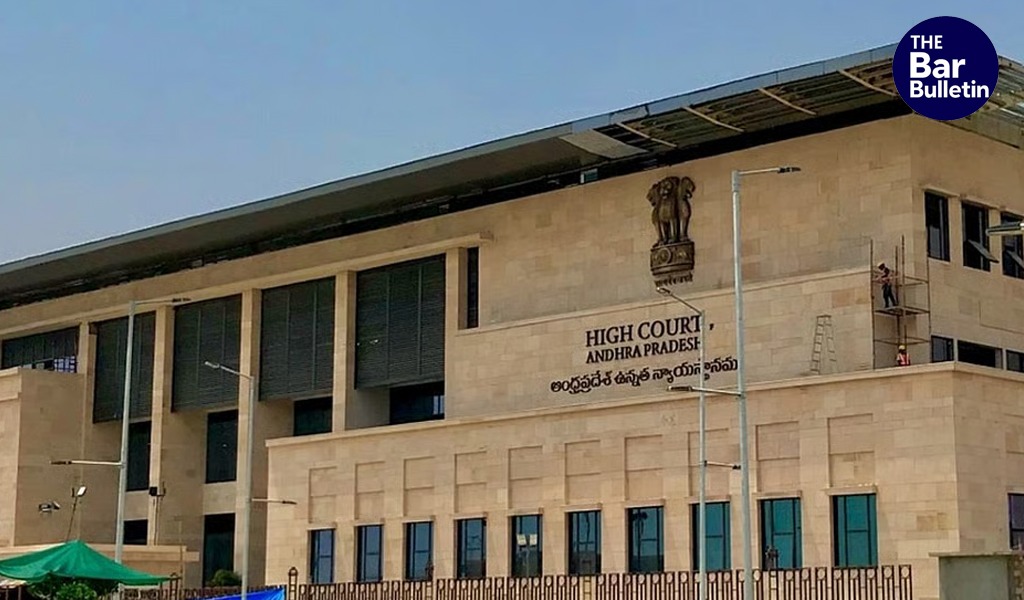

Whether a claim for compensation for seized jewellery could not survive, if the seizure was carried out as an exercise of sovereign power, and upon completion of the investigation, was not returned to the owner? The Andhra Pradesh High Court (Amaravati Bench) ruled that since silver seized from the bullion dealer (petitioner) was stolen by the staff from the police station itself, the petitioner would be entitled to compensation for the loss suffered on account of the sheer negligence on the part of the officials in protecting the property.
Emphasising the doctrine of public law compensation and the constitutional tort, the Court asserted that the loss of a large amount of silver and cash would absolutely impinge on the right of the petitioner, under Article 19(1)(g), to carry on his trade or business. Accordingly, the Court held that the petitioner is entitled to compensation for the loss of silver, which was only attributable to the negligence of the respondents, as the silver was stolen from the police station itself.
The Division Bench comprising Justice R Raghunandan Rao and Justice TCD Sekhar observed that the Court can only take into account the shortfall of silver as the difference between 105 kgs of silver seized from the petitioner and 81.567 kgs of silver returned to the petitioner. This would mean there was a shortfall of 23.433 kgs of silver.
Further, the Bench found that the cash of Rs. 2 lacs has been seized from the son of the petitioner and the cash of Rs.10 lakhs has been returned to the petitioner. It is stated that the aforesaid Rs. 10 lakhs was the cash recovered from the persons who had stolen the silver, as these persons had sold away some part of the silver and some of the proceeds of such sale were recovered from these accused persons.
The Bench therefore directed that the petitioner is entitled to a return of 23.44 kgs of pure silver; and that the additional cash of Rs. 7.95 lacs shall be adjusted against the return of 23.44 kgs, by taking the value of Silver, as on the date of this order. The Bench also directed that the silver that remains to be given to the petitioner, after such adjustment, shall be given by the respondents, either in the form of pure silver or by payment of cash, in lieu of silver.
At the same time, the Bench clarified that the aforesaid value as mentioned in this order will be applied if the silver is returned within three weeks. However, if there is any delay in the return of the silver, beyond three weeks, the value of pure silver, on the date of return, shall be taken.
Briefly, the petitioner, a registered GST taxpayer dealing in bullion, had 105 kgs of pure silver lumps and Rs. 2.05 lacs in cash seized by the police at Kurnool. The seizure followed, with an option to pay Rs. 35 lacs in lieu. As the GST Tribunal was not constituted then, the petitioner paid Rs. 39.20 lacs as tax, penalty, and fine. Thereafter, the GST Assistant Commissioner issued a release order to the Police to return the silver and cash.
However, the police responded that the silver and cash had been stolen from the police station, and only some quantities were recovered and placed before the Judicial Magistrate. On direction, the petitioner received 81.567 kgs of silver and Rs. 10 lakhs cash, whereas the original seizure was 105 kgs and Rs. 2.05 lakhs in cash. Later, shockingly, the petitioner claimed that 54.567 kgs of the returned silver was only 60% pure. As the compensation was not properly paid, the petitioner approached the High Court seeking the return of 44.123 kgs of pure silver or its market value.
Appearances:
Advocate G Narendra Chetty, for the Petitioner/ Taxpayer
Government Pleader for Home and Government Pleader for Commercial Tax, for the Respondent/ Revenue
