


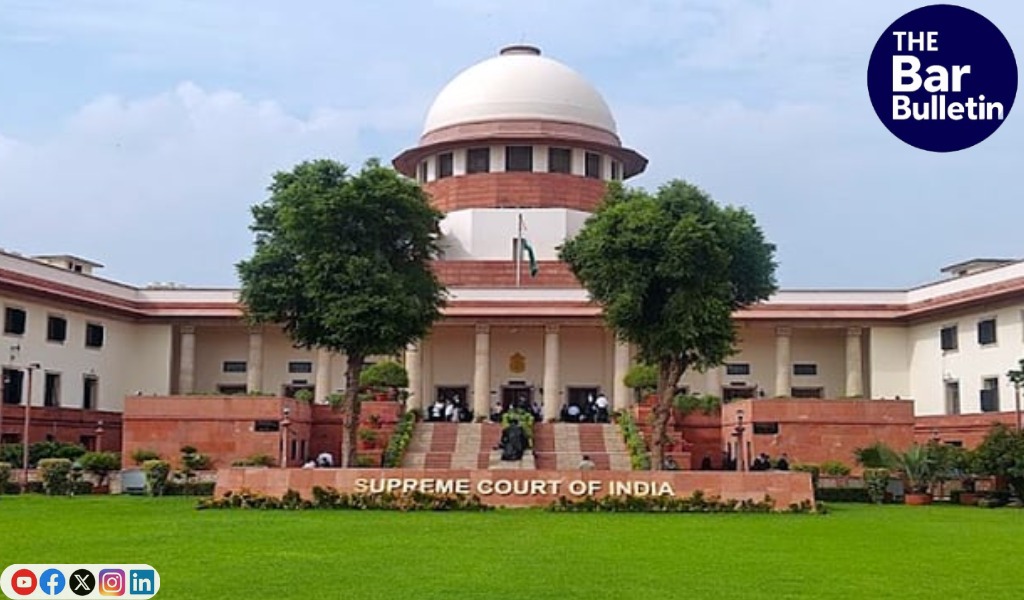

The Supreme Court has clarified that lifting of the corporate veil is an exceptional measure, and can be resorted to only upon a clear finding that the corporate personality was abused for fraudulent or dishonest purposes. Such a finding must be preceded by specific pleadings and a determination on merits.
Essentially, the Court held that the persons who were initially named as respondents in consumer complaints, but against whom the complaints did not ultimately proceed, could not be made subject to execution proceedings on the basis that they were the directors or promoters of the judgment-debtor company.
Finding that no such allegation of fraud or misuse of the corporate form was either pleaded or established before the adjudicatory forum, the Apex Court ruled that the directors/promoters cannot be exposed to personal liability through execution, in the absence of a prior and reasoned determination justifying disregard of the corporate personality.
The Court clarified that execution proceedings must strictly conform to the decree passed by the adjudicatory body, and no liability can be imposed during execution on individuals who were not parties to the original proceedings. The Court said that an order against a company cannot be enforced against its directors personally in the absence of a specific adjudication against them.
A Two-Judge Bench comprising Justice Dipankar Datta and Justice Augustine George Masih observed that the National Consumer Disputes Redressal Commission (NCDRC) committed no error in declining to execute the order against the directors/promoters, as they were not parties to the final complaints and the order was binding only on ACIPL (Respondent). The Bench clarified that this dismissal does not prevent the appellant from pursuing other available legal remedies against the promoters/directors under different statutes like the Companies Act, the IBC, or civil law, should the necessary conditions be met.
The Bench emphasised that the NCDRC had consciously decided to proceed only against ACIPL, and the appellant’s failure to challenge this order meant it became final. Since no pleadings were directed against the directors, no issues were framed concerning their liability, and no findings were recorded against them, the Bench said that these are not mere procedural formalities but substantive safeguards, and their absence meant the essential foundation for fastening liability was lacking.
It is settled law that an executing court cannot go beyond the decree. The decree must be executed as it is, and the court cannot shift or enlarge liability to bind individuals who were not parties to the decree, added the Bench.
The Bench also clarified that its previous order of January 17, 2024 was limited to the issue of the moratorium under the IBC, and it did not fasten any liability on the directors but merely removed the procedural bar of the moratorium and allowed the NCDRC to decide the question of the directors’ liability in accordance with the law.
Briefly, the case originates from Flat Buyer Agreements between the Ansal Crown Heights Flat Buyers Association and Ansal Crown Infrabuild (ACIPL) for units in the “Ansal Crown Heights” project. ACIPL was obligated to deliver possession of the apartments within 36 months from the execution of the agreements, with the deadline falling between December 2013 and December 2015. Upon ACIPL’s failure to deliver possession, the appellant association filed two consumer complaints in 2018 with the NCDRC against ACIPL and its directors/promoters.
While admitting one of the complaints, the NCDRC directed that the proceedings would continue only against ACIPL and not its directors. The appellant was instructed to file an amended memo of parties, impleading ACIPL as the sole respondent. This order was not challenged and thus attained finality. Later, the NCDRC allowed the complaints and directed ACIPL to either complete the project and hand over possession with 9% per annum interest from the committed date or refund the entire amount with 9% per annum interest. ACIPL did not comply with the order.
During the subsequent execution proceedings, a moratorium was initiated against ACIPL under the Insolvency and Bankruptcy Code, 2016. Consequently, the NCDRC adjourned the execution proceedings sine die, including those against the directors. The appellant challenged this adjournment before the Supreme Court, which, in an order dated January 17, 2024, set aside the NCDRC’s order, and clarified that the moratorium under Section 14 of the IBC protects only the corporate debtor (ACIPL) and does not extend to its directors/promoters. It directed the execution to continue against the directors, granting them the liberty to raise objections regarding their liability.
Following the revival of the proceedings, the NCDRC dismissed the execution applications against the directors, reasoning that the decree was only passed against ACIPL, which was the sole respondent in the complaints.
Appearances:
Senior Advocate Bishwajit Bhattacharyya, AOR Sahil Tagotra, and Advocate Chandrachur Bhattacharyya, for the Appellant
Senior Advocates Jayant Bhushan, Ruchi Kohli, and Jayant Bhusan, AORs Sanjay Jain, Sudarshan Singh Rawat, and Rahul Gupta, along with Advocates Vikas Agarwal, Jayant Chawla, Sonam Sharma, Palaash S. Singhai, Kamakshi S, Vikas Aggarwal, Saakshi Singh Rawat, and Sunny Sachin, for the Respondent
