


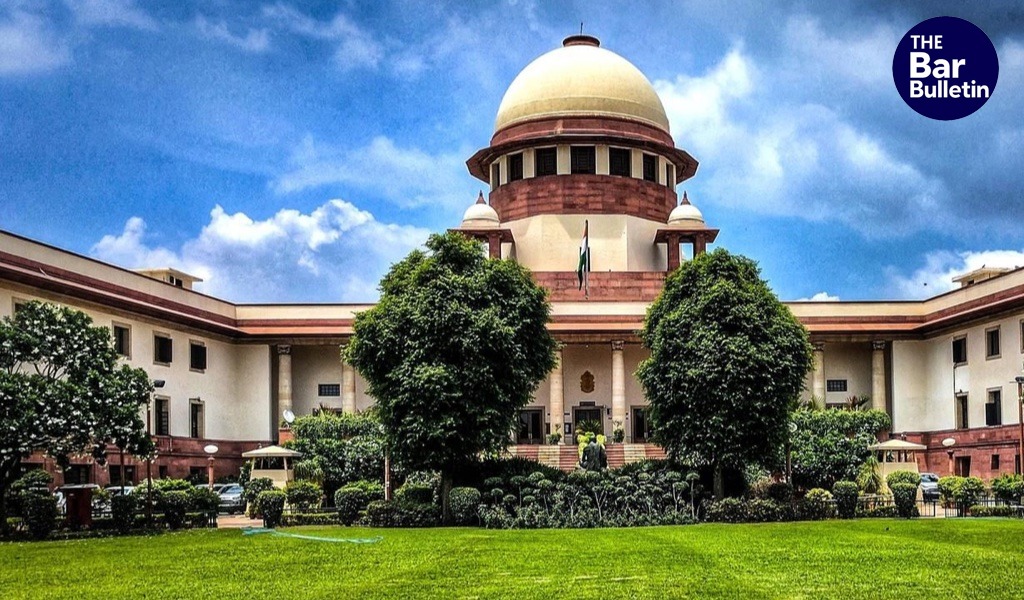

The Supreme Court today monitored the implementation of its directions for setting up special exclusive courts to try NIA and other serious offences, emphasising the urgent need for dedicated infrastructure, financial support, and structural reform to ensure time-bound trials.
The hearing saw the presence of 17 Advocate Generals from across states, reflecting the nationwide scope of the issue and the coordinated effort required between the Union and states to operationalise exclusive courts.
A key concern flagged was the existing model of “special courts” being assigned to the same judicial officer handling multiple categories of cases, which defeats the purpose of expeditious trials.
“The same officer will be special court under the SC/ST Act, under NI Act, under POCSO… how many special courts in one officer? This becomes completely impractical.”
The Court stressed that exclusive courts must function in the true sense, with presiding officers dealing only with designated cases such as UAPA and NIA matters, without being burdened by other dockets.
“These courts will be dedicated to no other case… that officer will have only those trials.”
Recognising delays in such cases, particularly due to the seriousness of offences and limited scope for bail, the Court underscored the necessity of day-to-day trial proceedings.
“The only way out is a dedicated timeline for conclusion of trial… trials should be taken up on a day-to-day basis.”
On the financial aspect, the Court discussed the Centre’s proposal to provide one-time grants for infrastructure and recurring expenditure for three years, while also pointing out challenges in the existing matching grant system, where states are unable to contribute their share.
The Court noted that the Union Government agreed to extend financial assistance to states and state governments, in consultation with High Courts, to identify the number of exclusive courts required, depending on the case load.
It further clarified that no separate cadre of judges is required, but experienced judicial officers should be designated exclusively for such trials, with a separate evaluation mechanism for their performance given the nature of cases. In addition, the Court called for:
• Appointment of dedicated public prosecutors for each court
• Creation of adequate court staff and infrastructure
• Submission of state-wise proposals within four weeks
Other directions of the court include:
• The Court directed that the performance (ACR) of judges presiding over exclusive courts must be assessed through a separate mechanism, since they will not follow the traditional unit-based disposal system.
• It clarified that no new cadre of judges will be created; instead, existing officers with adequate trial experience will be designated to these courts.
• The Court indicated that in geographically spread states, presiding officers may hold circuit sittings to manage cases across regions instead of creating multiple courts immediately.
• Agencies such as NIA and others must ensure proper coordination so that prosecution and witness examination proceed without delay.
• A similar model for setting up exclusive courts for NDPS cases is under active consideration, with states directed to submit inputs and status reports.
• The Court will continue to monitor compliance and has directed filing of updated status reports before the next hearing.
The Bench acknowledged ongoing efforts by several states and the Union Government, including proposals for exclusive NDPS courts, and encouraged coordinated action between state authorities and High Courts.
The matter has been posted for further consideration after four weeks (on Monday), with the Court expecting concrete progress reports on the establishment of exclusive courts across states.