


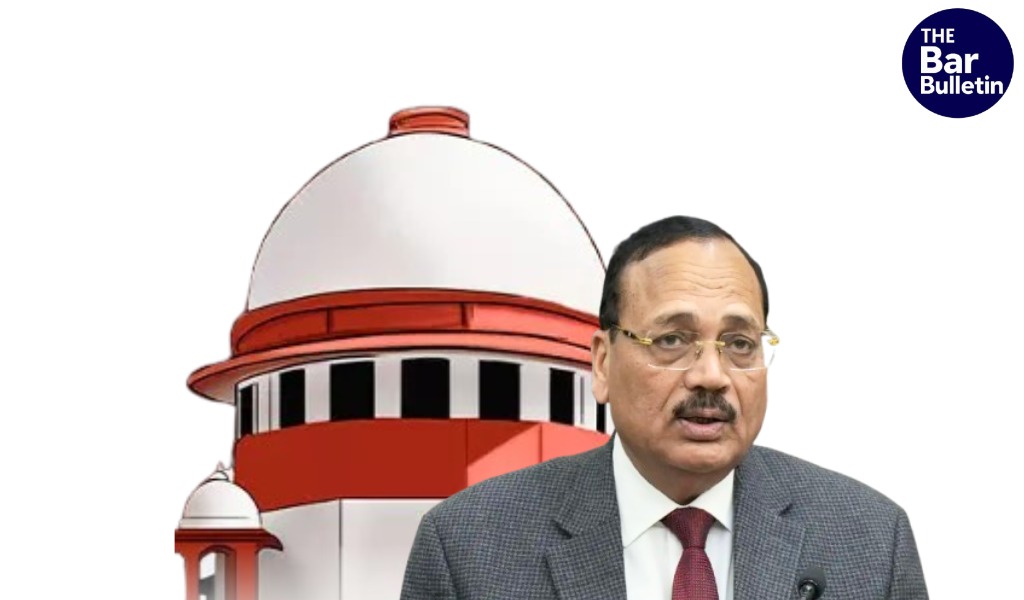

The Supreme Court on Monday signalled a structural overhaul of the long-pending environmental matters filed under the M.C. Mehta caption, expressing concern over the continued proliferation of interlocutory applications (IAs) in decades-old writ petitions.
During the proceedings, the Bench expressed concern over the continued listing of multiple interlocutory applications in connected environmental cases, observing that legacy cases are being kept alive through fresh IAs despite substantive issues having evolved over time. The Chief Justice remarked:
“Why can there not be one matter? IA after IA is being filed in this court. MC Mehta alone has 85 pending ones. Then you will ask the parliament how many cases are pending before us…. Every time you put us in an embarrassing position that 85 matters are pending. What is happening in this court? Why can’t we keep the separate applications clubbing together and dealing with them separately?
The Court noted that issues relating to the Taj Trapezium Zone (TTZ), air pollution, sealing drives, hazardous industries, AQI concerns, greening of Delhi and other environmental measures are often overlapping but continue to be listed under separate legacy captions.
Directing rationalisation, the Bench ordered that matters relating to TTZ, air pollution, sealing and other legacy issues be segregated and listed separately. Senior counsel, law officers and amici were asked to assist the Court in identifying:
• The total number of pending IAs in each C. Mehta matter,
• Overlapping issues across petitions,
• Distinct live issues requiring adjudication,
• Matters that may be transferred to the jurisdictional High Courts,
The Court emphasised that overlapping applications should be clubbed and treated collectively rather than continuing in silos.
The Court observed that matters that have been concluded should not continue to be reflected as pending. It was observed that the original 1985 petition, which initially concerned the relocation of hazardous industries from Delhi, has over time expanded into multiple branches, necessitating a fresh structural approach.
The Bench indicated that restructuring of these long-pending environmental matters will begin in March, with a view to separating concluded issues from live controversies and ensuring systematic case management going forward.
“Instead of carrying the burden of the past, we will identify the core issues and deal with them systematically … .Let the court officers inform us how these cases should be recaptioned so that the main cases are not kept alive. Let the identification of cases be also done so that cases can be transferred to the High Court. No further IA shall be filed in the 1985 matter.”