


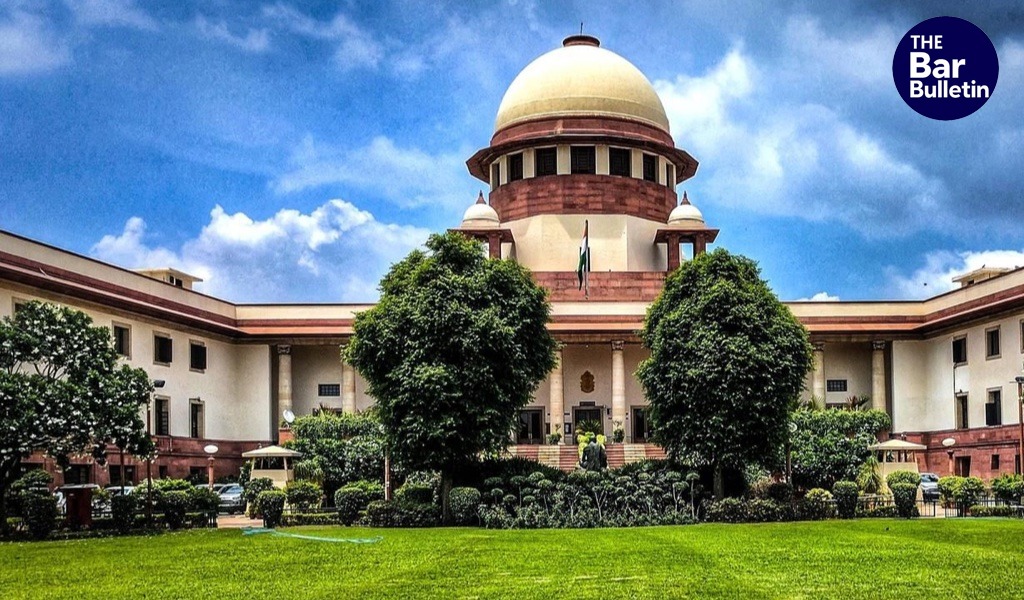

The Supreme Court on Friday declined to entertain a public interest litigation (PIL) filed by JANSHRUTI (Peoples Voice) seeking directions to the Union and State governments to frame standard operating procedures (SOPs) to prevent deaths caused by alleged negligence of public authorities, such as unsafe infrastructure, electrocution, and road hazards etc.
During the hearing, the Bench of Chief Justice Surya Kant and Justice Joymalya Bagchi expressed strong reservations about the overbroad nature of the petition, noting that it attempted to cover a wide range of unrelated grievances, from potholes and unsafe electrical wiring to incomplete bridges and custodial deaths. Criticising the scope of the plea, the CJI remarked:
“The PIL condition is as good as like a showroom or a shopping mall. Right from pothole to police building, non-completion of bridges, non-completion of underpasses, everything available there. You name any relief work here, everything will match.”
The petitioner argued that citizens across the country were losing their lives due to preventable negligence by public authorities and sought directions to the government to create SOPs and accountability mechanisms to address issues like electrocution from faulty wiring, unfinished infrastructure, and unsafe public works.
However, the Court noted that the reliefs sought were too sweeping and administratively unmanageable, especially given India’s federal structure, where financial and administrative conditions differ across states. The Bench observed:
“Across the country there cannot be uniform directions.”
The Court also emphasised that enforcement of existing laws and accountability for negligence could be addressed through available legal remedies, including criminal proceedings or approaching appropriate forums.
Declining to entertain the petition, the Court held that High Courts are better suited to examine such issues, as they are more familiar with the local administrative and financial realities of individual states.
“The appropriate court should have been… the respective High Courts. The High Courts are the best suited platform to understand the financial conditions of the State.”
The Supreme Court therefore disposed of the plea, granting liberty to the petitioner to approach jurisdictional High Courts with appropriately drafted petitions, while clarifying that it had not expressed any opinion on the merits of the issues raised.