


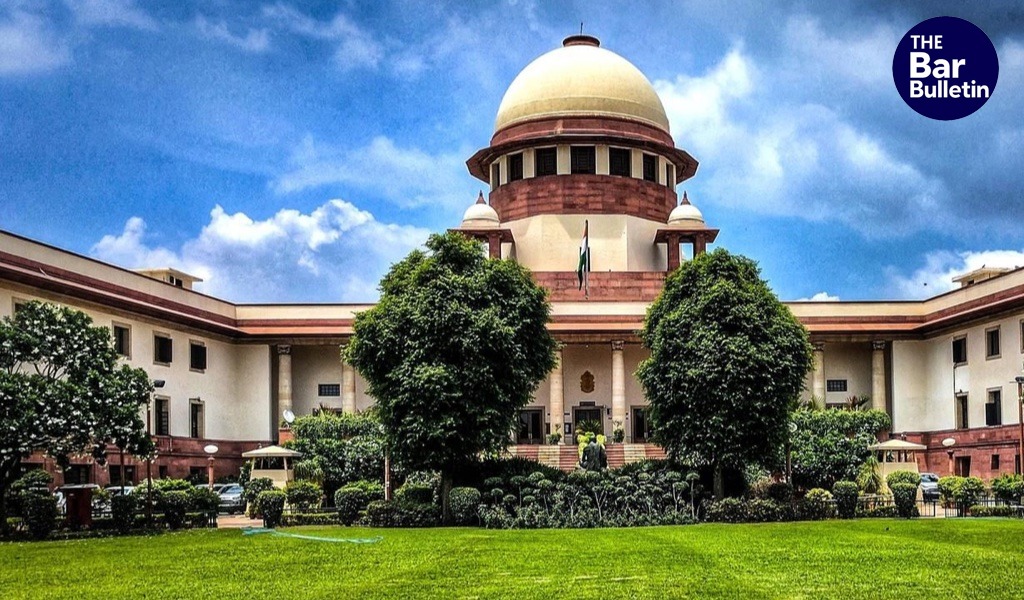

The Supreme Court has clarified that parties to an appeal are not entitled to produce additional evidence as a matter of right under Order XLI Rule 27 of the CPC. The appellate court’s discretion to permit additional evidence is to be used sparingly and is limited to cases where it is necessary to pronounce a satisfactory judgment, not to allow a litigant to fill lacunae or cure fundamental defects in their case.
The Apex Court therefore held that an attempt to secure a decree behind the back of the true owner is a circumstance that cannot be lightly brushed aside, and the proximity of events, namely, the passing of an ex-parte decree followed by the expeditious mutation of revenue entries in favour of the appellant-plaintiffs, casts a shadow over the bona fides of the proceedings.
Thus, when the appellant-plaintiffs themselves asserted title on the basis of long and continuous possession through their predecessors, the subsequent attempt to introduce additional evidence at the appellate stage assumes little legal significance, added the Court.
The Court also explained that an application to adduce additional evidence at the appellate stage cannot be used to fortify a claim that is fundamentally flawed from its inception, such as one based on a prior decree that is not binding on the opposing party. If the appellate court can render a satisfactory judgment on the basis of the evidence already on record, the application for additional evidence has no purpose and should be rejected.
A Two-Judge Bench of Justice Vikram Nath and Justice Sandeep Mehta noted that while the High Court did not decide the application for additional evidence in its main appeal judgment, it did subsequently consider and reject the application as being without merit while dismissing the review petition. The initial omission was thus addressed in the review proceedings.
On the principles of Order XLI Rule 27 CPC, the Bench reiterated that parties to an appeal are not entitled to produce additional evidence as a matter of right. Such evidence can be permitted only in three specific situations: (i) the trial court wrongly refused to admit evidence; (ii) the party proves that despite due diligence, the evidence was not within its knowledge or could not be produced at trial; or (iii) the appellate court itself requires the evidence to pronounce judgment or for any other substantial cause.
The Bench observed that the appellant-plaintiffs’ claim of ownership was primarily based on a decree from an earlier suit instituted by their predecessors. However, the respondent-defendants were not parties to that earlier suit, rendering the decree non-est and not binding on them. Consequently, the onus shifted to the appellant-plaintiffs to independently establish their title in the present suit, which they failed to do by not producing any cogent title deeds at the trial stage.
Further, the Bench held that the additional evidence sought to be produced, i.e., entries in the General Land Register showing the land as ‘private’, was impermissible at the appellate stage to cure inherent defects in the case. The Bench stated that even if this evidence were accepted, it would not impact the High Court’s findings, as mere recording of land as ‘private’ does not establish the appellants’ ownership claim, especially against the respondents’ title traced to a 1953 government decision and a 1954 Gazette Notification.
Briefly, the appellant-plaintiffs instituted a civil suit for a declaration of title and a permanent injunction over land situated in Gwalior, claiming that the property was ancestral and had been in their family’s continuous ownership and possession for over fifty years. This suit was however filed after officers of the respondent-defendants allegedly attempted to interfere with their property in 1989.
The Trial Court decreed the suit in favour of the appellant-plaintiffs in 1996, holding that their title, ownership, and possession were established. Aggrieved, the respondent-defendants appealed to the High Court of Madhya Pradesh. During the appeal, the appellant-plaintiffs filed an application under Order XLI Rule 27 of the CPC to introduce certified copies of the General Land Register as additional evidence.
The High Court, however, set aside the Trial Court’s decree, without deciding the application for additional evidence. The appellant-plaintiffs then filed a review petition, which the High Court dismissed, and also rejected the application for additional evidence at that stage.
Appearances:
AOR Kunal Verma, for the Appellant
ASG K M Nataraj, Senior Advocates V Chitambresh, AORs Mukesh Kumar Maroria, Rekha Pandey, and Harmeet Singh Ruprah, along with Advocates Rajan Kumar Chourasia, Swati Ghildiyal, Anuj Srinivas Udupa, Bhuvan Kapoor, Chitransh Sharma, Sharath Nambiar, Vinayak Sharma, Vatsal Joshi, Yogya Rajpurohit, Indira Bhakar, Satvika Thakur, S. Subramaniam, Ritika Ranjan, Kanishk Sharma, and Karan Singh, for the Respondent
