


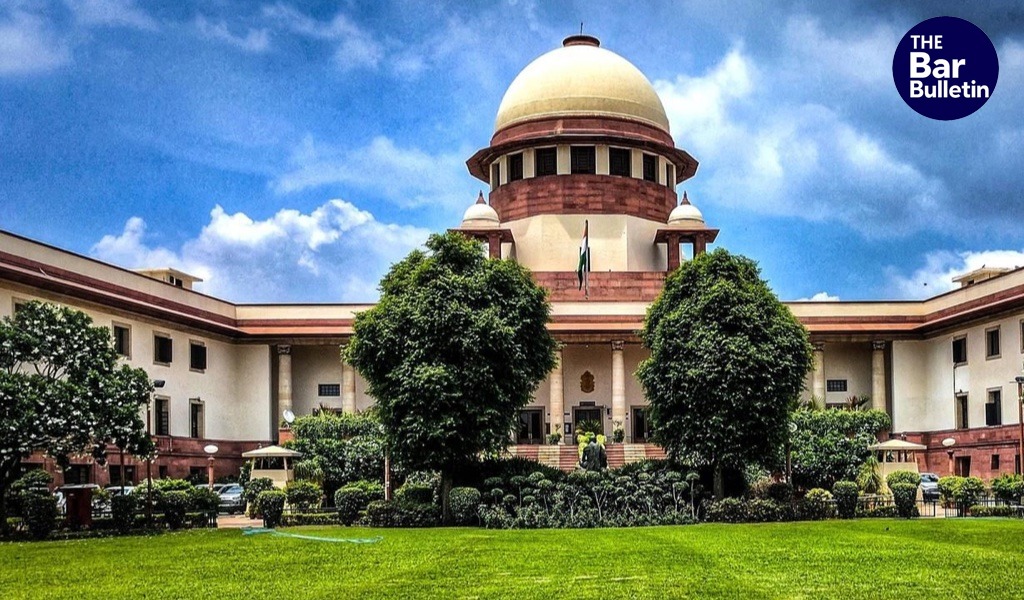

The Supreme Court has clarified that the power to summon an additional accused under Section 319 of the CrPC is an extraordinary power that should be exercised sparingly. The standard for its exercise is that the evidence on record must be more than prima facie but does not need to meet the standard of proof beyond a reasonable doubt required for conviction. The evidence must be ‘strong and cogent’, creating a reasonable likelihood of the proposed accused’s involvement.
The Apex Court also pointed out that while considering a Section 319 application, a court should not conduct a ‘mini-trial’ by undertaking a detailed evaluation of witness credibility or by overemphasizing minor contradictions and plausibility issues. The evidence should be assessed based on its cumulative effect, not in a fragmented manner. Sworn oral testimony from multiple witnesses naming an individual can be considered strong and cogent evidence, sufficient to summon that individual, even if there are inconsistencies that may be resolved during the trial.
A Two-Judge Bench comprising Justice Sanjay Karol and Justice Augustine George Masih delineated three levels of evidentiary standards in criminal proceedings. The lowest is the prima facie standard for framing charges. The highest is proof beyond a reasonable doubt for conviction. For summoning an additional accused under Section 319 CrPC, an intermediate standard applies, which requires the evidence to be ‘strong and cogent’. This standard is more than a mere prima facie case but does not require the evidence to be sufficient for conviction. The Court must assess if the evidence, if unrebutted, reasonably indicates the involvement of the proposed accused.
The Bench observed that the Trial Court had misdirected itself by applying a stricter standard of scrutiny than required at the Section 319 stage. The Trial Court’s detailed examination of witness credibility, minor contradictions, and plausibility issues (like the complainant escaping injury) amounted to a ‘mini-trial’, which is impermissible at this stage.
Further, the Bench found that the Trial Court erred by taking a fragmented approach, treating each inconsistency in isolation rather than assessing the cumulative weight of the testimonies. The law does not mandate documentary corroboration (like jail entry records) at this stage; credible oral evidence alone can suffice. The Bench found that the Trial Court overemphasized minor inconsistencies and exceeded the intended scope of pre-trial scrutiny.
The Bench held that the sworn testimony of three witnesses, including the complainant, naming the proposed additional accused, as being involved in the conspiracy, was sufficient to meet the ‘strong and cogent’ evidence standard required for Section 319 CrPC. The inconsistencies in their testimonies were deemed a matter for trial, not for determination at the summoning stage.
Briefly, the case originates from a First Information Report (FIR) filed by the appellant, which was registered under Sections 307, 302, and 120-B of the IPC, for the murder of Mohammad Ammar. The appellant, who was also a prosecution witness, alleged that Ammar was killed as part of a conspiracy hatched by individuals named Gulshanawwar, Jamshed, and Naushad, who were in jail. The murder was allegedly carried out by Dilshad, Mumtaz, and Abid at the behest of the jailed individuals, with Rajendra and Mausam also being involved in the conspiracy.
During the trial, the complainant and two other witnesses, Khalil and Tazeem, were testified, and based on their statements, the complainant filed an application under Section 319 of the CrPC to summon Rajendra and Mausam as additional accused. The Trial Court rejected this application finding material inconsistencies in the testimonies of the prosecution witnesses regarding the conspiracy. Specifically, there were contradictions about which of the jailed accused met with the proposed accused.
The investigation records also indicated that one of the main conspirators, Jamshed, was not in the local jail at the alleged time of the meeting but had been transferred to Mirzapur Jail. The Trial Court also doubted the credibility of another prosecution witnesses overhearing the conspiracy and noted contradictions in the complainant’s FIR and his court testimony, such as the number of assailants and the circumstances of taking the deceased to the hospital. The High Court also upheld the Trial Court’s decision.
Appearances:
AOR Garima Bajaj, along with Advocates Raghavendra Mohan Bajaj and Zeeshan Ahmed, for the Appellant
AORs Dinesh Kumar Garg and Vishwa Pal Singh, along with Advocates Vikas Bansal, Mukesh Kumar, Dr. Bharpur Singh, Adesh Gill, Vikas Gothwal, Angel, Anurag Pandey, Dharam Raj Ohlan, Santanu Mishra, Kadambini Arora, Varun Singh, Dhananjay Garg, Abhishek Garg, Kacho Manzoor Ali Khan, and Harsh Kumar Agarwal, for the Respondent
