


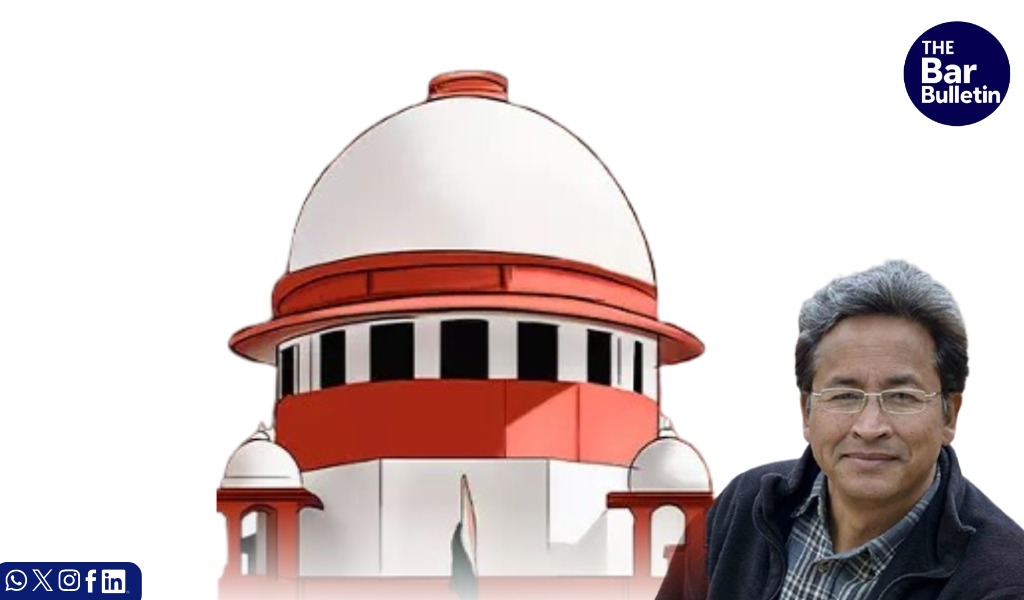

The Supreme Court on Monday directed that the pen drive allegedly supplied to detainee Sonam Wangchuk, a climate activist, at the time of his preventive detention under the National Security Act (NSA), be sealed and forwarded to the Court. The matter has been posted for further hearing on Thursday.
A Bench ordered that the pen drive said to have been furnished to the detainee on September 29, 2025, be obtained from his custody by jail authorities in Rajasthan, sealed in his presence, and transmitted to the Court. The Standing Counsel and Additional Advocate General for Rajasthan were directed to ensure compliance, with the Court indicating that it may be sent through a special messenger.
The direction came after senior advocate Kapil Sibal, appearing for Wangchuk, alleged that the detention order under the National Security Act (NSA) was based on video speeches that were never actually supplied to the detainee.
Senior advocate Kapil Sibal alleged serious discrepancies between the actual speeches and the transcripts forming the basis of detention under the NSA. Appearing for the detainee, Mr Sibal argued that the detention order relied on “non-existing material” and incorrect translations. Pointing to a specific instance, Mr Sibal told the Bench that the detention order attributed to Wangchuk a statement that he would “dedicate his life to overthrow the present government,” adding, “Where is that? It’s not there.” He contended that the actual speech merely criticised government policy and called for peaceful, non-violent protest.
Mr Sibal then argued that the issue operated at “three levels”: “First, it was never shown to us. Second, it could not have been shown because it was not there. Third, even if it was shown, showing is not enough under Article 22(5); you have to supply the document.”
The Union government, however, submitted that the same pen drive had been supplied to both the petitioner and the detainee. The Bench responded by directing that the pen drive currently in the detainee’s custody be sealed and sent to the Court to resolve the factual controversy.
Earlier in the hearing, Mr Sibal had also argued that the detention order relied on incorrect transcripts and amounted to a “complete copy-paste” of the recommending authority’s proposal without independent application of mind.
As the hearing could not conclude, the Court agreed to continue arguments on Thursday.