


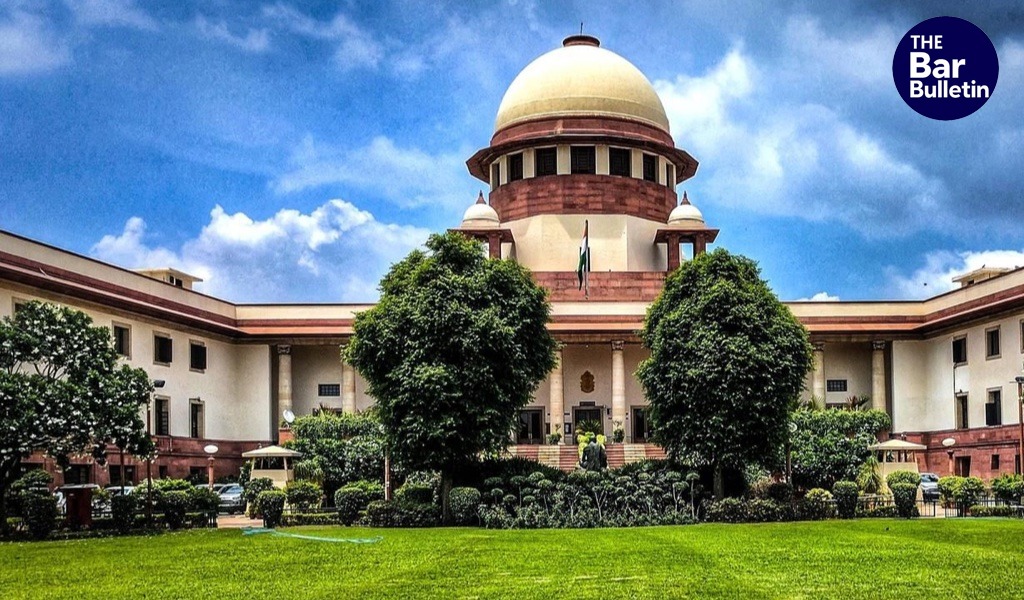

The Supreme Court on Monday approved the Union government’s decision to extend the tenure of currently serving chairpersons, presiding officers and members of various tribunals until September 8, 2026, or until they attain the maximum age prescribed under the Tribunal Reforms Act, 2021, while inviting suggestions from bar associations and other stakeholders on issues relating to tribunal functioning and accountability.
Approving the Centre’s proposal, the Bench of Chief Justice Surya Kant and Justice Joymalya Bagchi noted:
“The decision in principle having been taken to extend the tenure of the presently serving chairpersons, presiding officers and members of various tribunals till September 8, 2026, or until they attain the maximum age prescribed under the Tribunal Reforms Act, 2021, the Government of India will proceed further accordingly, subject to such suggestions that may be placed before the Court by the bar associations or other stakeholders.”
Attorney General R. Venkataramani informed the bench that the government is working on an alternate legislative framework for tribunals, and that a new law may be introduced, possibly during the Monsoon Session of Parliament, to address structural concerns.
The Court also flagged concerns about accountability and performance of tribunal members, particularly administrative members. Referring to submissions that some administrative members were not contributing to adjudication, the bench observed that extending tenures without addressing accountability would raise serious institutional concerns.
CJI remarked that a broader legislative framework would be required to address the issue of oversight, noting:
“They should also look into this aspect and bring a comprehensive law. You cannot keep tribunals entirely under government control; there will be criticism, and you cannot keep them wholly under judicial control either.”
The Court further questioned the absence of mechanisms to assess the integrity, merit and performance of tribunal members.
“Why should there be extension if the work and conduct is not up to the mark? Who is going to evaluate their integrity and performance? These are the real challenges which should have been taken into consideration… Who are they accountable to? There is no accountability here. That is our main concern,” the CJI observed.
However, allowing extension, the Court emphasised that the immediate objective was to ensure that tribunals continue functioning while broader reforms are examined. “The focus today is that the tribunals should not become non-functional because nobody is there,” the bench observed.
The court indicated that it will monitor the issue periodically, directing that the matter be listed again after four weeks, while stakeholders, including bar associations, may submit suggestions on improving tribunal functioning and accountability.