


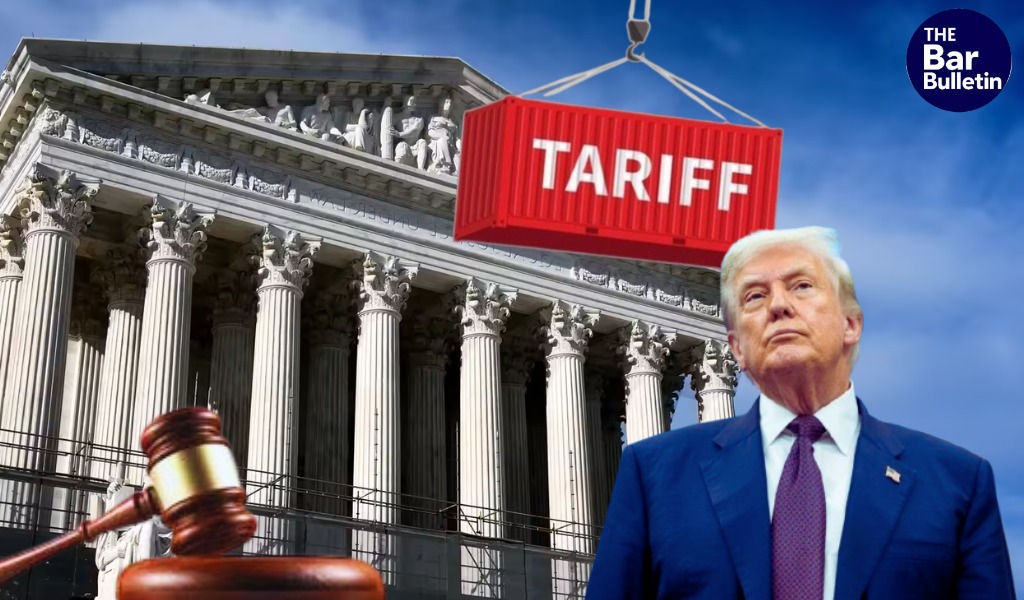

The Supreme Court of the United States has clarified that the International Emergency Economic Powers Act (IEEPA) does not grant the President the authority to impose tariffs. This clarification is based on the ordinary meaning of the statutory text, its context within the statute, and broader constitutional principles. The Court said that the power to “regulate importation” under 50 U.S.C. § 1702(a)(1)(B) does not encompass the power to tax. This is because the term “regulate” is not ordinarily understood to include taxation, and the statute conspicuously omits explicit terms like “tariff” or “duty”, which Congress consistently uses when delegating such authority.
The other verbs in the statutory list concern controlling or prohibiting transactions, not raising revenue, and interpreting “regulate” to include taxation would create a constitutional conflict regarding the prohibition on export taxes, added the Court.
Furthermore, as a plurality reasoned, the Court explained that the power to impose tariffs is a core congressional power of vast economic and political significance. Under the major questions doctrine, any delegation of such an extraordinary power requires clear and unambiguous authorization from Congress. The general phrase “regulate importation” in IEEPA falls short of this clear-statement requirement.
On the jurisdictional question, the Supreme Court pointed out that the Court of International Trade (CIT) has exclusive jurisdiction over challenges to tariffs imposed by the President, as such actions arise from a law of the United States providing for tariffs.
The Three Judge Bench comprising the Chief Justice Roberts, Justice Gorsuch, Justice Barrett, Justice Sotomayor, Justice Kagan, and Justice Jackson observed that the U.S. Court of International Trade (CIT) has ‘exclusive jurisdiction of any civil action commenced against’ the Government that arises out of any law of the United States providing for tariffs.
The plaintiffs’ challenges arose out of modifications to the Harmonized Tariff Schedule of the United States (HTSUS). The Bench noted that such modifications are considered statutory provisions of law for all purposes, and therefore, the plaintiffs’ challenges fall within the exclusive jurisdiction of the CIT.
The Bench made several observations regarding the constitutional and statutory framework for imposing tariffs. Constitutionally, the power “to lay and collect Taxes, Duties, Imposts and Excises” is vested in Congress under Article I, Section 8. Further, the power to impose tariffs is unequivocally a “branch of the taxing power”, which the Framers gave to Congress “alone”. Thus, the Government conceded that the President has no inherent authority to impose tariffs during peacetime and relied exclusively on IEEPA.
From a statutory interpretation perspective, the Bench observed that IEEPA authorizes the President to “investigate, block, regulate, direct and compel, nullify, void, prevent or prohibit, importation or exportation”. The Bench found it notable that this extensive list of specific powers makes no mention of ‘tariff’ or ‘duty’. It reasoned that if Congress had intended to delegate such a distinct and extraordinary power, it would have done so expressly, as it has consistently done in other tariff statutes.
The Bench determined that the power to “regulate importation” does not encompass the power to tax. It observed that while taxes may achieve regulatory ends, the power to regulate does not inherently include the power to tax as a means of regulation. The Government could not identify any other statute where the power to “regulate” was understood to include the power to tax. Furthermore, reading “regulate” to include taxation would render IEEPA partly unconstitutional, as the statute also applies to “exportation”, and the Constitution expressly forbids taxing exports.
Dissenting opinions:
Justice Kavanaugh’s Dissent, joined by Justices Thomas and Justice Alito, opined that the International Emergency Economic Powers Act (IEEPA) clearly authorizes the President to impose tariffs. The dissent’s reasoning is based on statutory text, historical context, precedent, and a rejection of the majority’s application of the major questions doctrine. The dissent contends that the ordinary meaning of the phrase “regulate importation” includes the authority to impose tariffs. It points out that tariffs have historically been a common and traditional tool for regulating imports, alongside quotas and embargoes. The dissent stated that the power to ‘regulate Commerce with foreign Nations’ under Article I, Section 8 of the Constitution has long been understood to include the power to impose duties.
Justice Thomas joined Justice Kavanaugh’s dissent in full but separately articulated an originalist argument that Congress’s delegation of tariff authority is constitutional under the nondelegation doctrine. Justice Thomas opined that the nondelegation doctrine, rooted in the Constitution’s Vesting and Due Process Clauses, only prohibits Congress from delegating its “core legislative power”. He defines this as the power to make substantive rules that set the conditions for depriving individuals of ‘life, liberty, or property’. According to Justice Thomas, the power to impose duties on imports is not a core legislative power. At the founding, this power was understood as part of the broader executive power over foreign commerce and external affairs. Furthermore, he argues that importing goods was historically considered a ‘privilege’, not a ‘right’ protected by the Due Process Clause. Therefore, charging a duty for this privilege does not implicate the constitutional protections that trigger the nondelegation doctrine. Because the power to impose tariffs is not a core legislative power, Justice Thomas concluded that Congress is free to delegate it to the President.
Brief facts
Shortly after taking office, President Trump sought to address two foreign threats: the influx of illegal drugs from Canada, Mexico, and China, and “large and persistent” trade deficits. The President declared a national emergency for both threats, deeming them “unusual and extraordinary”, and invoked his authority under the International Emergency Economic Powers Act (IEEPA) to respond. To counter the drug trafficking threat, the President imposed a 25% duty on most Canadian and Mexican imports and a 10% duty on most Chinese imports. To address the trade deficits, he imposed ‘reciprocal’ tariffs, consisting of a duty of at least 10% on all imports from all trading partners, with dozens of nations facing higher rates. Subsequently, the President issued several modifications, including increasing the tariff rates on Chinese goods multiple times, bringing the total effective rate to 145% on most goods from China.
Two sets of plaintiffs, comprising small businesses and several States, filed lawsuits challenging the tariffs. The Learning Resources plaintiffs sued in the U.S. District Court for the District of Columbia, which granted a preliminary injunction, finding that IEEPA did not authorize the tariffs. The V.O.S. Selections plaintiffs sued in the U.S. Court of International Trade (CIT), which granted summary judgment for the plaintiffs. The Federal Circuit affirmed the CIT’s decision, concluding that IEEPA’s authority to “regulate importation” did not authorize the challenged tariffs.
