

The Allahabad High Court has strongly asserted that where the official version of a custodial death is rendered doubtful by surrounding circumstances, medical findings, and unexplained non-production of primary evidence such as videography of the scene of occurrence and postmortem, the Court is justified in treating the matter as one requiring independent intervention to secure that evidence. The Court’s reasoning rests specifically on the inconsistency between the alleged use of a belt and the postmortem noting a knot mark, the fracture of tracheal rings suggesting strangulation rather than the version of hanging put forward by the police, and the inability of the State to establish that the videography had ever been sent out of police custody.
The Court further held that in a custodial death matter, reliance solely on police and executive reports without independent verification is inadequate, particularly because the police and State administration are interested parties. Accordingly, the Court directed the Central Bureau of Investigation, through its ACB office at Ghaziabad, to secure the video recordings within sixty days from the date of the order and to produce them before the Court on the next date of hearing. The Court specifically stated that there was no necessity to register an FIR at that stage because the CBI would be acting under directions of the Court.
The Court further directed counsel for the petitioner to implead the CBI, through its In-charge, ACB Office, Ghaziabad, as respondent no. 7 during the course of the day. The matter was directed to be listed on 10th August, 2026.
The Division Bench comprising Justice Siddharth Nandan and Justice Atul Sreedharan stated that the case disclosed “institutional failures”, and held that the Court itself had failed because a matter of this nature required urgent and repeated listing at short intervals so that crucial evidence such as videography could be preserved and produced. The Bench observed that the delay of sixteen years had created an opportunity for the police and the State to cover their tracks and obscure the truth.
Second, the Bench held that the Police/State was the next institution that had failed. It found the State evasive in relation to the production of videographic evidence and observed that, at that stage, the unwillingness to produce the videography appeared to be possibly aimed at concealing a crime. The Bench repeatedly emphasised that the police had not been able to demonstrate that the videography had ever been sent to the NHRC.
Third, the Bench made severe observations against the NHRC’s handling of the complaint. It said the NHRC had undertaken no independent investigation, had not recorded statements of material witnesses such as the father of the deceased, the girl concerned, her parents, neighbours, or police personnel present at the police station, and had not sought assistance from the State Human Rights Commission. According to the Bench, the NHRC had merely accepted the police and SDM reports without independent scrutiny, even though in custodial death cases the police and administration are interested parties. The Bench stated that this conduct prima facie called into question the very existence of the NHRC, while reserving final findings until hearing its counsel.
The Bench also observed that the NHRC’s closure order did not refer to examination of any videography or photographs of the scene of occurrence, which supported the Court’s inference that the videography probably always remained with the police.
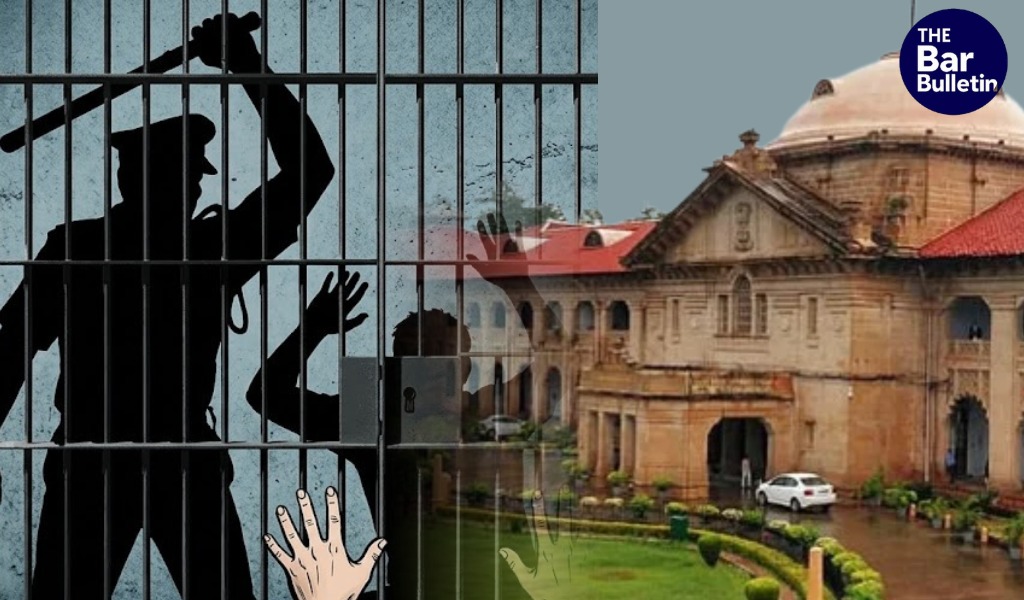
Briefly, the public interest litigation concerns the custodial death of Nahar Singh @ Sneh, a physically handicapped person with 40% disability, who died on May 9, 2009 in police custody at Police Station Dannahar, District Mainpuri, and was found hanging in the urinal portion of the lock-up. The State version recorded that he had used his belt to hang himself. The petition was filed by the Association for Advocacy and Legal Initiatives (AALI), through its coordinator, to uncover the truth behind the custodial death.
Over the long pendency of the matter, several affidavits were filed by police and State officers, including the then SHO, Superintendent of Police, Principal Secretary (Law), Secretary (Home), Executive Magistrate, and a former SSP. Also, the mother of the deceased had earlier moved an application under Section 156(3) CrPC seeking registration of an FIR against police personnel for murder, which was later withdrawn. A videography had been conducted both of the scene of occurrence and of the postmortem. From Jan 06, 2026 onwards, through multiple orders, the Court repeatedly directed the State to produce the videography. The Executive Magistrate informed the Court on affidavit that although he had conducted the inquest, the tapes were not in his custody and were with the police, who had arranged the photographer and videographer.
The State and police contended that the videography and documents had been sent to the National Human Rights Commission in connection with a complaint made by the deceased’s father. However, the police communication relied upon by the State did not describe any specific document or article sent to the NHRC, making it impossible to conclude from that letter that the videography had in fact been transmitted.
A central factual feature was that the postmortem noted a knot mark or knot impression on the right side behind the ear, which it found inconsistent with the police version that the deceased hanged himself with a leather belt, because a belt buckle impression, not a knot mark, would normally have been expected. The internal findings in the postmortem showed intact hyoid bone, fractured III, IV and V tracheal rings, and congestion of the epiglottis and larynx. On that basis, a reasonable suspicion arose that the deceased may first have been strangulated within the police station and thereafter his body may have been suspended in the urinal area to present the death as suicide. The missing videography becomes crucial because it could reveal whether the body was in partial or complete hanging position and whether bodily injuries existed that were either recorded or omitted under police influence.
The NHRC also accepted the version that the deceased was not in police custody, that he had gone to the police station in frustration after a failed attempt to secure police intervention in his intended marriage, and that he committed suicide in the toilet of the police station. The NHRC therefore closed the matter.
Appearances:
Ankur Sharma, Ravi Kiran Jain, Counsels for Petitioner
C.S.C., M.R. Chauhan, Counsel for Respondent
