


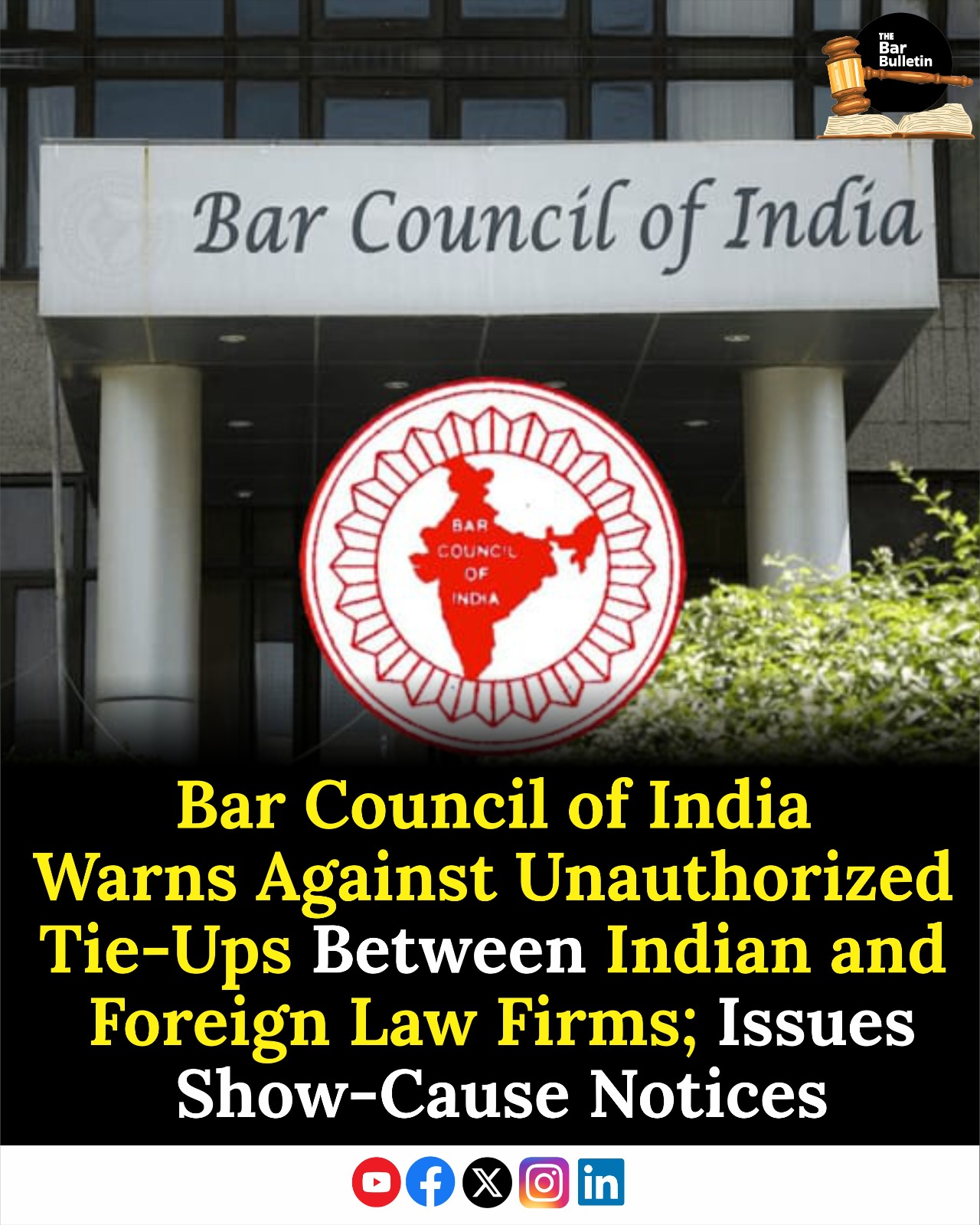

The Bar Council of India (BCI), in a press release dated October 21, 2025, cautioned Indian and foreign law firms against forming unauthorized, unregistered, and impermissible collaborations or alliances that give the impression of integrated practice in India. The Council has observed that certain law firms are projecting themselves as unified global legal service entities through joint branding, Swiss Vereins structures, referral arrangements, or strategic alliances actions that violate the Bar Council of India Rules for Registration and Regulation of Foreign Lawyers and Foreign Law Firms in India, 2023 (as amended in 2025).
The BCI stated that its earlier press release dated August 5, 2025, now stands withdrawn and substituted by this clarification, following representations made in Atul Sharma v. Bar Council of India before the Delhi High Court. The Council expressed grave concern that some foreign law firms and advocates, in active association with Indian counterparts, are advertising joint identities that create a false impression of integrated legal activities permitted under Indian law.
Citing the Supreme Court’s ruling in Bar Council of India v. A.K. Balaji (2018) 5 SCC 379, the BCI reaffirmed that foreign lawyers cannot practice Indian law, directly or indirectly. Legal practice includes not only advocacy but also advisory, drafting, negotiation, and documentation relating to Indian law. Under the current rules, foreign lawyers and firms may practice only foreign and international law in non-litigious matters, and only after proper registration with the BCI. They cannot appear before courts, tribunals, or authorities legally competent to record evidence on oath, including in arbitral proceedings governed by Indian law.
The BCI also clarified that cross-border firms cannot evade the ban by indirect methods such as brand sharing, joint announcements, or by using Indian firms under foreign names. It emphasized that joint branding, co-marketing, or common public representation amounts to a violation of the Advocates Act, 1961. Partners and promoters of such arrangements may be held jointly and severally liable for misconduct or circumvention of the law.
The Council confirmed that show-cause notices have been issued to several law firms and individuals allegedly engaged in prohibited arrangements. They have been asked to furnish full details of their partnerships, governance structures, and regulatory disclosures. Failure to comply may attract disciplinary action, including suspension, removal, or other penalties under the Advocates Act and BCI rules.
Additionally, BCI reminded advocates and firms that Rule 36 of Chapter II, Part VI of the Bar Council Rules prohibits solicitation or advertising of legal services. Public announcements, social media posts, or press events promoting mergers or foreign collaborations that suggest global integration will be treated as professional misconduct. The Council advised lawyers to audit their websites and marketing materials to remove prohibited content immediately.
Reaffirming its commitment to a “liberal yet controlled” system for foreign participation in India’s legal market, the BCI stated that registered foreign lawyers may engage in advisory work on foreign law and international matters under strict regulation, ensuring the sovereignty and integrity of India’s legal profession.