
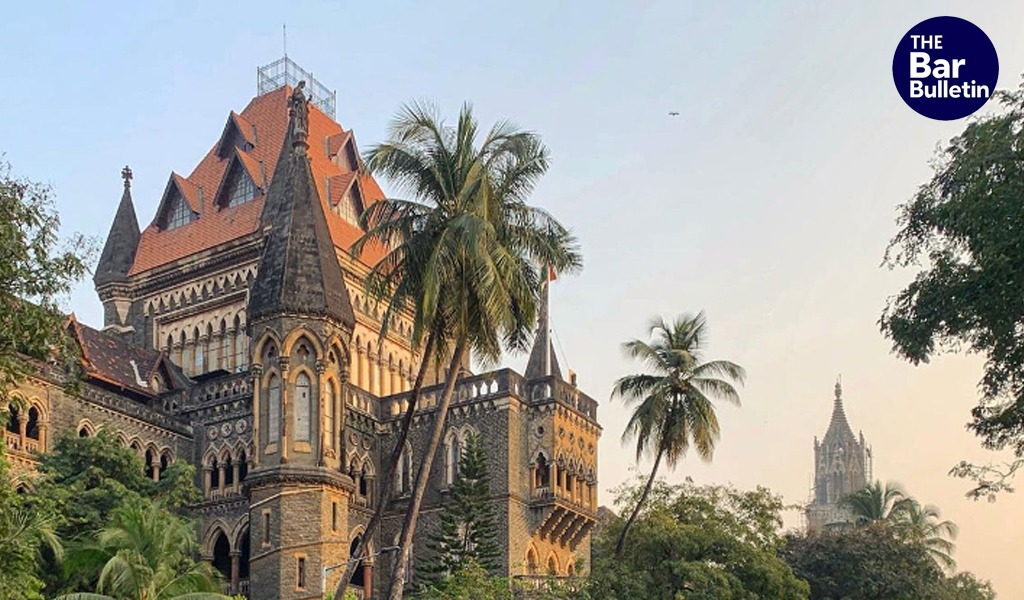

The Bombay High Court (Goa Bench) has asserted that where the FIR, complaint, and material collected during investigation prima facie disclose that the accused induced the complainants to part with money by making false representations from the very inception regarding authority, title, and transferability of immovable properties, the case discloses the ingredients of cheating under Section 420 IPC, and such proceedings ought not to be quashed merely because the transactions arise out of MOUs, involve property/commercial dealings, or are also the subject matter of arbitration or civil remedies.
The Court further laid down that at the stage of quashing, the High Court must confine itself to the uncontroverted allegations in the FIR and the material collected in investigation, without entering into disputed questions of fact or testing the reliability of the allegations, especially when the investigation is still at a nascent stage. Applying these principles, the Court held that the present matter was not a fit case for exercise of writ or inherent jurisdiction to quash the FIR, and accordingly rejected the petition while clarifying that its observations would not influence the trial on merits.
A Single Judge Bench of Justice Ashish S. Chavan observed that, taking the complaint and the investigation material at face value, the complainants’ case was not merely that the transactions failed, but that they were induced into six MOUs on the basis of representations by the petitioners that they were authorised to deal with the properties and that the properties were unencumbered or capable of being made marketable within a short time. On that basis, substantial sums were allegedly paid.
The Bench noted that the investigation had already unearthed several acts of omission and commission, including manipulated documents, absence of authority in favour of the partnership firm, pendency of civil litigation relating to title, and collection of money from multiple persons in respect of the same property. These circumstances were treated as material showing prima facie false representation and deceitful conduct by the petitioners.
The Bench specifically observed that the investigation prima facie disclosed that the petitioners had suppressed pending inventory proceedings, civil suits, and title disputes, while simultaneously dealing with multiple purchasers and accepting substantial sums despite being aware that no legitimate transfer could be effected. The Bench rejected the petitioners’ argument that the matter was a pure commercial dispute, holding that the allegations and the investigation material prima facie disclosed deception from the inception of the transaction, and that this was not a case of a mere subsequent breach of promise or failure to perform contractual obligations.
The Bench also observed that the pendency of arbitration or availability of civil remedies does not bar criminal proceedings where the factual allegations prima facie disclose the ingredients of cheating. It relied upon settled law that a commercial transaction may also involve a criminal offence and that the existence of a civil remedy is not, by itself, a ground to quash criminal proceedings. It reiterated that at the stage of quashing an FIR, it cannot assess the veracity of disputed facts such as whether the complainants were aware of title defects or legal deficiencies. Such disputed questions are triable and must be left to investigation and trial.
The Bench applied the settled principles governing quashing, especially that quashing is to be exercised sparingly, that courts should not thwart investigation into cognizable offences, and that while examining an FIR, the Court is only to see whether the allegations disclose commission of a cognizable offence and not whether the case will ultimately succeed on merits.
Briefly, the petitioners invoked the inherent jurisdiction of the High Court seeking quashing of FIR registered by the Economic Offences Cell under Section 420 read with Section 120-B of the IPC, on the basis of a complaint alleging fraudulent property transactions. The complaint alleged that the petitioners induced the complainants to enter into multiple property transactions by falsely representing that they had clear and marketable title and legal authority to transfer ownership, while suppressing legal deficiencies including pending inventory proceedings, tenancy disputes, and lack of authority from owners/co-owners. The amount alleged to have been misappropriated was approximately INR 3.70 crores.
The complaint referred to six transactions/MOUs under which the complainants parted with money in respect of various properties situated at Assagao, Siolim-Marna, Arpora-Nagoa, Corjuem, and other locations in Goa. The petitioners argued that they were merely legal representatives/property aggregators acting under authority from the owners, that the dispute was commercial in nature, that arbitration proceedings had already been invoked, and that the complainants were aware of defects and encumbrances affecting the properties. They also contended that documents such as MOUs, powers of attorney, title certificates, and bank statements had been furnished to the EOC but were not properly considered.
Respondent No. 3 and the State opposed quashing by contending that the dishonest intention was present from the inception, because the petitioners knew that they lacked documents from all owners/co-owners, that inventory proceedings and title disputes were pending, and that lawful alienation was not possible, yet they executed multiple and even overlapping MOUs and collected consideration from different purchasers.
The investigation revealed prima facie that some documents furnished by Petitioner No. 1 were manipulated to hide address, Aadhaar, and PAN details; that for the Siolim-Marna property there was no material showing authority from one of the occupants and the POAs were in the individual name of Petitioner No. 1 and not in the name of the partnership firm; and that in relation to the Arpora-Nagoa property, the original MOU did not transfer title to the firm, yet the petitioners collected INR 55 lakhs from the complainants while agreeing to transfer the property for INR 21 crores.
The investigation further revealed that the petitioners had allegedly adopted the same modus operandi with another witness in respect of the same properties, including taking INR 35 lakhs in advance for Survey No. 74 and further sums for Survey No. 95/1, thereby entering into MOUs with multiple persons in respect of the same properties. The State also pointed out that the investigation was at a nascent stage and involved verification of authority from more than sixty owners/co-owners, examination of POAs, receipts, and related records.
Appearances:
Sudin Usgaonkar, Senior Advocate with Snehlata Sahani and Divya Parab, Advocates for the Petitioners
S. Karpe, Additional Public Prosecutor for Respondent Nos.1 and 2/State
H.S. Kohli with Chirag Angle, Advocates for Respondent No.3
