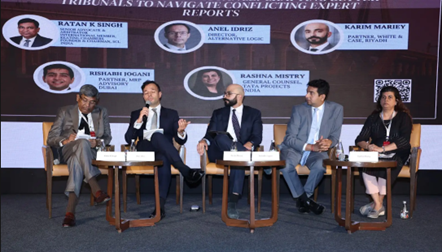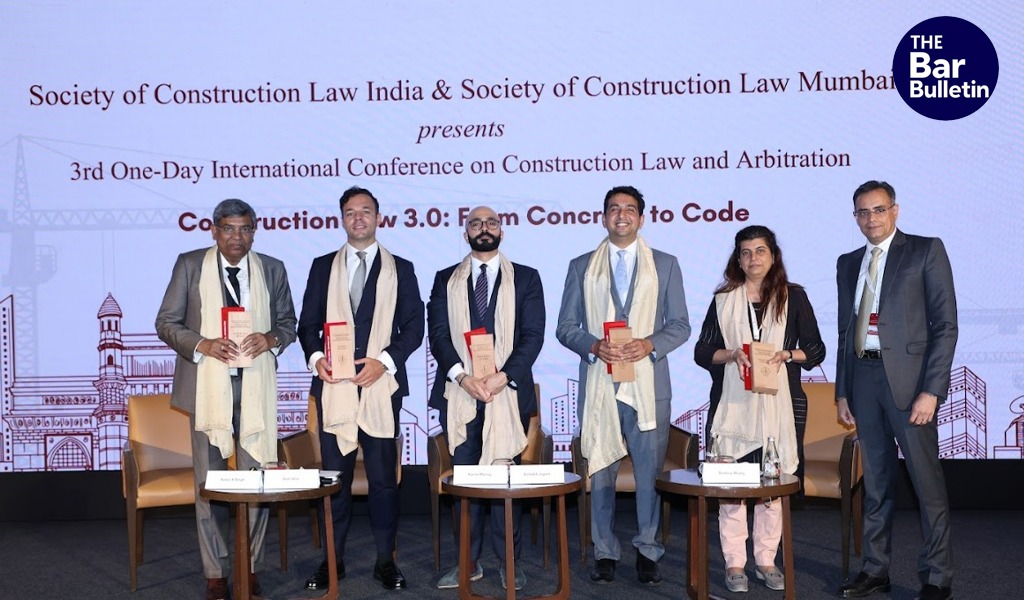
At the Construction Law 3.0: From Concrete to Code conference held in Mumbai on April 25, 2026, Session 1 focused on the theme “From Credibility to Substance: Crafting Better Tribunals to Navigate Conflicting Expert Reports.” The discussion brought together leading voices from arbitration, construction law, and dispute resolution to examine the evolving role of expert evidence in complex disputes. The panel featured speakers, including:
• Ratan K Singh – Senior Advocate & Arbitrator; International Member, Keating Chambers; Founder & Chairman, SCL India
• Anel Idriz – Director, Alternative Logic
• Karim Mariey – Partner, White & Case, Riyadh
• Rishabh Jogani – Partner, MRP Advisory, Dubai
• Rashna Mistry – General Counsel, Tata Projects, India
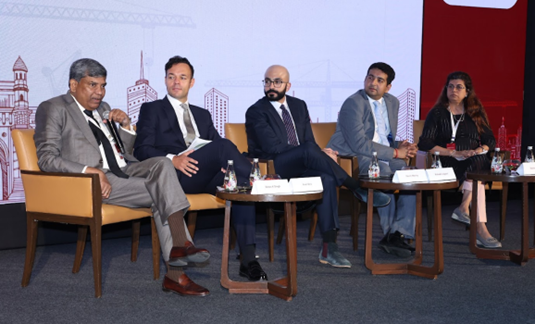
The session opened with Mr Ratan K Singh framing expert evidence in construction disputes as a persistent “enigma” for stakeholders, highlighting the challenges in identifying, appointing, and evaluating experts across delay, disruption, and quantum issues. He emphasised that experts play a critical role in reconstructing project timelines, establishing causation, and assisting tribunals in understanding complex factual matrices, while cautioning against bias, poor methodology, and lack of clarity in expert reports.
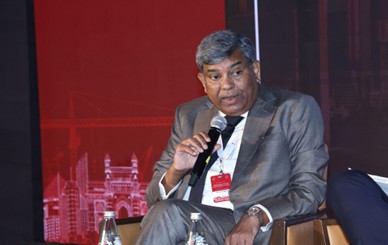
Setting the tone for stakeholder perspectives, he directed the discussion to Ms Rashna Mistry, posing a key question on how parties should approach the selection of experts and the significance of choosing the right expert in construction disputes.
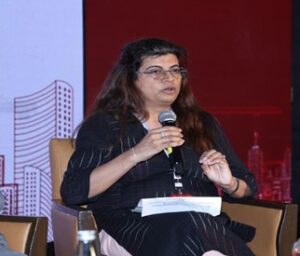 Responding to the question on expert selection, Ms Rashna Mistry outlined the in-house approach to construction disputes, stressing that the process begins with extensive document collation and analysis before any expert is engaged. She cautioned that expert opinions must be firmly rooted in contemporaneous project records and contractual frameworks, observing, “Without document, an expert report will be useless. It’ll just be a story making to fit your case.”She further highlighted practical constraints faced by in-house teams, particularly the rising costs of engaging multiple experts across delay, quantum, and testimony stages, making careful selection both a legal and commercial necessity.
Building on her remarks, Mr Ratan K Singh expanded the discussion to broader systemic concerns, including diversity in arbitration and the need for more balanced tribunal composition. He then invited Mr Rishabh Jogani to share his perspective, who pointed to a persistent reliance on foreign tribunals in domestic disputes. Highlighting this disconnect, Mr Jogani remarked, “I don’t know why, but we end up appointing three barristers in London to decide on a case governed under Indian law for a project in India,” highlighting the need to build greater confidence in regional expertise.
He also noted the lack of gender balance in construction and arbitration, pointing out that even panels remain male-dominated and emphasising the need for greater participation of women based on merit, not tokenism. He said:
“The amount of women in construction I think really needs to increase u so that you know we have more gender diverse panels and not because women need to be you know pushed anyway and supported in any way. They’re excellent lawyers.”
Responding, Mr Ratan K Singh noted that few women historically entered civil engineering and that the field is no longer a preferred choice, and it is “not a good sign.”
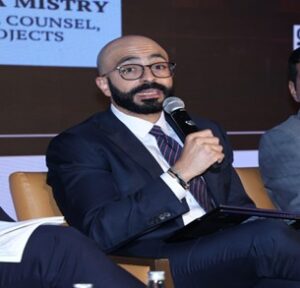 He then pivoted back to the core issue of dispute resolution, stressing the importance of appointing technically competent tribunals, and posed a question to Mr Karim Mariey on whether parties are building the right tribunals for construction disputes.
Responding, Karim Mariey emphasised that while tribunals need not be subject-matter experts, they must be sufficiently familiar with technical concepts such as delay analysis. He cautioned against appointing arbitrators as “experts” themselves, noting the risk of them substituting party-appointed expert evidence with their own views. Instead, he highlighted the importance of proactive, procedurally robust tribunals capable of structuring expert evidence effectively, through measures such as joint statements, agreed methodologies, and clearly defined scopes, to ensure that expert reports meaningfully assist the tribunal.
Following his exchange with Karim Mariey, Ratan K Singh thanked him and shifted focus to how expert reports are handled in arbitration, explaining that parties typically file individual reports followed by a joint expert report identifying areas of agreement and disagreement. He noted that while agreements narrow issues, extensive disagreements create difficulties for tribunals. He then turned to Mr Anel Idriz, asking whether such expert disagreement is inevitable.
 Responding, Mr Idriz explained that delay analysis involves reconstruction of events after the fact and, even when based on the same records, differing methodologies, such as prospective versus retrospective approaches or variations in window analysis, can lead to different conclusions, which in turn creates challenges for tribunals. He explained that well-executed expert analysis can clearly reconstruct project delays and causation, but if poorly done, it risks confusing tribunals and obscuring key issues.
He said: “If we apply it really well and it’s done with rigor and accuracy, it can really explain what’s happened on the course of the project, what went right, what went wrong, and where the critical delay was. But also, we do have the other side—when it’s not done well, it can appear to arbitrators, to counsel, very confusing and it doesn’t clearly explain the cause and effect and really can actually create a bit of confusion.”
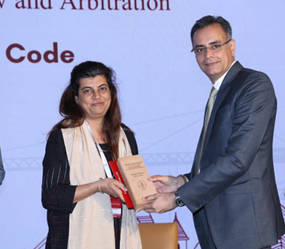 Following Mr Anel Idriz, Mr Ratan K Singh briefly outlined the fundamentals of delay classification in construction disputes before turning back to Ms Rashna Mistry, asking how in-house teams can shape legal strategy around experts and support their effective deployment in arbitration.
Responding to the question on legal strategy, Ms Rashna Mistry emphasised that successful dispute management requires alignment between the tribunal, experts, and legal team, noting that all three must remain consistent with the facts and documents to avoid contradictions during proceedings. She cautioned against inflated claims and stressed credibility, stating, “Let the truth prevail. Let your documents speak.”
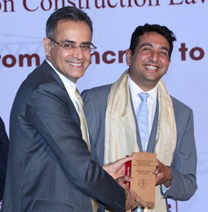 Building on this, Mr Ratan K Singh moved the discussion to procedural tools, inviting Mr Rishabh Jogani to address the role of the first joint statement in delay and quantum disputes. He highlighted its importance in fixing methodology and scope early in proceedings, observing that without it, experts may adopt conflicting approaches, leaving tribunals unable to reconcile competing reports.
Following Mr Jogani’s remarks, Mr Ratan Singh briefly explained key concepts such as baseline programme and impacted as-planned (IAP) methodology for the audience, before turning back to Mr Karim Mariey with a question on how tribunals handle conflicting expert opinions, particularly through techniques like “hot-tubbing,” and whether its effectiveness depends on the competence of the arbitrator.
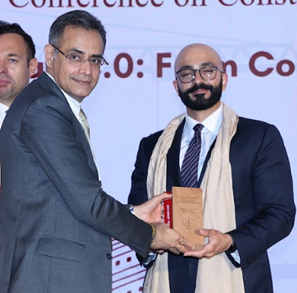 Responding to the question on “hot-tubbing,” Mr Karim Mariey explained that while it is often said to narrow disagreements, in reality, most issues should already be narrowed through joint statements before the hearing. He clarified that its real effectiveness lies in tribunal engagement, noting, “the reason that hot tubbing works is because the experts are… being stared at by the one or three people who will decide the fate of their evidence,” making them more likely to concede and refine positions. He emphasised that its success ultimately depends on a well-prepared and proactive tribunal.
Responding to the answer, Mr Ratan K Singh stressed that the effectiveness of such processes hinges on the diligence of arbitrators, contrasting international practice with domestic arbitration in India, where tribunals often do not engage deeply with records until late stages. He highlighted the need for arbitrators to actively study case materials from the outset to meaningfully understand disputes and evaluate expert evidence. He then moved the discussion forward, posing a question to Mr Anel Idriz on the role and importance of recognised guidance frameworks, such as delay and disruption protocols, in shaping expert analysis and tribunal decision-making.
Answering the question on the role of guidance frameworks, Mr Anel Idriz clarified that protocols such as delay and disruption guidance are not binding rules but tools, emphasising that “it is just a guidance… you always need to go back to what the contract says,” while also considering project records and circumstances.
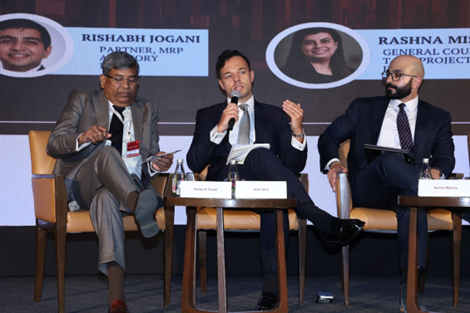
Building on this, Mr Ratan K Singh shifted the discussion to cross-examination strategy and invited Mr Rishabh Jogani to respond on whether experts should be tested on methodology and merits rather than just credentials.
Rishabh Jogani said that advice to avoid testing experts on their methodology is often followed by lawyers who haven’t fully understood the case. He remarked that if a lawyer is well-prepared and familiar with the facts, they should directly challenge the expert’s methodology and conclusions rather than avoid it. He cautioned that focusing excessively on credentials, conflicts, or personal aspects can become counterproductive, sometimes even appearing as a personal attack, and risks losing the tribunal’s confidence, especially when significant time is spent on such lines instead of engaging with the substance of the expert report.
Concluding the session, Mr Ratan Singh added practical guidance for practitioners, highlighting the importance of examining experts’ prior publications to test consistency in their positions. Afterwards, the panel took a few questions from the audience.