
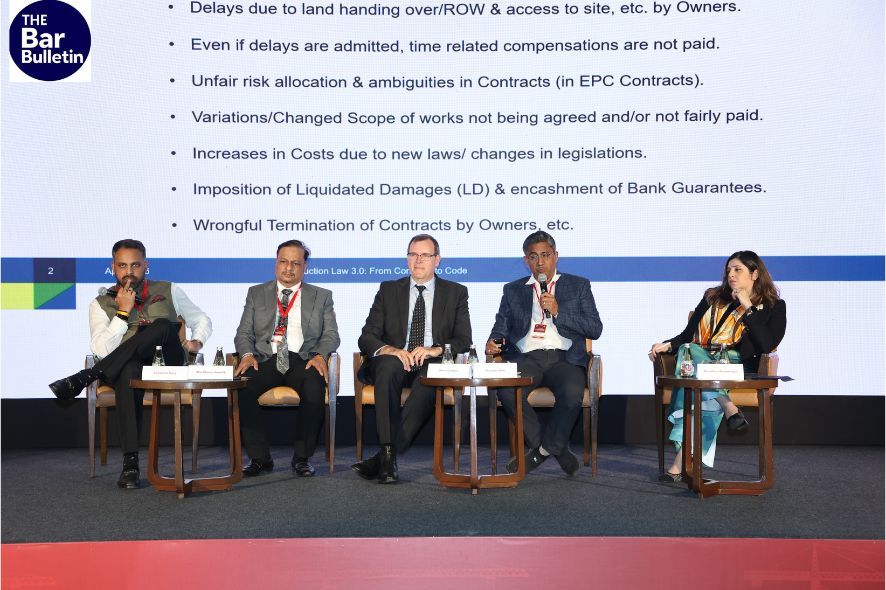

Leading voices from the construction and legal industry convened at the SCL Construction Law 3.0: From Concrete to Code conference for an insightful panel discussion on “Why Projects End in Disputes: Lessons from Industry Professionals.”
The session brought together an eminent panel comprising Shashank Garg, Senior Advocate and ICC IAG Chair), Gurudas Naik, Executive Vice President, Contracts, ECC India, Shiv Sharan Kaushik, Senior Vice President, Contracts, KPIL India, Khushboo Shahdadpuri, Partner, Al Tamimi & Co., UAE and Steven Cannon, Partner, Clyde & Co., UK, offering a multi-jurisdictional perspective on dispute trends in infrastructure projects.
Moderating the session, Mr Shashank Garg set the tone by shifting the focus from what goes wrong in projects to why disputes arise, describing the discussion as a culmination of issues debated throughout the conference.
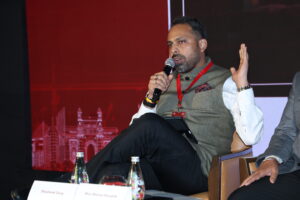
Mr Gurudas Naik highlighted practical challenges from the Indian infrastructure sector, pointing to delays in land acquisition, failure to provide right of way, and reluctance of employers to compensate for time-related costs as key triggers for disputes. He also flagged unfair risk allocation in EPC contracts, arbitrary application of price adjustment mechanisms, and wrongful termination practices as recurring concerns.
Gurudas Naik highlighted ground realities in infrastructure execution, pointing to systemic inefficiencies:
“Contracts are inherently risk-driven, but the problem arises when all risks are pushed onto the contractor. A contractor is a service provider, not a funding agency for the project.”
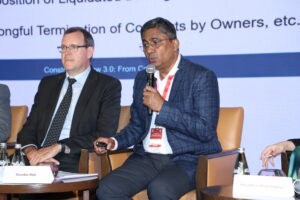
Mr Shiv Sharan Kaushik emphasised that disputes are not merely caused by events but by how stakeholders respond to them. He identified systemic issues such as delayed decision-making, lack of ownership in public sector undertakings, and a culture of denial towards contractor claims. He also cautioned against aggressive and unrealistic claims by contractors and stressed the need for clarity in contracts, robust risk identification, and effective contract administration.
Shiv Sharan Kaushik shifted focus to stakeholder behaviour, observing:
“Disputes don’t arise only because of events, they arise because of how those events are dealt with.”
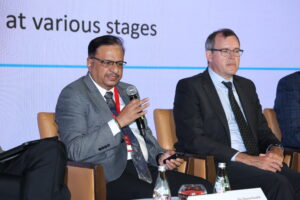
Offering an international perspective, Ms Khushboo Shahdadpuri examined dispute patterns in the Middle East, noting that most disputes stem from unresolved claims, payment delays, scope changes, and differences in contractual interpretation. She underscored the importance of documentation, timely approvals, and clarity in contract provisions, particularly in complex, multi-stakeholder projects.
Providing a cross-border perspective, She reflected on dispute patterns in international projects:
“Most disputes originate much earlier than we think, often at the stage of unresolved claims and payment issues.”

Mr Steven Cannon analysed disputes through a structural lens, categorising them into issues arising at the contracting stage, unforeseen circumstances, performance-related challenges, and deliberate commercial positioning by parties. He highlighted behavioural and systemic inefficiencies, including poor contract management, ambiguous specifications, and power imbalances between contracting parties, as factors that make disputes “sticky” and difficult to resolve.
Steven Cannon analysed disputes structurally, stating:
“Many disputes are effectively ‘baked in’ from day one due to poor drafting, unclear scope, and misaligned expectations.”
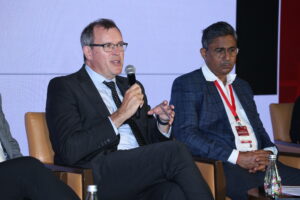
The panel collectively stressed the importance of early dispute avoidance mechanisms, fair risk allocation, transparent communication, and proactive contract management. Emphasis was laid on adopting global best practices, including clearer drafting, better documentation, and timely resolution frameworks to reduce dispute escalation.

The session concluded with a consensus that while disputes may be inevitable in large infrastructure projects, their frequency and intensity can be significantly reduced through better planning, collaboration, and accountability across stakeholders.