


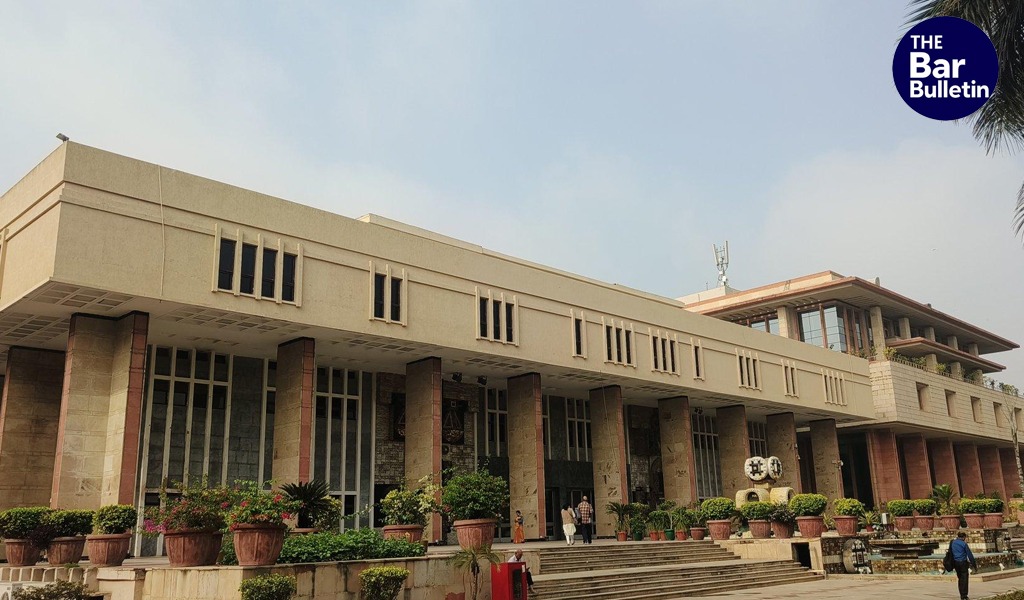

In a criminal appeal filed before the Delhi High Court against a judgment of the Trial Court to convict the appellant under Sections 302/397/34 of the Indian Penal Code, 1860 (IPC) read with Section 120-B IPC as well as a sentencing order dated 31-01-2009 whereby he was sentenced to undergo imprisonment for life with fine, a Division Bench of Justice Navin Chawla and Justice Ravinder Dudeja took note of the serious delay in the matter and laid down guidelines for post-conviction/bail follow up.
The Court perused the records and stated that the present case was one in which the appellant continued to enjoy the fruits of liberty for a period of thirteen years, even after his appeal against conviction was dismissed by this Court.
The Court noted that during the pendency of his appeal, the appellant’s sentence was suspended for 2 months by an order dated 13-12-2010, after which the Trial Court accepted the bond furnished by the appellant, but he did not surrender. Thereafter, by a judgment dated 19-09-2012, the criminal appeal filed by the appellant was dismissed.
The status report filed by the Superintendent, Jail, revealed that the appellant was arrested on 13-10-2025 and remanded to jail to serve the remaining sentence, but the Court noted that the report failed to elaborate on the steps taken to secure the appellant’s arrest over the last thirteen years.
The Court noted the extraordinary delay in securing the appellant’s custody and stated that this situation indicated deficiencies in post-conviction/bail follow-up and a lack of coordination among the Trial Court, Jail Administration, and Police. It was said that such episodes corrode the credibility of the criminal justice system, and to ensure that such incidents are not repeated in the future, the Court laid down the following guidelines:
• Immediately upon the passing of any order granting interim bail or suspension of sentence, the Registry shall communicate the said order to the Trial Court, Jail Superintendent, and the jurisdictional police station.
• In case of suspension of sentence for a specified period, the Trial Court, after accepting the bond, shall fix and record the date of surrender and list the matter immediately after that.
• Jail Superintendent must intimate the Trial Court which accepted the bail bond as to whether the convict surrendered on the expiry of the specified period of interim bail, for taking further action.
• In case the convict fails to surrender on the due date and there is no order present extending the interim bail or suspension of sentence, the Trial Court shall take appropriate action to ensure that the convict is arrested and committed to prison.
• Where the convict’s appeal is dismissed and the convict is on bail, and even in cases where the appeal filed by the State/Complainant against acquittal is allowed, Superintendent Jail shall immediately pass the information to the Trial Court as to whether the convict has surrendered or not and, based on such report, the Trial Court shall take requisite steps and ensure that convict is sent to prison to serve the sentence.
Lastly, the Court requested the Registrar General to circulate a copy of the present order to all criminal courts, the Inspector General of Prisons, and the Commissioner of Police for strict compliance.
Appearances:
For Appellant – Mr. Harsh Prabhakar (Standing Counsel, DHCLSC), Ms. Rakhi Dubey (DHCLSC)
For Respondent – Mr. Aman Usman (APP), Mr. Manvendra Yadav, Mr. Atiq Ur Rehman
