


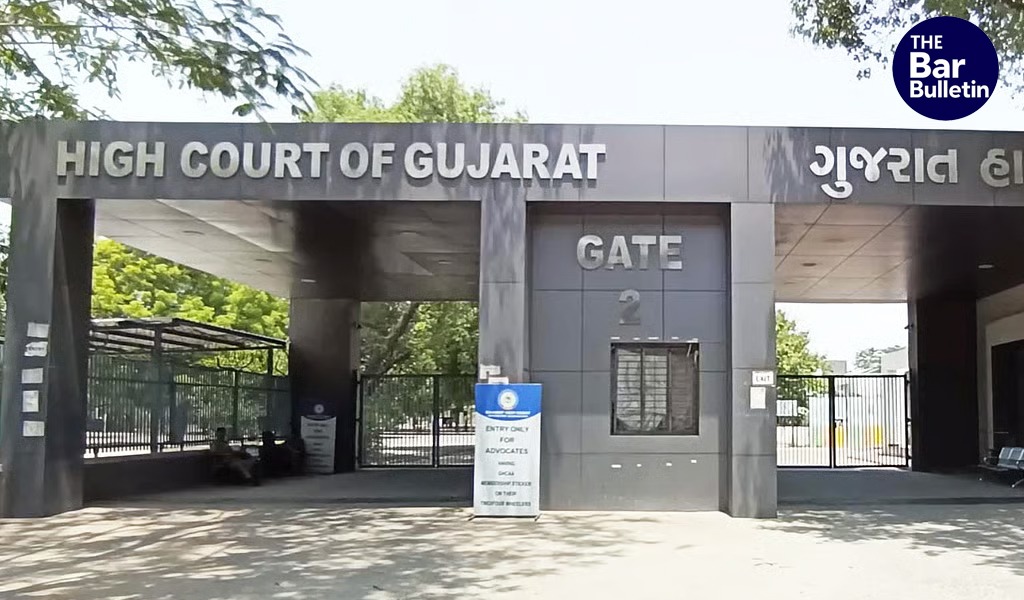

The Gujarat High Court(Ahmedabad Bench) has clarified that in absence of any specific statutory provision granting any opportunity of making representation or otherwise, there is no legal requirement to issue a show cause notice to a State Government servant prior to passing an order of punishment, provided the case is governed by the second proviso to Article 311(2)(a) of the Constitution of India.
The Court stated that the Disciplinary Authority is only required to reach the conclusion that the conduct of the government servant has led to his conviction on a criminal charge and warrants the imposition of a penalty, which must be done by the Disciplinary Authority ex parte and by itself, without hearing the concerned government servant due to the exclusionary effect of the second proviso to Article 311(2)(a) of the Constitution.
A Single Judge Bench of Justice Maulik J. Shelat observed that the petitioner’s service conditions, being a Police Personnel, were governed by the provisions of the Bombay Police Act, 1951. As per the proviso to Section 26 of the Bombay Police Act, 1951, in a case referred to in the second proviso to Article 311(2)(a) of the Constitution, there is no requirement to issue a show cause notice to the Police Personnel before imposing punishment.
The Bench observed that the phrase ‘this clause shall not apply’ in the second proviso to Article 311(2) is mandatory and in the nature of a Constitutional prohibitory injunction restraining the disciplinary authority from holding an inquiry or giving any kind of opportunity to the concerned government servant. The Disciplinary Authority must only consider whether the conduct which led to the conviction warrants the imposition of a penalty, and this has to be done ex parte and by itself, without hearing the concerned government servant.
Moving ahead, the Bench held that the delinquent has no right to an opportunity of making representation or of hearing on the penalty proposed to be imposed, and such an order passed without hearing would not be vitiated. The Bench further observed that respondent No.4 had correctly recorded in the impugned order that the petitioner was convicted in an ACB case and, considering such serious conduct, it was not desirable to continue him in service.
Essentially, the Bench reiterated that allowing a public servant convicted of corruption to continue holding public office would impair morale and erode public confidence.
Briefly, the petitioner was appointed as a Police Constable on April 30, 2001, and an FIR was registered against him on Aug 12, 2010 for offences punishable under Sections 7, 12 and 13(1)(b)(2) of the Prevention of Corruption Act, 1988. Resultantly, the petitioner was suspended vide order dated Sep 27, 2010 and reinstated vide order dated Feb 07, 2013. Upon conclusion of the trial, the Addl. Sessions Judge, convicted the petitioner for the said offences.
On appeal, the High Court suspended the sentence but did not stay the conviction. Consequently, respondent No.4 dismissed the petitioner from service. The petitioner unsuccessfully challenged the dismissal order before the Appellate and Revisional Authorities, and hence approached the High Court, pleading violation of natural justice as no prior show cause notice was served.
Appearances:
Advocate P.P. Majmudar, for the Petitioner
AGP Siddharth Rami, for the Respondents
