
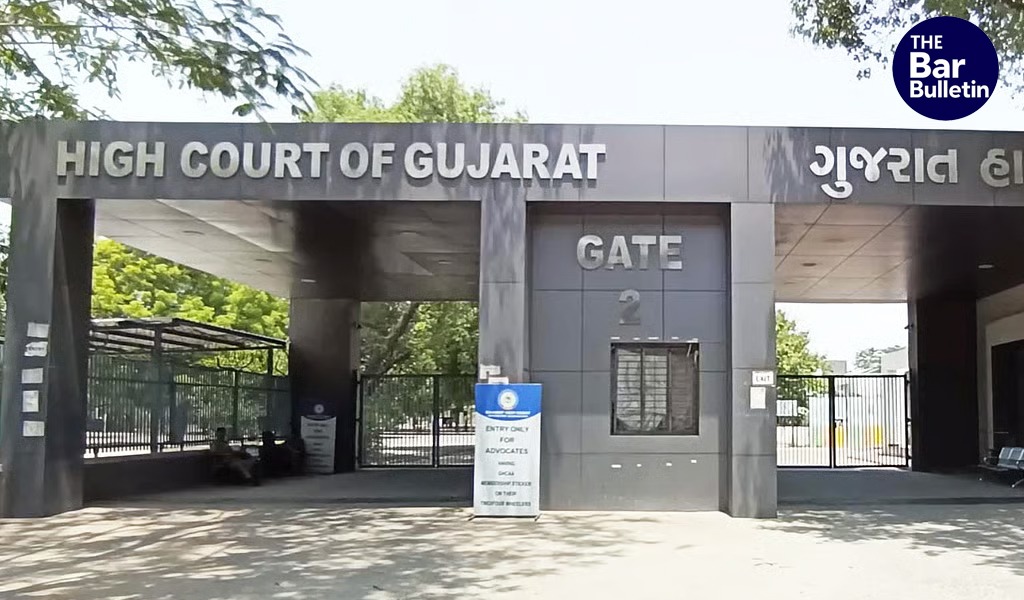

The Ahmedabad Bench of the Gujarat High Court has held that an officer of the State Government, namely the Deputy Conservator of Forests, who in his official capacity collects permit fees, entry fees, camera fees and related charges in the course of conservation and regulation of forest access, is discharging sovereign and statutory functions on behalf of the State and is not carrying on the business of a “Tour Operator” within the meaning of the Finance Act, 1994.
Consequently, such collections, being statutory/official charges credited to the consolidated fund of the State, cannot be subjected to service tax in the hands of that officer, and no substantial question of law arose against the Tribunal’s order setting aside the demand.
The Division Bench comprising Justice A.S. Supehia and Justice Pranav Trivedi recorded that the department had sought to treat the Deputy Conservator of Forests as falling within the definition of “Tour Operator” under Sections 65(105)(zzzzw) and 65(105)(n) of the Finance Act, 1994, as substituted by the Finance Act, 2008 with effect from 16.05.2008, on the footing that he was engaged in planning, scheduling or arranging tours by mode of transport. The Bench expressly observed that it failed to understand how an officer of the State Government could be roped into such proceedings and brought within the definition of “Tour Operator.”
The Bench noted that it was undisputed that the State Government protects and conserves forests within its geographical territory, and that the fees collected by the respondent in his official capacity on behalf of the Government of Gujarat were directly credited to the consolidated fund of the State.
The Bench observed that the respondent was discharging a sovereign function and not any private function, and therefore such activity could not be brought within the purview of service tax. It also noted that the amounts collected were in the nature of a compulsory levy and were credited to the consolidated fund of the Government of Gujarat.
Referring to Article 246(3) of the Constitution of India, the Bench stated that the State Legislature has exclusive power in respect of matters in the State List, and further observed that the Central Government could not levy tax on statutory charges collected by the State Government, particularly when the State was protecting and conserving forests within its territory. The Bench also noted that what was sought to be taxed was effectively the income of the State Government, which was not permitted by the Constitution or any statutory provision.
The Bench additionally observed that the activities of issuing permits for entry into forests, issuing tickets for access to Devaliya Park, and collecting camera fees did not fall within any category of taxable service when undertaken by the respondent in discharge of official duties. It held that the department had wrongly assumed jurisdiction in levying service tax and consequential penalty, and had wrongly impleaded the Deputy Conservator of Forest from the inception of the proceedings.
Briefly, the Commissioner CGST held that the Deputy Conservator of Forests fell within the category of “Tour Operator” under Section 65(n)(105) of the Finance Act, 1994, because visitors were charged entry fees, camera fees and other charges for visiting the forest at Sasan Gir. On that basis, the authority held that the respondent was engaged in planning, scheduling or organizing and arranging tours by vehicles, and had also failed to obtain service tax registration under the categories of “Accommodation in Hotel” and “Tour Operator,” thereby violating Section 69 of the Finance Act, 1994 read with Rule 4 of the Service Tax Rules, 1994. The adjudicating authority quantified service tax liability at Rs. 3.44 Crores recoverable under Section 73(2), together with interest under Section 75.
Appearances:
Ankit Shah, for Appellant
Raj Tanna, AGP for Opponent
