


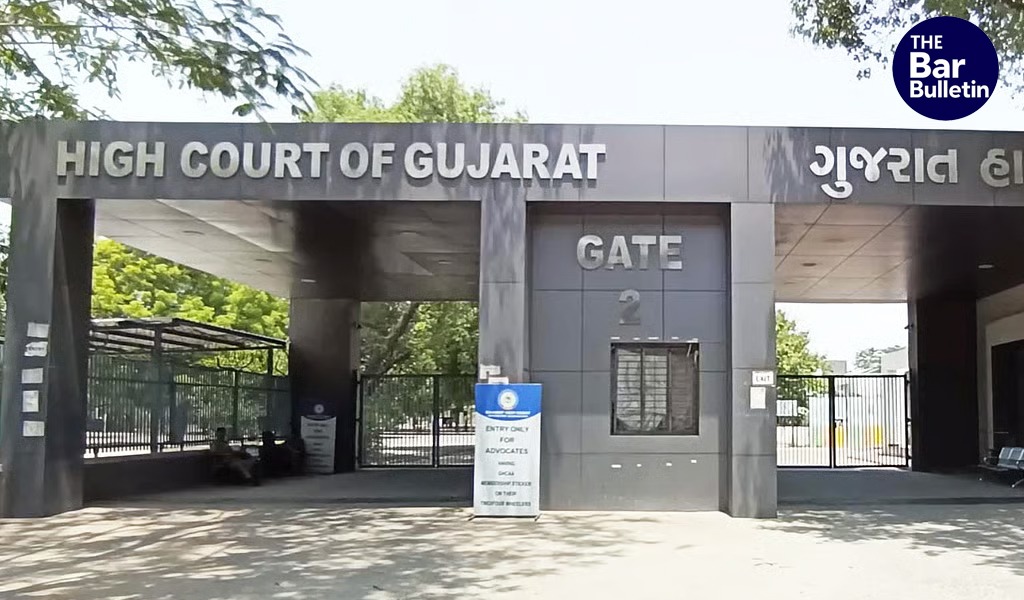

In an appeal filed before the Gujarat High Court under Section 378 of the Code of Criminal Procedure, 1973 (CrPC), against a judgment and order of acquittal dated 01-08-2012 by the Sessions Judge, Surendranagar, for offences punishable under Sections 498(A), 306, and 114 of the Indian Penal Code, 1860 (IPC), a Single Judge Bench of Justice Sanjeev J Thaker endorsed the findings of the Trial Court and affirmed the acquittal of the accused while dismissing the present appeal.
The complainant stated that he had solemnized the marriage of his deceased daughter with the accused husband three years prior to the incident. After the deceased daughter gave birth to a male child, the husband started harassing her mentally and physically, which became unbearable for the deceased, who ultimately jumped into a well and ended her life on 06-08-2011.
After analysing the evidence and hearing both parties, the Sessions Court acquitted the accused of the offences for which he had been charged, holding that the prosecution had failed to prove the case beyond a doubt.
The Court noted the statement of the deceased’s father, who had deposed that when they took sweets to their daughter’s matrimonial home after she had given birth to a child, a dispute arose, and the accused husband had assaulted the deceased’s mother with a stick. However, the Court also noted the statement of the deceased’s mother and found material contradictions between the statements.
Considering the entire case of the prosecution, the Court stated that none of the witnesses of the prosecution had stated the kind of mental and physical cruelty meted out by the accused on the deceased, and that the prosecution had been unable to prove that the accused persons were guilty. The Court stated that there were merely allegations of harassment without any positive action proximate to the time of occurrence on the part of the accused, which compelled the deceased to commit suicide.
Further, the Court said that words uttered in the heat of anger or emotion without intending the consequences to actually follow cannot be said to be instigation. Hence, the Court held that the Trial Court had rightly held that there was no positive evidence to prove that the accused, overtly or covertly, instigated the deceased in a manner that left no other option for her but to commit suicide.
As per the principle laid down by the Supreme Court in State of Karnataka v. Hemareddy, AIR 1981 SC 1417, the Court stated that in acquittal appeals, the appellate court is not required to give fresh reasoning when the reasons assigned by the lower court are just and proper. Thus, the Court found no infirmity in the impugned order, held that the accused was rightly acquitted, and dismissed the present appeal.
Appearances:
For Appellant – Ms. Megha Chitaliya (APP)
For Respondent – Mr. K.S. Chandrani
