
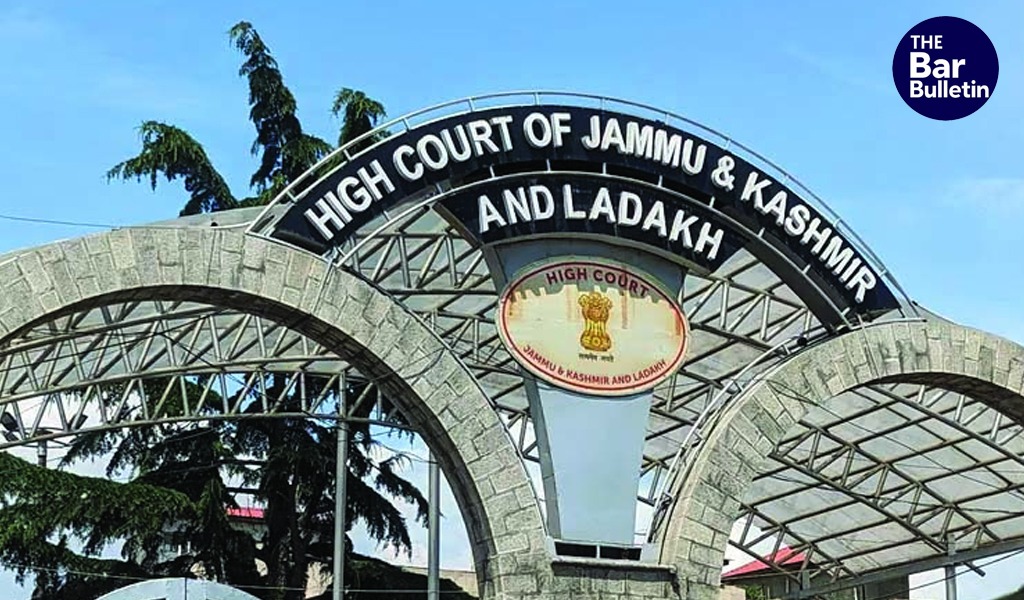

The Srinagar Bench of the High Court of Jammu & Kashmir & Ladakh has held that permission for medical termination of pregnancy beyond the statutory gestational limit cannot be granted by the High Court in exercise of writ jurisdiction where the duly constituted Medical Board has categorically opined that termination at the existing advanced stage of pregnancy would pose grave and substantial risks to the life, health and future reproductive capacity of the minor victim. In such a situation, the Court must give primacy to preservation of life and cannot override expert medical opinion on sympathetic considerations or solely because the pregnancy resulted from rape.
The Court also laid down that cases permitting termination at advanced gestational stages are fact-specific and depend materially on the medical opinion in the particular case; where the Medical Board finds the victim physically fit, termination may be permitted, but where the Medical Board warns of serious danger, the Court is justified in declining such relief. The Court may, however, simultaneously direct comprehensive medical, protective and rehabilitative measures for the victim and the prospective child under the applicable statutory framework.
A Single Judge Bench of Justice Wasim Sadiq Nargal observed that although the pregnancy was alleged to have arisen from sexual assault and the trauma, emotional distress and psychological agony of the victim were fully acknowledged, the paramount consideration while exercising jurisdiction under Article 226 had to be preservation and protection of the life of the pregnant minor herself. The Bench held that Article 21 encompasses not only reproductive autonomy but also the right to life and survival, and once a duly constituted Medical Board opines that termination at the present stage poses a serious and imminent threat to the life of the victim, such expert medical opinion cannot be brushed aside on sympathetic considerations.
The Bench further observed that it could not, in exercise of writ jurisdiction, disregard or sit in appeal over the expert opinion of the Medical Board, particularly in matters involving complex medical questions. It emphasized that courts are not expected to substitute their own views for those of specialists and super-specialists who are equipped to assess medical feasibility, safety and consequences.
The Bench also observed that there existed a consistent line of judicial precedents where courts declined termination when the Medical Board opined that such termination would pose serious threat to life or health. It therefore concluded that the prayer for termination could not be granted in the peculiar facts of the case, because the opinion of the Medical Board assumed immense significance and deserved due weight, especially when it recorded grave and substantial risks to the life and future reproductive health of the victim.
At the same time, the Bench observed that refusal of termination did not conclude the matter so far as the welfare, dignity, rehabilitation and future well-being of the minor victim and the prospective child were concerned. It referred to the Juvenile Justice (Care and Protection of Children) Act, 2015 and noted that a minor victim of sexual assault clearly falls within the category of a child in need of care and protection under Section 2(14).
The Bench also referred to the statutory framework relating to the Child Welfare Committee and adoption, including Section 38, and directed coordinated institutional support for the minor, including free medical treatment, pre-delivery and post-delivery care, counselling, confidentiality, security, and necessary steps concerning adoption and care of the newborn in consultation with the Specialized Adoption Agency and the Child Welfare Committee.
Briefly, the petition was filed on behalf of a minor girl, approximately 14 years of age, through her father, seeking permission for immediate medical termination of pregnancy on the ground that the pregnancy had resulted from sexual assault and rape. An FIR had been registered at Police Station D.H. Pora, and the accused had been taken into custody. At the time of filing, the pregnancy was assessed at about 25 weeks and 5 days, thereby exceeding the ordinary statutory limit under the Medical Termination of Pregnancy Act, 1971. The Child Welfare Committee declared the girl a child in need of care and protection and recommended urgent legal, medical and psychological intervention. The medical authorities, however, informed that termination could not be undertaken without permission of the competent court because the gestational period had crossed the statutory limit.
The petitioner contended that continuation of the pregnancy would cause grave injury to the physical and mental health of the minor and would violate her right to life, dignity and bodily integrity under Article 21 of the Constitution. It was also submitted that the parents had consented to termination and that denial of such relief would compel the minor to undergo childbirth and motherhood at an age where she was incapable of bearing such responsibility.
Then by order dated May 06, 2026, the High Court directed that the minor be examined by a duly constituted Medical Board to assess her physical and mental well-being and to opine whether termination at that stage could be safely carried out without risk to her life. The Court also directed protection of the identity, privacy and confidentiality of the minor. Thereafter, on the basis of the Medical Board’s observations regarding discrepancy in age assessment, further radiological and dental assessment was directed. The subsequent medical material showed that the victim was more than 17 years and less than 18 years according to one report, and approximately 16 years according to the dental examination, and the Court proceeded on the basis that she was a minor.
The central issue before the Court was whether medical termination could be permitted when the Medical Board had categorically opined that termination at the advanced stage of approximately 27 weeks carried extremely high risk of medical complications and posed a serious threat to the life and health of the minor.
Appearances:
Asifa Rashid, Advocate, for Appellant
Faheem Nisar Shah, GA and Waseem Gul, GA, for Respondent
