
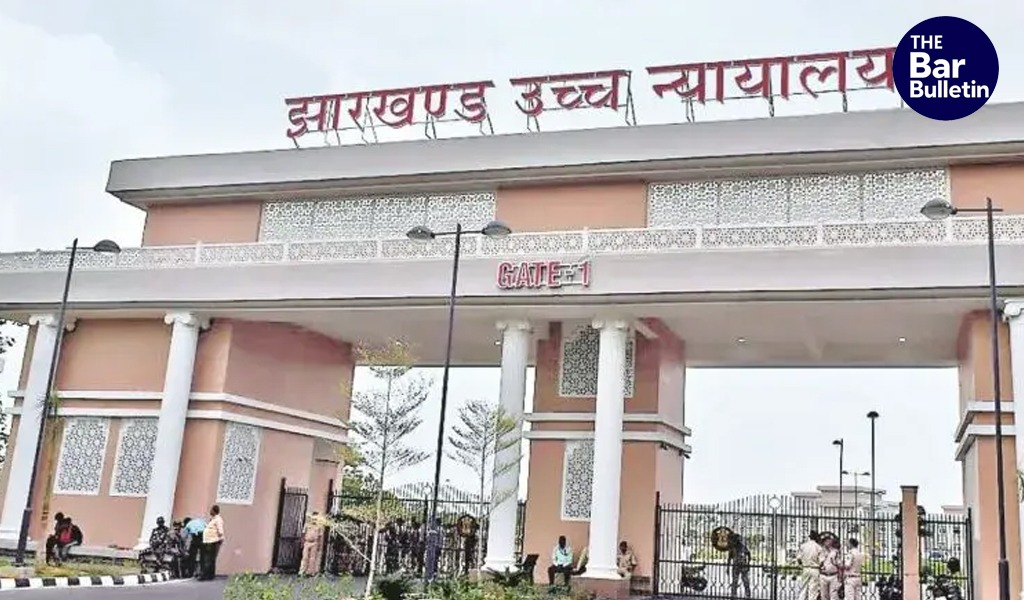

The Jharkhand High Court came down heavily on the State Government over what it described as a “systemic” failure to comply with the statutory mandate requiring judicial inquiries into custodial deaths, ordering fresh probes in 262 such cases where only Executive Magistrate inquiries had been conducted.
A Division Bench of Chief Justice M.S. Sonak and Justice Rajesh Shankar was dealing with a public interest litigation alleging large-scale non-compliance with Section 176(1-A) of the Code of Criminal Procedure, now mirrored in Section 196(2) of the Bharatiya Nagarik Suraksha Sanhita, which mandates that cases involving custodial death, disappearance, or custodial rape must be inquired into by a Judicial Magistrate.
The petition was filed on the basis of official disclosures indicating a high number of custodial deaths in Jharkhand and alleging that authorities had routinely deputed Executive Magistrates to conduct inquiries despite the clear statutory framework.
During the proceedings, the State placed data before the Court showing that 427 custodial deaths had been reported since 2018. Of these, while the State claimed magisterial inquiries had been conducted in all cases, its own figures revealed that 262 inquiries were carried out by Executive Magistrates and 225 by Judicial Magistrates, prompting the Court to question both the legality and accuracy of the State’s records.
Calling the figures “deeply distressing” and “shocking beyond words,” the Bench said the State appeared to have either fundamentally misunderstood or deliberately disregarded the law. The Court observed that Parliament had removed the Executive’s role in such inquiries nearly two decades ago specifically to ensure independence in investigations involving deaths in State custody.
“Enquiries by Executive Magistrates could never have been regarded as substitutes for enquiries by Judicial Magistrates in matters of custodial deaths,” the Court held.
The Bench noted that the right to life under Article 21 extends equally to persons in custody, observing that a custodial death represents a grave constitutional failure. It said permitting the Executive to effectively investigate itself would amount to allowing the State to be ‘a judge in its own cause’, defeating the very purpose of the statutory safeguard.
The Court also took serious exception to the State’s initial stand that the PIL was frivolous, saying such a position was insensitive in light of the scale of custodial deaths and admitted procedural breaches.
Finding the violations to be systemic rather than isolated lapses, the Court ordered the State Government and district judicial authorities to identify all cases since 2018 where mandatory judicial inquiries were not held and initiate de novo judicial inquiries in each such matter. Judicial Magistrates are to be nominated district-wise, with inquiries to be completed, as far as practicable, within six months.
The Bench further directed the Chief Secretary and Principal Secretary of the Home Department to issue a circular within 30 days making it clear that jurisdiction in custodial death inquiries vests exclusively with Judicial Magistrates, warning that future deviations would be treated as wilful statutory violations.
In addition, the Jharkhand Judicial Academy has been asked to prepare a standard operating procedure and model format for such inquiry reports, incorporating NHRC guidelines and relevant judicial precedents, to ensure uniformity and sensitivity in future investigations.
Recognising the issue of compensation, the Court also directed that wherever inquiry reports disclose custodial violence, negligence, or unnatural death, the matter should be placed suo motu before District Victim Compensation Committees for consideration of relief to the families of victims.
The Court said the matter involved not merely procedural non-compliance but a serious constitutional lapse striking at the rule of law.
Appearances:
For the Petitioner: Md. Shadab Ansari, AdvocateFor the Respondents: Mr Gaurav Raj, A.C. to A.A.G.-II
