



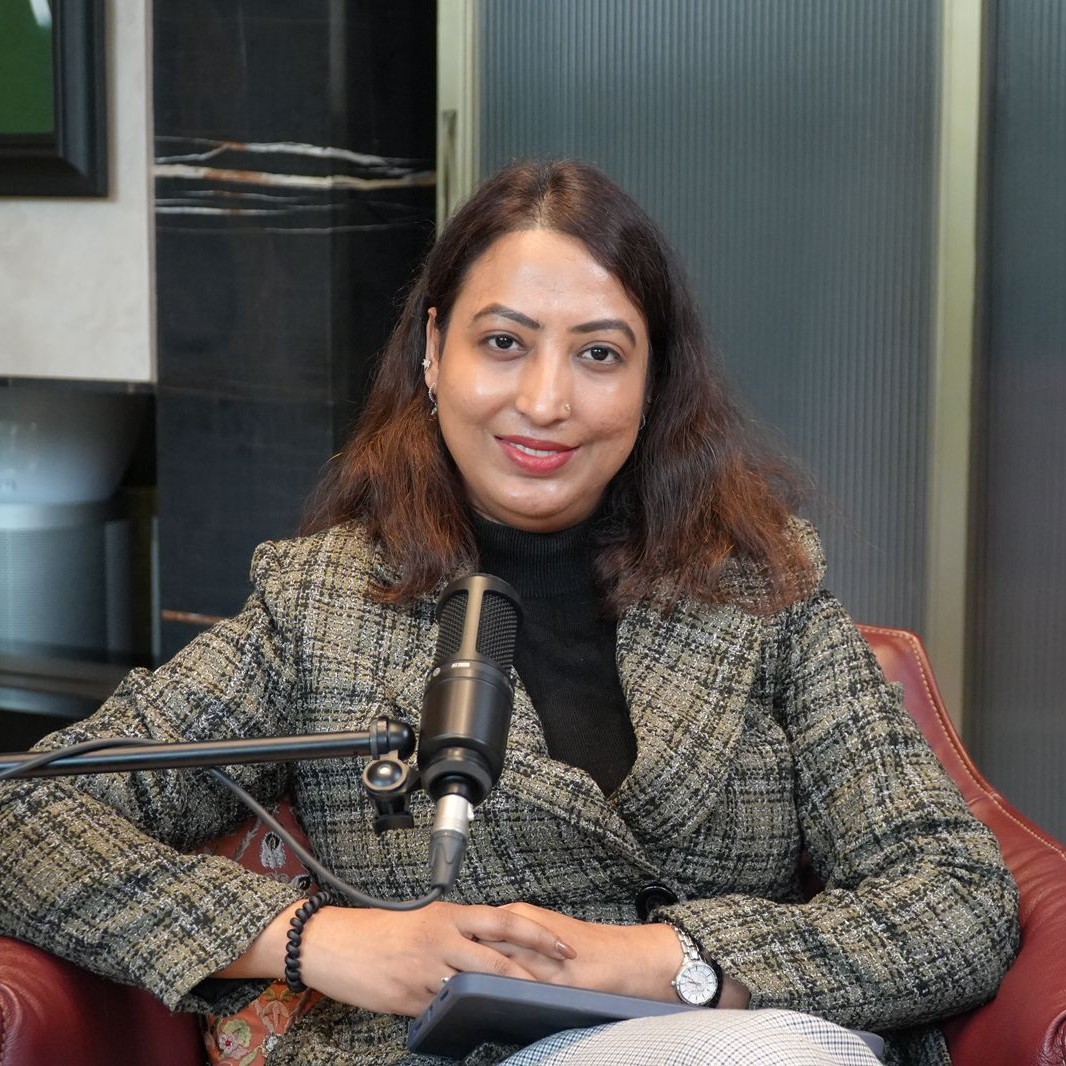
The Supreme Court Lawyers Welfare Trust (SCLWT) has announced the 2026 edition of the J.S. Verma Fellowship, selecting Archita Nigam, Surabhi Vaya, and Mallika Agarwal as this year’s fellows after a highly competitive selection process.
1. Congratulations on being selected for the J.S. Verma Fellowship, what does this recognition mean to you personally and professionally?
Archita Nigam: Thank you! I want to begin by expressing my sincere gratitude to all the Trustees of the Supreme Court Lawyers Welfare Trust. I would also like to thank Ms. Shubhra Verma, daughter of Late Justice J.S. Verma, for her continued involvement in keeping her father’s legacy alive. At the same time, I would like to give a heartfelt thank you to both my bosses, Senior Advocate Abhinav Mukerji and Advocate Bihu Sharma, who have been the most nurturing mentors I could have found in this field across my 5-year journey. I would also like to thank The Bar Bulletin for this interview and for creating a platform that celebrates and amplifies the work of young lawyers.
Professionally, this Fellowship is deeply encouraging. Doubt is something every young litigator experiences at some point, whether you can keep going, whether the path is leading somewhere. One often finds oneself getting impatient because the returns in Litigation are slow. For me, the JSV Fellowship is a checkpoint that reinforces the belief that litigation does recognise the effort one puts in every day. What makes it especially meaningful is the selection process itself. The Statement of Purpose (SOP), a legal essay on a matter I had actually worked/argued before the Supreme Court, and the interview with the Trustees together do not merely recognise the few weeks of preparation while applying, but the last 5 years of consistent work that precede it. At its heart, the JSV Fellowship is an encouragement for all the days one simply kept showing up.
On a personal level, the Fellowship meant a great deal to the people I love. My parents, my brother, both my bosses, and my closest friends. I could see that they were genuinely proud. And honestly, that meant just as much to me as the Fellowship itself.
Mallika Agarwal: Justice J.S. Verma Fellowship is a prestigious recognition and given how competitive is the legal profession, the fellowship certainly makes your career trajectory more evident, which is much needed as a young lawyer. Personally, I feel that getting the opportunity to become part of this cohort with such eminent lawyers is in itself a motivation to work hard and do well in profession and professionally, the fellowship offers the much-needed support to execute that intent.
Surabhi Vaya: I am honoured to have received the fellowship. In a profession with a long gestation period, every bit of feedback and encouragement goes a long way toward keeping you going. I am grateful to the trustees for reposing their trust in us, and I hope to use this opportunity to shape my litigation career more thoughtfully.
2. Justice J.S. Verma’s legacy is closely tied to constitutional values and gender justice, how do you see your work aligning with his vision?
Archita Nigam: Justice J.S. Verma’s legacy, to me, represents what the law can look like when it genuinely listens. The Justice Verma Committee Report was remarkable not just for its recommendations, but for the process behind it. It actively sought inputs from women’s rights groups, feminist scholars, legal professionals and civil society, and that consultation was reflected in the progressive nature of its findings. It recognised that legal reform on gender justice cannot happen in isolation from the voices of those most affected by its absence. That, I think, connects deeply to the Indian Constitution as well. The Constitution is often described as a living document, and it has largely stood the test of time precisely because it is capacious enough to evolve. It is a document that affords rights and dignity to all persons, regardless of gender, and it provides the framework within which advocates and courts can push for a more just and equal society.
My own work has, in many ways, been oriented towards that same vision. A significant part of my practice has involved matters relating to domestic violence and sexual offences, and engaging with these cases has reinforced for me that the law, when applied with sensitivity and conviction, can be a genuine instrument of protection and accountability. I see my work as a small contribution to the larger project that Justice Verma’s legacy represents one where constitutional values are not merely aspirational, but are made real in the lives of those who need the law the most.
Mallika Agarwal: This is a tough question to answer right now as I think I am still at a stage where I see life is long and my vision is not yet crystallized for that long journey, However, I can say that Justice JS Verma’s legacy is not just about the landmark judgements he delivered but his approach of deep commitment to the constitutional values, guided by a strong moral compass. In my own journey so far, I’ve been fortunate to learn this through the people I worked with- as law researcher to Justice Rajiv Shakdher in Delhi High Court (as he then was), who taught me to not just be legally sound but to attempt to be morally right backed by constitutional rationale to support the view and as junior to Ms Liz Mathew, Senior Advocate in Supreme Court of India, who consistently emphasized on the ethical way of doing things – even if that path is more demanding.
So while I may not define my work in very grand terms yet, I do see my alignment with Justice Verma’s vision in trying to approach the law with integrity, with sensitivity to rights, and with a commitment to doing things the right way.
Surabhi Vaya: I spent some time in my first year as a litigator working on some domestic violence cases. I still see the push-back against laws, which are meant to help those who need it the most women, people from the transgender and queer community and others. I was very lucky to start out in a chamber where my seniors and colleagues engaged with the judicial system with intellectual and emotional rigour while treating people with great sensitivity. I hope to carry this with me as I move forward.
We are facing a difficult time with questions relating to gender justice – the gains of the last few decades, which were a result of the court system interacting with other stakeholders like activists, thinkers, and frontline workers, are being rapidly undone. I hope that my work as a litigator will be informed not just by what this institution has to offer, but also by the larger world and times we live in, and by those outside the institution.
3. What motivated you to apply for this fellowship, and what distinguished aspect of your application do you think resonated with the selection panel?
Archita Nigam: I first came across the JSV Fellowship a few years ago through Bar & Bench and Live Law. However, it was only this year that I seriously pursued it, largely motivated by my friend Sreekar Aechuri, who won the fellowship last year and encouraged me to apply.
As for what resonated with the selection panel, I honestly cannot say with certainty, but I hope it was my Statement of Purpose (SOP). I tried to be genuine in explaining why this Fellowship would be meaningful to me at this particular stage of my career, and I hope the reasons I articulated came across as sincere.
Mallika Agarwal: What motivated me to apply for the Justice J.S. Verma Fellowship was a combination of my personal journey and a very clear professional need at this stage of my career.
There is an old saying “padhne wala kahin bhi padh leta hai”. Frankly, I don’t fully agree with it as good legal work is not just about intent. Let me tell you one incident. During my LL.B. at Campus Law Centre, Delhi University, I was selected to represent my college in an international arbitration moot. Arbitration law is a constantly evolving field of law, and the library in Delhi University school wasn’t really updated. So to support our preparation, our principal on request got us access for one day to NLUD library. The library collection at NLUD was truly astounding, and with access to resources such as HeinOnline, Kluwer subscriptions, and the latest commentaries on the subject, it completely changed the quality of our work. The arguments in our moot were significantly refined, structure and research backed. It was that day when I realized that desire to accomplish or contribute to law is inevitably linked to access to institutional and academic resources. This understanding has remained central to my professional journey.
I applied for this fellowship as it provides the much needed financial support, especially for administrative aspects of practice, and access to quality research tools to build your practice.
As for what may have resonated with the selection panel, I believe it was the clarity and authenticity of my journey.
Surabhi Vaya: I suspect I am the absolute wrong person to answer what distinguished my application. My primary motivation for applying was the opportunity and the resources to develop my practice at the Supreme Court. I am particularly interested in criminal appeals across subject areas and the intersection of criminal and constitutional law. I plan to use the fellowship to draft and assist with more such matters at the Supreme Court.
4. What is one pressing legal issue today that you believe requires urgent reform?
Archita Nigam: I believe the recognition and criminalisation of marital rape is an issue that requires urgent reform. The fact that even after a comprehensive overhaul of the criminal codes, marital rape continues to remain outside the ambit of criminal law is deeply disappointing. The Justice Verma Committee Report had categorically recommended the removal of the marital rape exception. The Report rightly noted that marriage cannot be construed as an irreversible consent to sexual acts, and that the relationship between the survivor and the perpetrator ought to be irrelevant to the determination of the offence. Despite this, Section 63 of the Bharatiya Nyaya Sanhita, 2023, which deals with the offence of rape, retains the marital rape exception. It is a near verbatim reproduction of the exception under Section 375 of the Indian Penal Code and represents a missed legislative opportunity. Rather than reflecting constitutional values of dignity and equality, the exception perpetuates a colonial-era notion that a wife is the property of her husband and that marriage operates as a blanket consent to sexual intercourse. It is also worth noting that the constitutional validity of this exception is currently pending before the Supreme Court of India, which itself signals the urgency of the issue. I am firmly of the view that this exception must be removed, and marital rape must be recognised and prosecuted as the crime that it is.
Mallika Agarwal: Since this fellowship is centered around access, I believe that one pressing issue that requires urgent attention is that as Courts are moving towards digitization and e-filing, there is a large segment of lawyers, with many of them highly skilled, who feel constrained by the shift because of limited digital access, or familiarity with the system. Hence, the much-needed reform is to make it inclusive by having fully functional e-sewa kendras in each Court that actively assist lawyers and litigants with filing, accessing records, and navigating digital systems.
Surabhi Vaya: Bail jurisprudence. We have arrived at a point where the delay in commencing/completing a trial or appeal and other such procedural considerations outweigh deciding a bail on merits. Ultimately, while delay is an extremely important reason, it is also an institutional crisis that the litigant ought not to be forced to account for, and it has become a substitute for all other reasons. Similarly, in many white-collar crime cases, as litigation mushrooms, denial of bail and other interim measures, such as the attachment of property, have become ends in themselves, without seriously considering the merits of the case. We must find a way to minimise the impact of these procedural delays on people’s lives and prevent them from shaping jurisprudence in a singular way.
5. As emerging voices in the legal field, what message would you like to share with young law students aspiring to create meaningful impact through law?
Archita Nigam: My first piece of advice would be around conviction. If you believe in something, stick with it. You may be questioned, it might be by lawyers who are more senior to you or your own peers. Listen to them objectively, because there is a fine balance to maintain: you don’t want to be arrogant and dismissive, but you also shouldn’t abandon an opinion you have built through your own reading and research. Young lawyers are particularly susceptible to being influenced, and that is not always a bad thing. Experienced people have brilliant perspectives to offer. But learn to discern objectively. Take what is genuinely worth taking, and hold your ground where it matters. Just because someone is senior or more experienced does not automatically mean they have your best interests at heart. Further, it is also sometimes difficult to voice disagreement, especially early in your career, but it is important to act when something doesn’t sit right with you.
The second thing I would say is to cultivate patience. Litigation, in particular, tests you in this regard. Unlike a law firm environment where things move quickly, salaries grow, and promotions happen, litigation is slow. The returns are not immediate. Everything comes down to showing up consistently and trusting the process. That is something I am still learning myself.
Mallika Agarwal: I think what is defined as “meaningful impact” is a subjective matter. Even a good draft can feel like a meaningful impact as it crystallizes the issue at hand, prevents lengthy arguments and saves limited judicial time. Likewise, it can be said by going well-prepared for a matter with all relevant instructions from client makes a real difference.
So, I would advise law students that a consistent and diligent approach to law is the road to create meaningful impact, and hopefully the little steps will add up and unconsciously bring the larger impact too.
Surabhi Vaya: Don’t be afraid of taking intellectual risks. Don’t shy away from recommending an idea or a brief just because you might be wrong or it might get turned down. It’s good to take your work seriously, but don’t take yourself too seriously. Being turned down or told you made a mistake says nothing about who you are as a person. So don’t take it personally. It’s okay to worry. It’s okay to be nervous. But don’t run away from a challenge. Ask for feedback, rework your approach and take another run at it. The process of creatively thinking through a problem is the best part of litigation. When you get it right, the thrill is unparalleled – a reward worth chasing.
I have been incredibly lucky to find a fantastic mentor in Mr. Shri Singh, who has consistently pushed me to think about my work and the law in thoughtful ways. He has often taken the time to help me make sense of the issues facing us and continues to share his insights. So find a kind mentor who will give you the space to take intellectual risks and build on your learning.
Also, find things you like to do outside the profession, including keeping your non-lawyer friends close. It’s a big world, and it’s easy to forget that sometimes. So keep finding creative ways to be in it.