


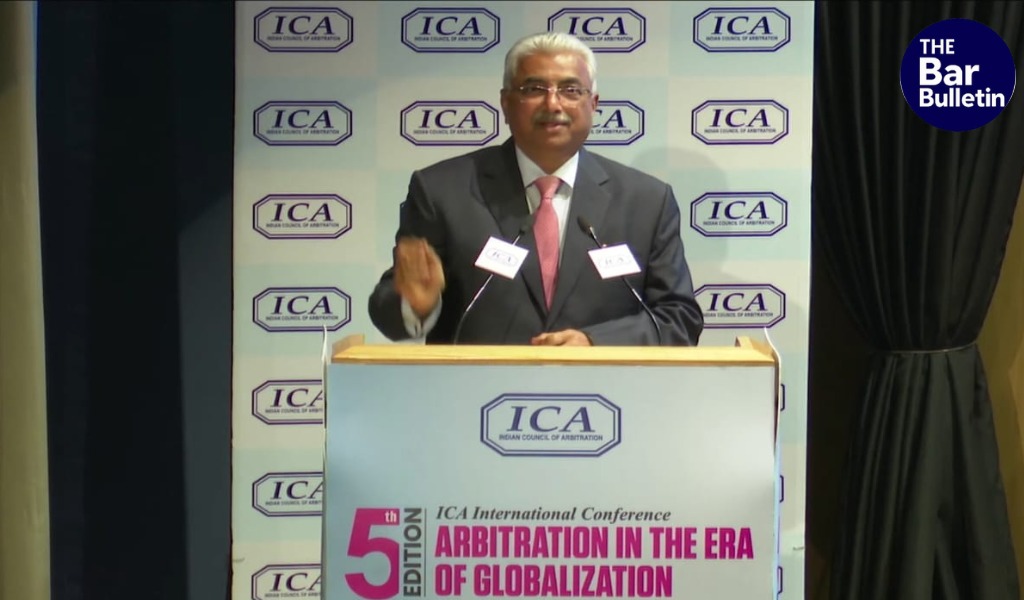

At the 5th ICA International Conference on “Arbitration in the Era of Globalisation,” Justice Aravind Kumar delivered a keynote address during Technical Session 4, addressing the theme: “Policing Arbitration: Do Anti-Arbitration Injunctions Help or Hurt India’s Global Standing?”
Speaking as Chair and Keynote Speaker, Justice Kumar emphasized that while arbitration has become a cornerstone of cross-border dispute resolution, its legitimacy depends on maintaining a careful balance between party autonomy and accountability.
Focusing on the delicate balance between judicial restraint and necessary intervention, Justice Kumar underscored that arbitral autonomy cannot be absolute. He stressed that autonomy without accountability risks misuse, and therefore must be tempered by limited but principled judicial oversight.
He identified three key grounds where courts are justified in intervening:
• Jurisdictional legitimacy
• Procedural irregularities
• Abuse of process
Outside of these exceptions, courts must exercise restraint, in line with the statutory mandate that judicial authorities should not intervene unless expressly provided under arbitration law.
On the contentious issue of anti-arbitration injunctions, Justice Kumar observed that while such measures may appear to hinder arbitration, they serve a vital function when the arbitration agreement itself is fundamentally flawed. “Arbitration cannot escape scrutiny where its very foundation is infirm,” he noted, reinforcing that autonomy cannot be absolute without accountability.
He shared a light-hearted anecdote about attending proceedings shortly after his marriage and gave a broader message to youngsters on dedication to the profession.
Addressing young members of the Bar, Justice Kumar urged sincerity, discipline, and respect for seniors. He reminded them that today’s juniors are tomorrow’s leaders, shaping the future of arbitration and legal practice in India.