


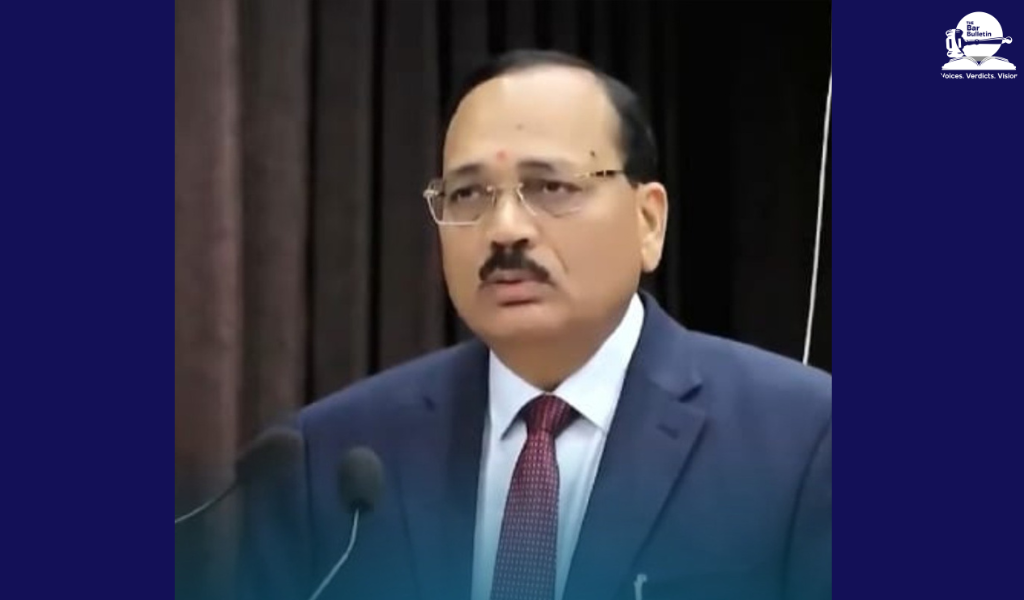

Justice Surya Kant of the Supreme Court of India delivered an illuminating address titled “The Living Constitution: How the Indian Judiciary Shapes and Safeguards Constitutionalism” at the Supreme Court of Sri Lanka, emphasising the judiciary’s central role in upholding human rights and the enduring success of India’s Legal Services Authorities in making justice accessible to all.
Addressing an esteemed gathering that included Hon’ble Chief Justice P. Padman Surasena, Justice Arjuna Obeyesekere, Attorney General Parinda Ranasinghe, Registrar Manodhi Hewawasam, and members of the Sri Lankan judiciary, Justice Surya Kant reflected on the deep constitutional and moral foundations of human rights, tracing their genesis from India’s freedom struggle and their crystallisation in the Fundamental Rights enshrined in the Constitution.
He observed that the Indian judiciary has served as the “living conscience of the Constitution”, ensuring that the promise of justice, liberty, and equality translates into tangible human dignity. Through a series of landmark decisions from Maneka Gandhi to K.S. Puttuswamy, the courts have expanded the scope of rights to include privacy, education, environment, livelihood, and dignity, thereby transforming the document into a living instrument of social justice.
Justice Surya Kant spoke about the transformative work of the Legal Services Authorities national, state, and district-level bodies established under the Legal Services Authorities Act, 1987 which he described as “the institutional soul of India’s constitutional compassion.” He noted that through free legal aid, para-legal volunteers, and Lok Adalats, these bodies have ensured that even the most marginalised citizens enjoy meaningful access to justice and protection of their fundamental rights.
Drawing from his judicial experiences, Justice Surya Kant highlighted cases involving human rights violations, victims’ rights, and the need to “give voice to the voiceless victims” within the justice system. He emphasised that human rights protection must not remain confined to paper guarantees but must be operationalised through responsive and empathetic judicial action.
Concluding his address, Justice Surya Kant affirmed that “a Constitution is not a parchment of paper, it is a way of life,” calling upon the judiciary, the Bar, and citizens alike to act as vigilant companions in safeguarding constitutional values. He also commended the Sri Lankan judiciary for its steadfast commitment to human rights and the rule of law, expressing hope for deeper Indo–Sri Lankan judicial collaboration in promoting constitutional justice.