


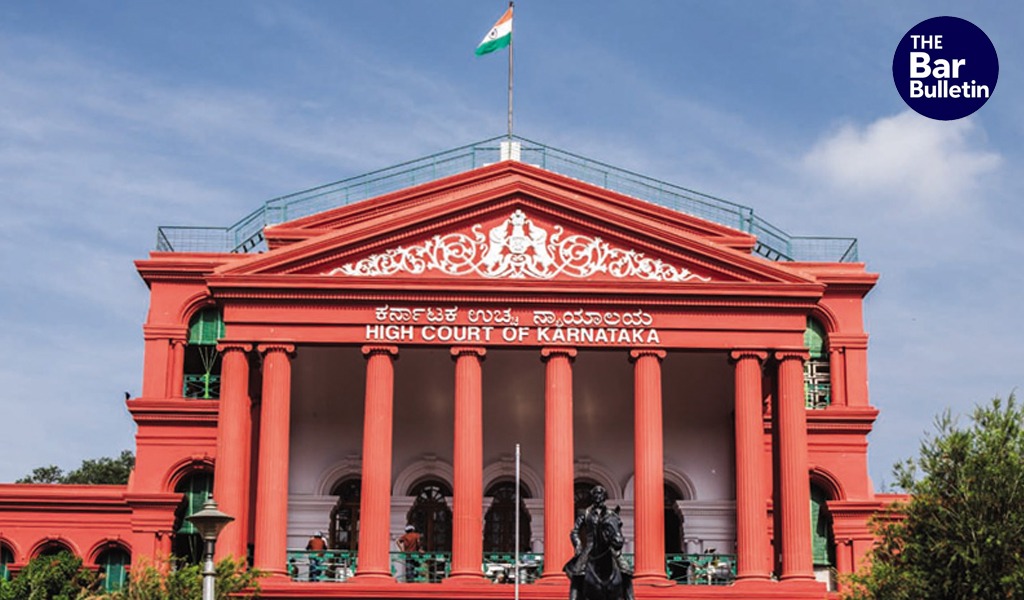

The Karnataka High Court (Dharwad Bench) has clarified that an award would become executable if it is passed on a joint memo, only when the parties have signed the joint memo. A wrong concession, statement, admission, compromise, and settlement made by a counsel without obtaining instructions or authority from the clients will not bind the clients, as an advocate cannot throw away legal rights or enter into arrangements contrary to law.
Consequently, the Court ruled that an award passed by the Lok Adalat based on a joint memo that does not bear the signatures of the claimants is liable to be set aside and the appeal restored to its file to be heard on its merits.
A Single Judge Bench comprising Justice M. Nagaprasanna observed the judgment of the Apex Court in State of Punjab v. Jalour Singh, which held that where an award is made by the Lok Adalat in terms of a settlement arrived at between the parties (which is duly signed by parties and annexed to the award of the Lok Adalat), it becomes final and binding on the parties to the settlement and becomes executable as if it is a decree of a civil court. The Bench also referred to Bhargavi Constructions v. Kothakapu Muthyam Reddy, to reiterate that an award would become executable if it is passed on a joint memo, only when the parties have signed the joint memo.
The Bench further examined the decision of the High Court of Kerala in Sunanda v. Sundaran, which analysed Regulation 17 of the National Legal Services Authority (Lok Adalats) Regulations, 2009. The regulation mandates that when both parties sign or affix their thumb impression and the members of the Lok Adalat countersign it, it becomes an award, and wherever the parties are represented by counsel, they should also be required to sign the settlement or award before the members of the Lok Adalat affix their signature.
Further, reference was made to the Apex Court’s ruling in Kirti v. Oriental Insurance Company Limited, which holds that a concession made by a counsel would not bind the parties, as the Advocate cannot throw away legal rights of the clients or enter into arrangements contrary to the interest of the clients. Following this, the High Court of Kerala in K.R. Jayaprakash v. State of Kerala held that a wrong concession, statement, admission, compromise, and settlement made without obtaining instructions/authority from the clients will not bind the clients.
Thus, the Bench concluded that it is clear from the joint memo that the claimants have not affixed their signatures, and only the Advocates of both sides and the representative of the Insurance Company have affixed their signatures.
Briefly, the petitioners, mother and son respectively, were going as pillion riders in the motorcycle of the deceased, who is the husband and father of petitioner Nos.1 and 2, respectively, to ESI Hospital for treatment of the 2nd petitioner for an ailment. On the way, in a road traffic accident involving a car and the motorcycle, the husband of the 1st petitioner died. A claim petition was filed seeking compensation from the Insurance Company, and the Tribunal, in terms of its order, awarded a compensation of Rs. 9.18 lakhs with interest at 6% per annum from the date of petition till the date the amount is made good to the hands of the claimants.
The Insurance Company challenged the said award before the High Court. During the subsistence of the appeal, the matter was referred to the Lok Adalat, and on the settlement arrived at between the parties before the Lok Adalat, the award amount was reduced to Rs. 7.82 lakhs as full and final settlement, which was in reduction of the compensation awarded by the Tribunal.
The petitioners challenged the said award of the Lok Adalat on the score that they were not even aware that their learned counsel had agreed for a settlement to reduce the award amount before the Lok Adalat and that they had not signed the joint memo filed thereto. The joint memo admittedly did not bear the signature of the claimants, as the signature portion of the claimants was left blank, and it was signed only by the representative of the Insurance Company, Advocate for the Insurance Company, and Advocate for the claimants.
Appearances:
Advocate Shiriya S. Katagimath, for the Petitioner
Advocates S.K. Kayakamath and Mahesh Wodeyar, for the Respondent
