


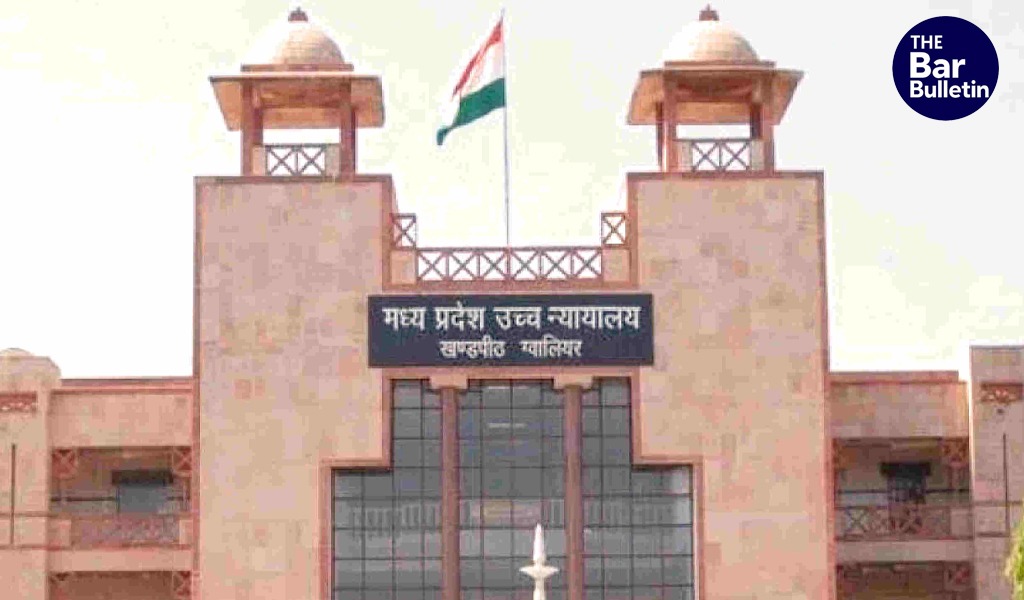

The Madhya Pradesh High Court, Jabalpur Bench, has partly allowed a criminal appeal filed by a man convicted in a rape case, setting aside his conviction under Section 3(2)(v) of the Scheduled Castes and Scheduled Tribes (Prevention of Atrocities) Act, while maintaining his conviction under IPC and POCSO provisions. The Bench of Justice Vivek Agarwal and Justice Avanindra Kumar Singh has held that:
“In the present case, we find that no such evidence being adduced to show that offence was committed against the victim only because she belongs to Scheduled Tribes community.”
The appellant had been convicted by the trial court for multiple offences, including rape and criminal intimidation, along with offences under the SC/ST Act. Before the High Court, the challenge was limited to the applicability of Sections 3(2)(v) and 3(1)(12) of the Act.
The prosecution’s case was that the accused, a neighbour, had sexually assaulted the minor victim and threatened her. The question before the court was whether the enhanced punishment under the SC/ST Act could be sustained.
Referring to Patan Jamal Vali vs. The State of Andhra Pradesh, AIR 2021 SC 2190 and Khuman Singh v. State of Madhya Pradesh, SLP (Crl)No.6647 of 2018 the bench noted the Supreme Court’s findings that for offences committed prior to the 2016 amendment, it must be proved that the offence was committed “on the ground that such person is a member of SC/ST”, and not merely that the accused knew the victim’s caste.
Noting that this requirement was not satisfied in the present case, the Court held that the conviction under Section 3(2)(v) of the SC/ST Act could not be sustained. It accordingly set aside the conviction under the said provision and allowed the appeal to that extent.
Appearance:
Shri Shivam Chhalotre – Advocate for the appellant.
Shri Ajay Tamrakar – Government Advocate for the respondent/State.
