
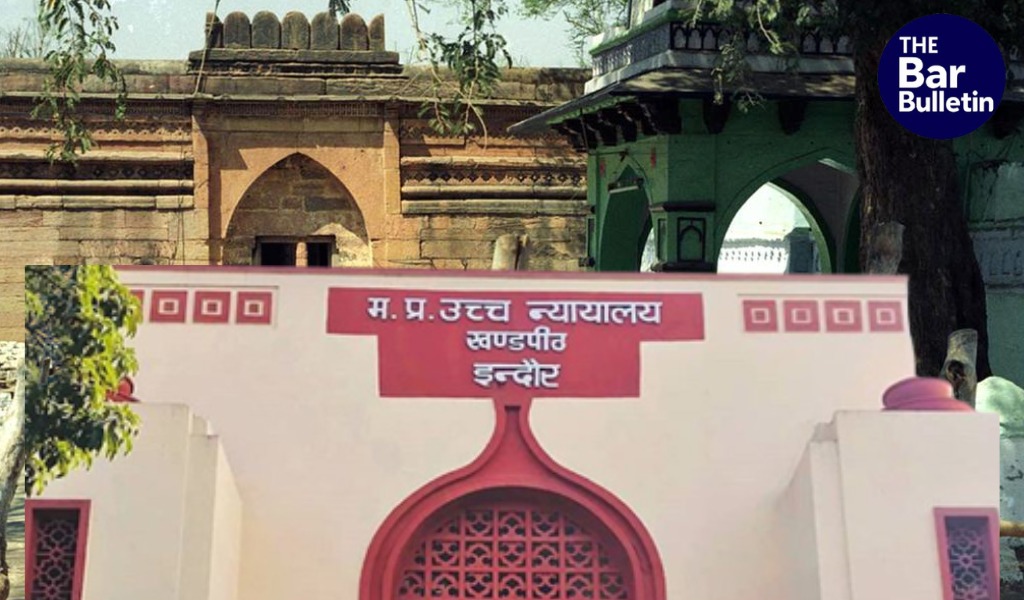

The Indore Bench of Madhya Pradesh High Court on Friday held that the religious character of the disputed Bhojshala complex in Dhar is that of a temple dedicated to Goddess Vagdevi Saraswati. The Court also struck down portions of the 2003 ASI arrangement that restricted Hindu worship and permitted Friday prayers by the Muslim community at the site.
Pronouncing the operative portion of the verdict, the division bench of Justice Vijay Kumar Shukla and Justice Alok Awasthi had examined archaeological historical facts, ASI notifications, and survey report in light of the Ancient Monuments and Archaeological Sites and Remains Act, 1958 and the principles laid down in the Ayodhya judgment. Emphasising the evidentiary value of archaeology, the bench observed:
“Archaeology is a science that draws on multidisciplinary or transdisciplinary approaches. Therefore, the court can safely rely on the conclusions derived on the basis of such multidisciplinary scientific studies by the ASI.”
The Court held that historical and archaeological material established Bhojshala’s identity as a centre of Sanskrit learning associated with Raja Bhoja and the Parmar dynasty. The bench recorded the literature and architectural reference, including those connected with the period of Raja Bhoja, indicating the existence of a temple dedicated to the goddess Saraswati at Dhar.
Referring to continuity of worship, the Court further observed:
“We have noted the continuity of Hindu worship at the site through regulated overtime here has never been extinguished.”
Allowing petitions filed by the Hindu Front for Justice and others, the High Court declared that the disputed Bhojshala-Kamal Maula complex is a protected monument under the 1958 Act and held:
“The religious character of the disputed area of the Bhojshala complex and Kamal Maula Mosque is held to be Bhojshala with the temple of goddess Vagdevi Saraswati.”
The Court set aside paragraph 3 of the ASI’s April 7, 2003 order insofar as it restricted Hindu worship and permitted namaz by the Muslim community within the disputed premises. It directed the Union government and ASI to take decisions regarding the administration and management of the Bhojshala temple and the Sanskrit learning centre, while clarifying that the ASI would continue to exercise supervisory control over the preservation and conservation of the protected monument.
The Court said the Union government may consider representations seeking the return of the idol of Goddess Saraswati from a museum in London and its reinstallation at Bhojshala.
Alternative land of Mosque
At the same time, in an attempt to balance competing religious claims, the Court observed that if Muslim parties apply for land for the construction of a mosque or prayer space in Dhar district, the State government may consider allotment of “a suitable and permanent parcel of land” in accordance with law.
The Court ultimately allowed the writ petition by the Hindu Front for Justice and connected petitions filed by Hindu parties, while dismissing cross-petitions filed by Muslim litigants and other petitioners.
Background of the Case
The Bhojshala Temple–Kamal Maula Mosque dispute relates to a protected archaeological site in Dhar, Madhya Pradesh, claimed by both Hindus and Muslims. Hindus regard the site as the historic Bhojshala temple dedicated to Goddess Vagdevi (Saraswati), allegedly established by Parmar king Bhoj in the 11th century, while Muslims identify it as the Kamal Maula Mosque, where namaz has been offered for centuries. The site was maintained by the Archaeological Survey of India (ASI).
The dispute has a long litigation history concerning rights of worship and the character of the structure. Under an arrangement in force for years, Hindus are allowed to offer prayers on Tuesdays and Muslims offer namaz on Fridays. Tensions intensified after Hindu groups sought unrestricted access and claimed that remnants and inscriptions at the site reflected its original identity as a temple.
In 2022, Hindu Front for Justice filed petitions before the Madhya Pradesh High Court seeking scientific survey and excavation of the complex to ascertain the religious character and historical origin of the structure. In March 2024, the High Court directed the ASI to conduct a scientific survey of the Bhojshala complex. The ASI subsequently carried out extensive videography, photography and archaeological examination, leading to multiple interim applications regarding the survey process, production of reports, objections by Muslim parties and demands for cross-examination of ASI officials.
The batch of petitions in which judgment has now been delivered included challenges and applications arising from the ASI survey, including pleas concerning admissibility of the survey report, maintainability of the petitions and production of videographic evidence.