
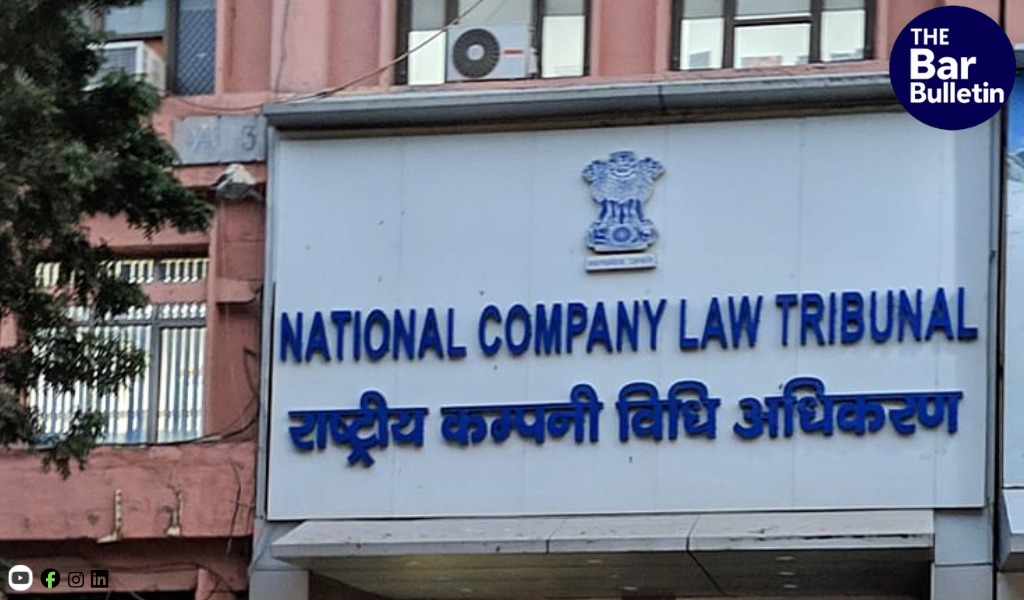

The National Company Law Tribunal (NCLT) Mumbai Bench has explained that a document styled and worded as a guarantee, which records that the signatory unconditionally and irrevocably guarantees repayment of the borrower’s dues, will be treated as a contract of guarantee and not as an indemnity merely because it also contains language that, as between the bank and guarantor, the guarantor is treated as principal debtor.
The Tribunal held that where the terms of the guarantee are on demand, a Section 13(2) SARFAESI notice addressed to the guarantor and containing a specific demand to pay within the stated period can amount to valid invocation of the personal guarantee. In such a case, the guarantor’s default arises upon failure to comply within that demand period, and the date of default for the guarantor may therefore be different from the borrower’s default/NPA date.
The Tribunal further held that for admission under Section 95/100 IBC, pendency of proceedings under SARFAESI or before the DRT does not bar initiation of insolvency resolution against a personal guarantor, having regard to the independent nature of IBC proceedings and the overriding effect of Section 238. Even if the guarantee deed is challenged on stamping, the application can still be admitted where debt and default are otherwise established from other transaction documents on record.
The Division Bench comprising Nilesh Sharma (Judicial Member) and Sameer Kakar (Technical Member) observed on perusal of the agreement, that it was a guarantee agreement. It noted that the respondent was expressly described as “Guarantor”, and the document specifically stated that the guarantor would “unconditionally and irrevocably guarantee the repayment of all amounts”. It therefore rejected the argument that the document was merely an indemnity.
The Tribunal held that, in the facts of the case, the Section 13(2) notice dated 06.07.2024 constituted a valid invocation of the personal guarantee because it was addressed to the borrower/guarantor/mortgagor/owner and specifically required the respondent to pay within 60 days. On that basis, the Tribunal accepted 04.09.2024 as the correct date of default for the personal guarantor.
The Tribunal expressly observed that it did not find any guarantee agreement for the GECL and GECL 1.0 facilities. However, it held that the default in respect of the OCC facility alone was above the statutory threshold of Rs. 1 crore, and therefore the Section 95 proceedings were maintainable on that basis.
Further, the Tribunal rejected the objection based on differing dates of default for the borrower and guarantor. It held that the guarantor’s obligation to pay arises after invocation of the guarantee following default by the principal borrower, and that, here, the guarantor’s default occurred on expiry of the 60-day period under the invocation notice, i.e. 04.09.2024.
At the same time, the Tribunal held that the insufficiency of stamping objection did not defeat the petition because the bank had otherwise established the debt and default through other transaction documents, including the acknowledgment of debt and renewed sanction letters accepted by the personal guarantor.
Lastly, the Tribunal held that prior or parallel proceedings under SARFAESI and before the DRT do not bar a Section 95 application. It relied on Section 238 of the IBC and noted that insolvency proceedings under the Code are independent and are not invalidated merely because other recovery proceedings are pending. The Tribunal accepted that the bank, through its rejoinder, had filed statements of account with the Bankers’ Books Evidence Act certificate, which reflected disbursement to the corporate debtor. It therefore rejected the respondent’s evidentiary objection.
Briefly, the petition was filed by Canara Bank under Section 95(1) of the Insolvency and Bankruptcy Code, 2016, read with Rule 7(2) of the 2019 Personal Guarantor Rules, seeking initiation of insolvency resolution process against Shweta Deepak Patel, as personal guarantor, for a claimed default of Rs. 51.34 crores arising in respect of a Deed of Guarantee dated 21.02.2019.
The principal borrower was Swaminarayan Diamonds Private Limited. The bank had sanctioned an OCC facility of Rs. 38 crore, and later additional facilities including GECL/WCTL I of Rs. 5 crore and GECL/WCTL II of Rs. 6.4 crore. The respondent had executed a Guarantee Agreement dated 21.02.2019. The bank relied on the terms that the guarantor had unconditionally and irrevocably guaranteed repayment, that the guarantee was continuing, that liability was joint and several, and that the guarantor agreed that, as between the bank and guarantor, the guarantor would be treated as principal debtor jointly with the borrower.
The borrower’s account was classified as NPA on 05.07.2024. Thereafter, the bank issued a Section 13(2) SARFAESI demand notice to the borrower as well as the guarantor, demanding payment. The bank treated this notice as invocation of the personal guarantee. The date of default stated against the personal guarantor in the Section 95 application was 04.09.2024, i.e., after expiry of the 60-day period in the notice. A separate Form B demand notice dated 02.12.2024 under Rule 7(1) of the Personal Guarantor Rules was also issued. The respondent replied on 21.12.2024 but did not make payment.
Appearances:
For Applicant: Adv. Yash Dhruva a/w Ruchita Jain i/b MDP Legal
For Respondent/PG: Adv Charles De Souza a/w Somya i/b TN Tripathi & Co.
For Resolution Professional: Adv Raj Laxmi Pawar, Adv Diva Shukla i/b Devanshu Desai
