
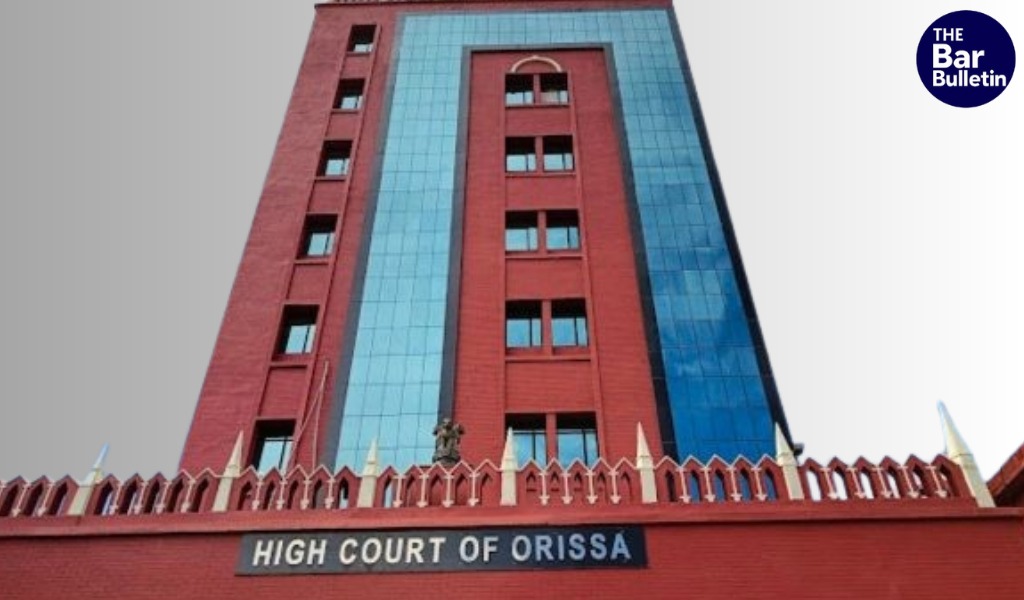

The High Court of Orissa at Cuttack Bench has clarified that where the evidence discloses a free fight arising out of prior enmity, and it is difficult to determine who was the aggressor, the plea of private defence is not available to either side if both parties have retaliated; and if the injured witnesses’ evidence, supported by medical evidence, establishes the participation of the accused, the conviction can be sustained even if the injuries are simple and the weapons are not recovered.
The Court held that Section 4 of the Probation of Offenders Act has a wider and more expansive ambit than Section 360 CrPC, and unless its applicability is excluded, the court is under a mandatory duty to consider release on probation in a fit case; if such benefit is denied, reasons ought to be recorded. Applying that principle, the High Court upheld the conviction but modified the sentence by releasing the surviving appellants on probation for one year on execution of bonds and subject to supervision and good behaviour.
A Single Judge Bench of Justice Sibo Sankar Mishra observed that the testimonies of the injured witnesses attributed specific overt acts to the accused-appellants, and the medical evidence showed that only one prosecution witness had sustained an incised injury while the remaining injured witnesses had lacerated injuries, all of which were simple in nature.
The Bench also noted that no weapon of offence was recovered during investigation, but held that a meticulous re-appreciation of each piece of evidence would not change the conclusion that the occurrence was the result of a free fight arising out of prior enmity. On that basis, the Bench found no perversity or illegality in the trial court’s appreciation of evidence and affirmed the conviction under Sections 148, 324 and 149 IPC.
On the question of sentence, the Bench took note that the incident was old, the conviction was recorded in 2010, the appeal had remained pending for a long period, the appellants had advanced in age, and there were no criminal antecedents brought on record. The Bench therefore considered these circumstances sufficient to examine grant of benefit under the Probation of Offenders Act, 1958.
Briefly, on August 16, 2008, while the informant Ghanashyam Mohanta and others were returning from the temple of Goddess Brahmani Devi, they were restrained by the accused persons armed with lathis, sticks, and other weapons, and were assaulted in connection with a dispute concerning performance of worship by the village priest. Specific overt acts were attributed to different accused, including causing cut and lathi injuries to members of the informant party. Based on these allegations, the FIR was registered under Sections 147, 148, 341, 323, 294, 324, 336, 506 and 149 IPC, and after investigation charge-sheet was submitted against the present appellants and one Daitary Mohanta, though proceedings against Daitary later abated due to his death.
To prove its case, the prosecution examined twelve witnesses, including the informant and several injured witnesses including the Medical Officer, independent witnesses, and the Investigating Officer. The defence examined one witness, who was also the informant in the counter case arising out of the same incident. It was admitted that there was a counter case, and the defence plea was that the appellants had been assaulted by the informant party and had acted in exercise of the right of private defence.
The Trial Court found that the incident arose out of a pre-existing dispute and was a case of free fight between both groups, making it difficult to ascertain who the aggressor was and who acted in defence. It held that in such circumstances neither side was entitled to claim the benefit of private defence, and therefore acquitted the appellants of the other charges but convicted them under Sections 148, 324 and 149 IPC.
Appearances:
Advocate Biswa Kumar Mishra, for the Appellant
Advocate S. Panigrahi, for the Respondent
