
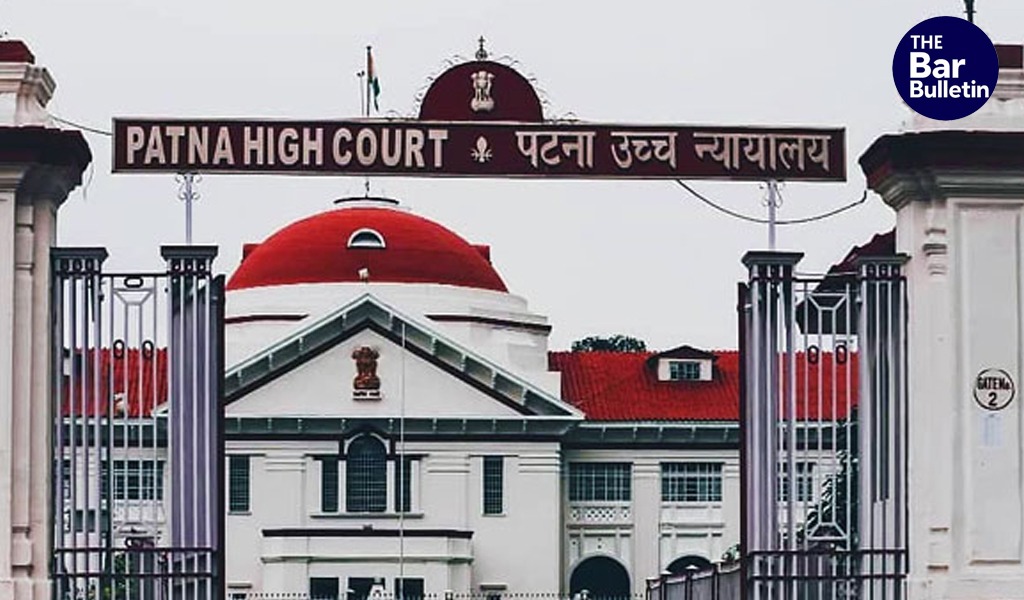

The Patna High Court has clarified that Section 107 CrPC is preventive in nature and not punitive, and for its application, there must be an allegation of an overt-act which may lead to a breach of public peace affecting the public at large. Where a substantive offence is committed by a person, the proper procedure is to institute regular prosecution against the persons committing the offence and not to initiate proceedings under Section 107 CrPC.
The Court explained that the concept of public peace is much wider than instances of tension between a few individuals or a problem of law and order. Situations where the effect of any dispute or tension is confined only to a few individuals do not give rise to an apprehension of breach of public peace and tranquility, and are not contemplated under Section 107 CrPC.
The availability of an efficacious alternative remedy does not operate as an absolute bar to the maintainability of a writ petition under Article 226 of the Constitution, and the High Court is duty-bound to entertain the writ petition and quash the proceeding if the order or proceedings are wholly without jurisdiction and result in the infringement or curtailment of the fundamental right of liberty under Article 21, added the Court.
A Single Judge Bench of Justice Jitendra Kumar observed that although the proceeding under Section 107 CrPC was already concluded and the bond period had passed, the writ petition was disposed of on merit to clarify the law regarding the extent and scope of the jurisdiction of the Executive Magistrate under Section 107 CrPC.
The Bench observed that the scope and object of Chapter-VIII of CrPC are preventive and not punitive in nature. Where a substantive offence is committed by a person, the proper procedure is to institute regular prosecution against the persons committing the offence and not to initiate proceeding under Section 107 CrPC.
The Bench noted that Chapter-VIII of CrPC is intended to maintain public peace and tranquility, and the concept of public peace is much wider than instances of tension between a few individuals or a problem of law and order. If the effect of any dispute or tension is confined only to a few individuals who are party to the dispute, such dispute could not give any apprehension of breach of public peace and tranquility, and hence, such situations are not contemplated under Section 107 CrPC giving extraordinary jurisdiction to the Executive Magistrate.
Hence, vague allegations cannot be the basis of initiation of proceeding under Section 107 CrPC; there must be an allegation of a specific overt-act giving apprehension of breach of public peace, added the Bench.
Regarding the maintainability of the petition, the Bench observed that the availability of an efficacious alternative remedy is not an absolute bar to the maintainability of a writ petition. A writ petition is entertainable in situations where it has been filed for the enforcement of a fundamental right, where there has been a violation of principles of natural justice, where the order or proceedings are wholly without jurisdiction, or where the vires of a legislation is challenged.
In the present case, the Bench observed that at most the petitioner had committed a substantive offence punishable under the Indian Penal Code and hence, he should have been prosecuted for such offences. There was no allegation of any overt-act which could give apprehension of breach of public peace and tranquility. Only on account of the fear under which some individuals may be living due to threats being extended by the petitioner does not mean that it would lead to a breach of public peace.
Thus, the Bench concluded that the Executive Magistrate initiated the proceeding without any jurisdiction and transcended his authority. The initiation of the proceeding under Section 107 CrPC against the petitioner was held to be nothing but an infringement and curtailment of the fundamental right of liberty of the petitioner as granted by the Constitution under Article 21.
Briefly, the criminal writ was preferred by the petitioner seeking quashing of the entire proceeding in a case initiated vide order passed by the Sub-Divisional Magistrate (S.D.M.), Naugachhia, Bhagalpur under Section 107 CrPC. The proceeding was initiated by the Executive Magistrate in light of letter written by the Assistant District Supply Officer, Naugachhia, which alleged that the petitioner unnecessarily harasses the P.D.S. dealers, demands money from them, and on account of non-payment, threatens to implicate them in false cases.
In view of the letter, the S.D.M. directed the petitioner to appear and show cause why a bond of Rs. 1 lakh with two sureties should not be executed by him to maintain peace for a year. The petitioner filed his show cause submitting that he had filed two R.T.I. petitions against the District Supply Officer regarding distribution under Pradhanmantri Pravasi Majdoor and regarding his movable and immovable property, which led to the false complaint by the Assistant District Supply Officer.
On the basis of pleading and evidence, the S.D.M. found that the petitioner extended the threat of journalism to the Supply Department and different schools of the Education Department and demanded money, causing employees and P.D.S. dealers to live under fear, thereby creating a possibility of breach of peace. A final order was passed directing the petitioner to execute the bond. The State defended the initiation of the proceeding and submitted that since the proceeding was already concluded vide final order dated Feb 02, 2022 and the period of one year had passed, the petition had become infructuous.
Appearances:
Advocate Shambhu Sharan Singh, for the Petitioners
Advocate Vijay Kumar Sinha, for the State
