
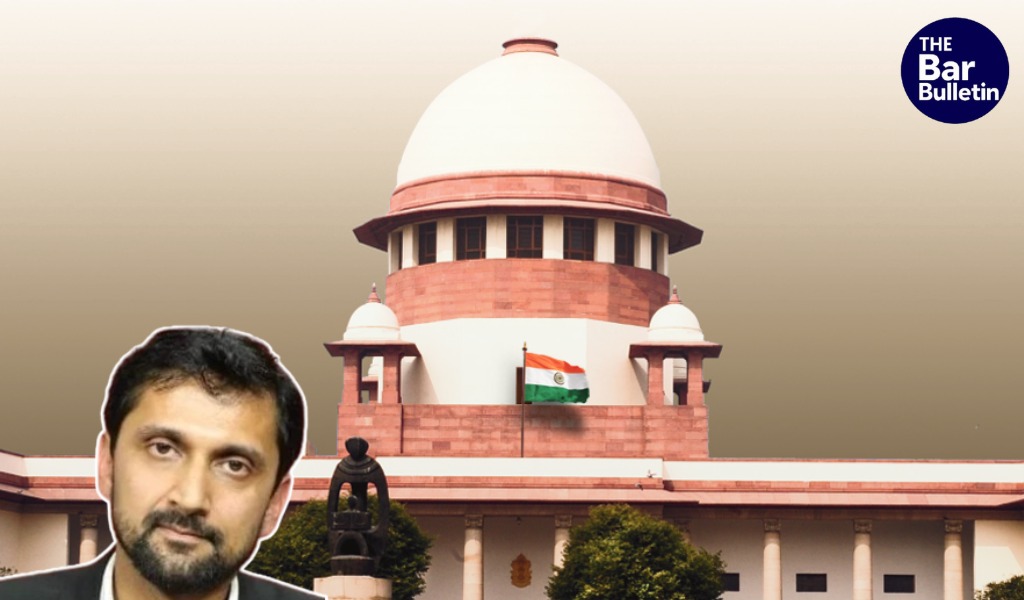
Advocate Nizam Pasha on Tuesday argued before a 9-judge bench of the Supreme Court that even where a mosque is open to all members of the community, such openness does not translate into unrestricted rights over how worship is conducted. Illustrating his point, he said that if places of worship were governed only by individual rights under Article 25, it would lead to disorder, with individuals claiming the right to impose their own forms of worship.
“A masjid formed by residents of a housing society or neighbourhood, even if open to all Muslims, would have no right of management if Article 26 is not recognised, meaning anyone could enter and demand any form of worship. But no one can walk into a mosque and insist on giving the azaan, nor can anyone enter and ring bells or conduct bhajans. These restrictions flow from Article 26, and the right holder would be the local community managing the mosque. The only question, therefore, is: who constitutes that community?”
He argued that entry into religious spaces such as dargahs must be governed by the rights of the religious denomination managing them, and not by claims of general access under constitutional rights.
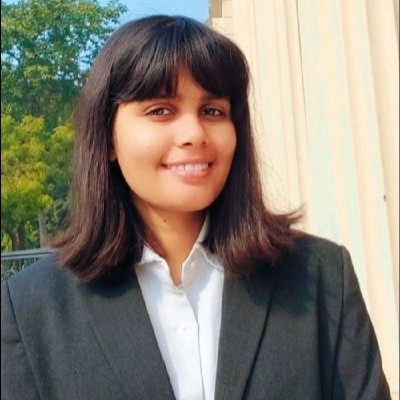
On facts, Mr Pasha submitted that this intervention was filed after a petition was filed in the Delhi High Court by a law student who alleged denial of entry into the sanctum of Nizamuddin Dargah violated her rights, drawing parallels with the Sabarimala verdict.
He contested the government’s stand that the shrine is not a religious denomination because it is open to all, citing precedent:
“The mere fact that others are allowed does not take away the right of a religious denomination..The dargah is a place where a saint is buried… there is deep attachment to such places.”
Mr Pasha emphasised that a place of worship is inseparable from its belief system:
“The place of worship is nothing but a belief system. A person who does not share that belief has no constitutional entitlement to enter.”
On constitutional interpretation, he argued that Article 25(2)(a) defines what religion is not, while Article 25(2)(b) operates within the limits of public order, morality, and health. He stressed that social reform cannot override core religious protections beyond these grounds.
In response to Justice Ahsanuddin Amanullah’s query on who would manage aspects like entry and worship, Advocate Nizam Pasha argued that every place of worship necessarily carries denominational rights under Article 26 and cannot be governed solely by individual rights under Article 25. He submitted that relying only on Article 25 would lead to an unworkable situation where individuals could claim the right to perform any form of worship at any religious site.
“There will be no place of worship that will be devoid of right under Article 26… because otherwise, if it is just Article 25, then a situation will arise where one may say a dargah is a place of worship—you may have the right to go there and offer namaz, but I may claim a right to go there and do aarti and bhajan.
A masjid formed by the residential society or neighbourhood is open to all sections….But nobody can walk into the masjid and ring the bell and do aarti..A mosque may be open to all, but nobody can walk in and perform rituals inconsistent with its faith.”
Thus, he emphasised that in matters of entry and worship, the key question is identifying the “right holder,” asserting that every place of worship has a managing authority whose rights must be protected.
On constitutional morality, Advocate Nizam Pasha argued that questions of public morality should be determined primarily through democratic processes rather than by courts in isolation. He submitted that what constitutes public morality must be reflected in laws enacted by Parliament, which represents the will of the people. Courts, he said, can then test such laws through judicial review to ensure they remain within constitutional limits, and it is this process that gives content to constitutional morality.
On the issue of essential religious practices, Mr Pasha contended that Islam cannot be treated as a monolith for determining what is “essential,” noting that the Quran provides only broad principles while religious practices are shaped significantly by prophetic traditions, which themselves are subject to differing interpretations across sects. He argued that this complexity makes the essentiality test inherently flawed. He concluded by noting that religious texts like the Quran are minimalist.