
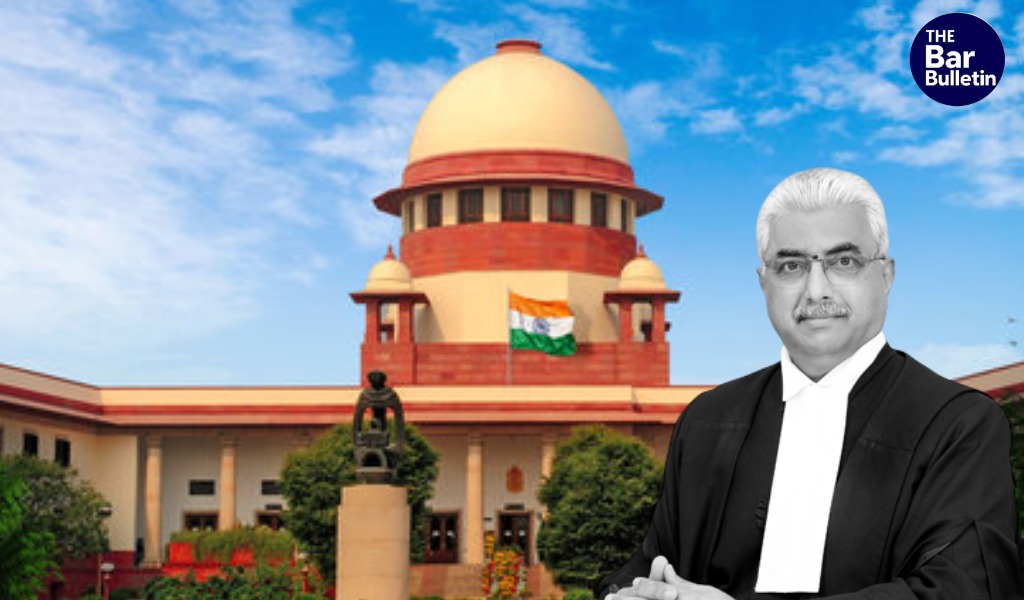

Justice Aravind Kumar questioned why affected persons from the Dawoodi Bohra Community had not approached the Court earlier against the 1962 judgment in Sardar Syedna Taher Saifuddin or sought review of the decision. Responding to the query, Senior Advocate Raju Ramachandran submitted that, in hindsight, “many things could have been done,” but emphasised that fear of excommunication itself discouraged victims from approaching courts. He pointed out that the same question had been raised earlier during the hearing and sought to explain that generations of persons had suffered the consequences of excommunication in silence.
He submitted that he was not a party to the original proceedings and therefore could not automatically be faulted for not seeking review. As regards a curative petition, the advocate pointed out that “curative hadn’t come at that time.”[The curative jurisdiction of the Supreme Court had not yet been evolved when the original judgment was delivered.]
He submitted that certain members of the Dawoodi Bohra community, including a registered body and Mr. Asghar Ali, an engineer who was himself a victim of excommunication and violence, had approached the Court seeking protection. When Justice B. V. Nagarathna asked whether the petitioners were conformists to the Dawoodi Bohra religion, counsel replied that “they were indeed Dawoodi Bohras and conformists, but could not be slaves; they are bound by a mediaeval code”
Intervening thereafter, the Chief Justice Surya Kant observed that the matter stood on a footing entirely different from the other cases before the Bench because, in this instance, there had existed a law enacted [Bombay Prevention of Excommunication Act, 1949] for the protection of the community and safeguarded under Article 25(2) of the Constitution, which protection had subsequently been taken away through a judicial mandate [Sardar Syedna Taher Saifuddin Saheb v. State of Bombay, AIR 1962 SC 853]. The CJI emphasised that this distinct legislative and constitutional background created a different kind of situation from the other matters under consideration.
Responding to Justice Aravind Kumar’s suggestion that the affected persons could have approached a civil court, the senior advocate submitted that the issue could not be reduced to an ordinary civil dispute under the CPC because it directly implicated fundamental rights under Article 21. Counsel argued that the very fear of excommunication involving social ostracism and what was described as “complete civil death” prevented individuals from approaching courts for generations. Families had suffered humiliation and exclusion in silence, and it took immense courage for victims to finally come forward. The advocate emphasised that there could be no waiver of Article 21 rights.