


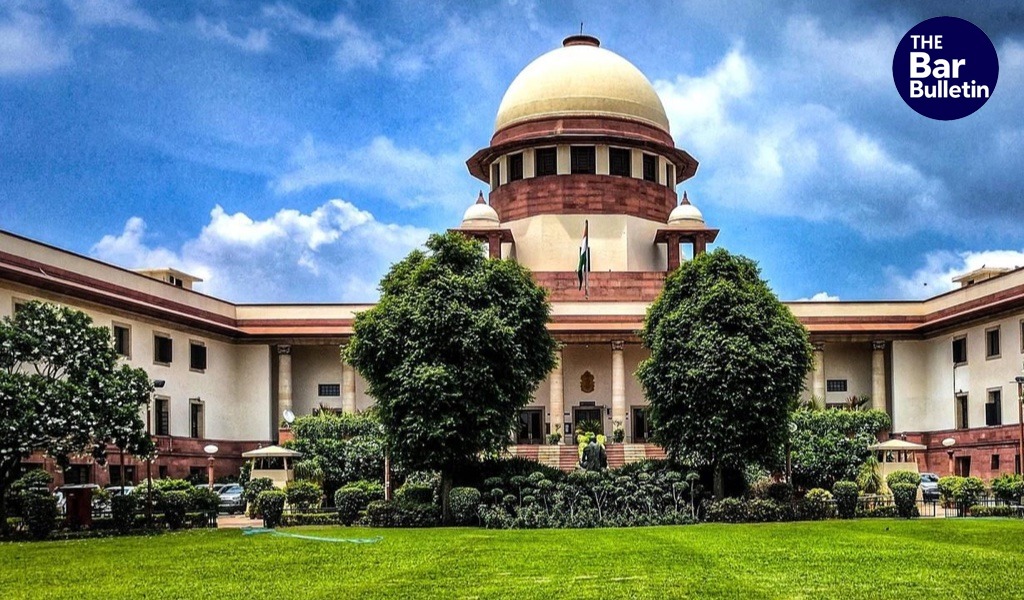

The Supreme Court has held that an executing court cannot go beyond or alter the terms of a decree and must execute it “as it stands,” setting aside orders that had modified the allocation of land under a compromise decree.
“Executing Court in passing the orders dated 19.07.2021 and 26.08.2021 has gone beyond its jurisdiction and instead of directing for the execution of the decree as it stands, has altered its terms by changing certain portions of the land allotted to the parties, the same are unsustainable in law.”
The case arose from execution proceedings relating to a 2017 compromise decree concerning division of land in Panchgani. The executing court had altered the portions of land allotted to the parties on grounds of impracticability and existing constructions, which was upheld by the High Court, leading to the present appeal.
Examining the scope of powers under Section 47 CPC, the Court held that while executing courts may determine issues relating to execution, they have no jurisdiction to go beyond the decree sought to be executed and cannot substitute their own view in place of the decree. It referred to Vasudev Dhanjibhai Modi v. Rajabhai Abdul Rehman and Ors., (1970) 1 SCC 670 which held that an executing court must take the decree “according to its tenor” and cannot entertain objections regarding its correctness unless it is a nullity.
Applying these principles, the Court allowed the appeal and directed that the decree be executed strictly in its original form.
Appearances
Petitioner- Mr. Anand Dilip Landge, AOR
Respondents- Mr. Gopal Jha, AOR Mr. Sanjeev Baliyan, Adv. Mr. Tilak Vij, Adv. Mr. Shreyash Bhardwaj, Adv. Mr. Nimish Arjaria, Adv. Mr. Sawan Datta, Adv. Ms. Shireesha Sharma, Adv. Mr. Umesh Kumar Yadav, Adv.
