


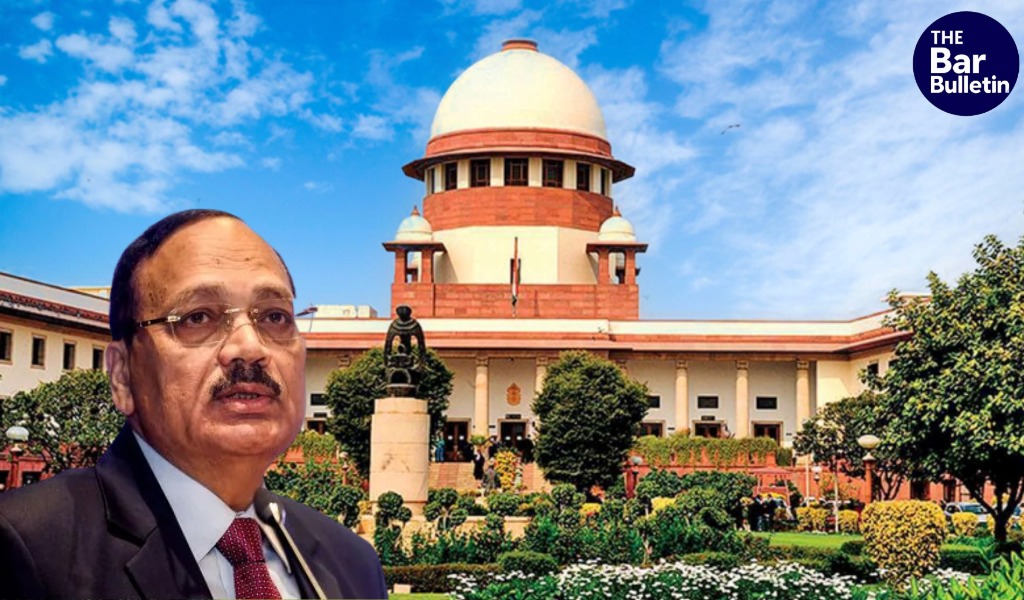
The Supreme Court of India set aside a judgment of the Allahabad High Court which had diluted charges of attempt to rape against two accused in a case involving a minor, holding that the High Court had misapplied the settled distinction between “preparation” and “attempt” under criminal law.
The Court was hearing a suo motu writ petition along with connected criminal appeals arising from a March 17, 2025 order of the Allahabad High Court, which had modified summons issued by a POCSO Court at Kasganj. While the trial court had summoned the accused under Section 376 IPC read with Section 18 of the POCSO Act, the High Court reduced the charges to Section 354B IPC, holding that the allegations disclosed only preparation and not an attempt to commit rape.
Disagreeing, the Supreme Court noted that the allegations taking the minor victim on a motorcycle on a false pretext, stopping near a culvert, dragging her and committing sexually offensive acts, and fleeing only due to the arrival of witnesses clearly indicated that the accused had moved beyond preparation and had begun executing their criminal intent. The Court held that interruption by third parties does not negate an offence of attempt.
Accordingly, the Court restored the original summons for attempt to commit rape, allowed the criminal appeals, and clarified that its findings were prima facie and would not prejudice the ongoing trial.
Significantly, the Court also expressed concern over lack of sensitivity and empathy in judicial handling of sexual offence cases, particularly those involving minors and vulnerable victims. While refraining from issuing immediate guidelines, the Court directed the National Judicial Academy, Bhopal to constitute an expert committee, headed by former Supreme Court judge Justice Aniruddha Bose, to draft comprehensive report on Developing Guidelines to Inculcate Sensitivity and
Compassion into Judges and Judicial Processes in the Context of Sexual Offences and other Vulnerable Cases. The committee has been asked to submit its report within three months.
Appearances:
For Petitioner(s) : Mr. Prashant Padmanabhan, AOR; Mr. H. S. Phoolka, Sr. Adv.; Mr. Bhuwan Ribhu, Adv.; Ms. Rachna Tyagi, Adv.; Ms. Shashi, AOR; Mr. Saksham Maheshwari, Adv.; Ms. Surabhi Katyal, Adv.; Ms. Surpreet Kaur, Adv.; Mr. Amar Lal, Adv.; By Courts Motion, AOR
For respondent(s) : Mr. Sharan Dev Singh Thakur, Sr. A.A.G.; Ms. Ruchira Goel, AOR; Mr. Sharanya, Adv.; Ms. Ritika Rao, Adv.; Ms. Ayushi Srivastava, Adv.; Ms. Shobha Gupta, Sr. Adv.; Mr. Aditya Ranjan, AOR; Ms. Yogmaya MG, Adv.; Ms. Komal Saini, Adv. Ms. Siny Sara Varghese, Adv.; Mr. Rohin Bhatt, Adv.; Mr. Sharan Dev Singh Thakur, Sr. A.A.G.; Ms. Ruchira Goel, AOR; Mr. Sharanya, Adv.; Ms. Ritika Rao, Adv.; Ms. Ayushi Srivastava, Adv.; Mr. Pritam Singh, Adv.; Mr. Umesh Kumar Shukla, Adv.; Ms. Parvathi Menon, Adv.; Mr. Sangeeth Mohan, Adv.; Mr. Rahul Gupta, AOR
