
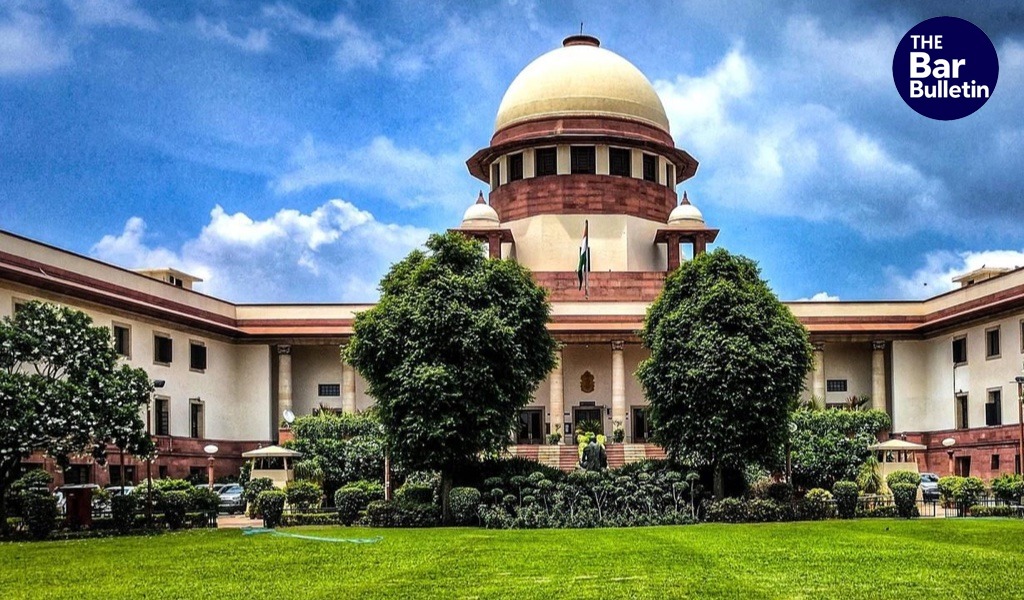

The Supreme Court, while hearing criminal appeals arising from a death reference case from the Patna High Court, has stayed the execution of the death sentence awarded to the appellants and laid down significant directions to reform the sentencing framework in capital punishment cases.
At the outset, the Court granted leave and directed that the death sentence shall remain stayed pending final adjudication of the appeals. It further called for records from the trial court and High Court, along with translated copies for effective consideration.
Recognising systemic gaps in sentencing, the Court directed the State to place on record probation reports, while the jail authorities were instructed to submit detailed reports on the conduct, work, and behaviour of the appellants in custody. Additionally, the Court ordered psychological evaluation of the appellants through a government medical facility.
Importantly, the Court permitted mitigation experts associated with NALSAR University of Law to conduct in-person interviews of the appellants to prepare a Mitigation Investigation Report, ensuring confidentiality and access to relevant records including medical and socio-economic background.
Moving beyond the facts of the case, the Court addressed a recurring concern in death penalty jurisprudence, the failure to adequately consider mitigating circumstances at the trial stage. It observed that such material is often collected only at the appellate stage, leading to delays and undermining a balanced sentencing process.
To address these systemic concerns, the Court laid down the following directions:
• Trial courts must call for reports on aggravating and mitigating circumstances immediately after conviction and before sentencing.
• High Courts must mandatorily call for such reports if not already on record at the stage of admission of death reference.
• Authorities must ensure reports are comprehensive, verified, and filed within stipulated timelines; courts may direct fresh reports if found inadequate.
• A special legal team, including a Senior Counsel and at least two experienced advocates, must be assigned to represent the accused in death penalty cases, irrespective of private representation.
• All High Courts must constitute and maintain dedicated panels of advocates for death reference matters.
• NALSA has been directed to frame guidelines for collection of mitigation data, including socio-economic background, mental health, and other relevant factors.
The Court emphasised that sentencing in capital cases must move beyond a purely retributive approach and incorporate a balanced assessment of reformation and rehabilitation, supported by structured and reliable data.
The matter has been directed to be listed after 20 weeks, along with all requisite reports.
Appearances:
For the Petitioner: Mr. Pramod Kumar Dubey, Senior Advocate, with Mr. Saurav Agrawal, Mr. Ravi Sharma, Advocate-on-Record, Ms. Madhulika Rai Sharma, Ms. Pinky Dubey, Mr. Satyam Sharma, Mr. Anjani Kumar Rai, Ms. Prachi Dubey, Mr. Arya Bhat, Ms. Anadi Mishra, Mr. Samrat Kasana, Ms. Shivangi Mishra, Ms. Suchitra Kumbhat, Mr. Abhilash Pathak, Mr. Mukesh Kumar Tiwari, Mr. Ajit Kumar Upadhyay, Mr. Satish Kumar Shukla and Ms. Amrita Vatsa .
