


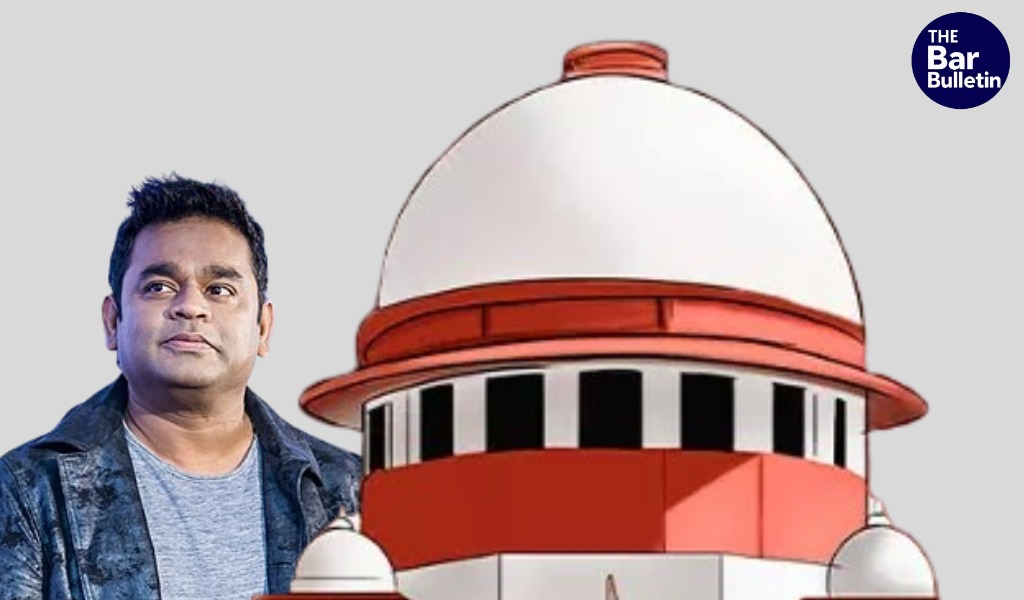

In the ongoing copyright dispute over the Hindustani classical composition “Shiva Stuti” between celebrity composer A.R. Rahman and Dhrupad exponent Ustad Faiyaz Wasifuddin Dagar, the Supreme Court has modified the Interim directions by the Delhi High Court concerning attribution in the song ‘Veera Raja Veera’ from Ponniyin Selvan 2, while clarifying that all questions of originality and infringement will be decided at trial.
Earlier, the Delhi High Court, in an interim order, had held that the film song prima facie infringed Dagar’s classical composition ‘Shiva Stuti’, observing substantial similarity between the two works and granting interim relief in favour of the Dagar family.
When the matter reached the Supreme Court, the Bench of Chief Justice of India, Justice Surya Kant,Justice Joymalya Bagchi, and Justice Vipul M. Pancholi did not delve into the merits of the High Court’s prima facie findings. Instead, it facilitated an interim arrangement between the parties. Modifying the operative portion of the High Court’s order, the Court directed that all OTT and online platforms must display revised credits stating pending trial:
“Composition inspired from Dagar Vani. First recorded by late Ustad Faiyazuddin Dagar… The names of the concerned Dagar exponents are to be specifically mentioned in the credit slide.”
Clarifying the limited scope of its intervention, the Court recorded:
“Since we have not expressed any opinion on merits, all issues are left open for the parties to be adjudicated in trial.”
The Bench further directed that the revised credits be incorporated within four to five weeks. The ₹2 crore amount earlier deposited pursuant to the High Court’s order will continue to remain with the Registry.
The Court emphasised that the civil suit shall proceed independently and findings at the interim stage will not bind the final adjudication.
The matter now returns to trial for final adjudication.
Appearances
Senior adv. Abhishek Manu Singhvi