
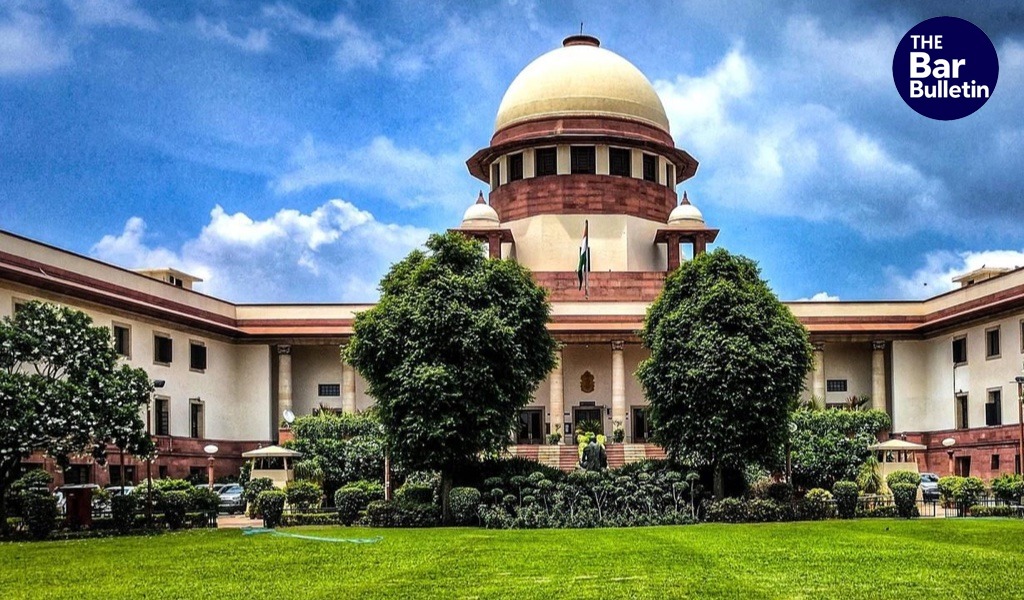

The Supreme Court has held that an accused cannot be placed in a worse position in a revision petition filed at their instance when the complainant has not challenged the sentence seeking enhancement.
A Bench of Justices K.V. Viswanathan and Vipul M. Pancholi was hearing special leave petitions arising from a cheque dishonour case under the Negotiable Instruments Act. The petitioners had challenged the Delhi High Court judgment which upheld their conviction while restoring the harsher sentence originally imposed by the trial court.
Before the Supreme Court, the petitioners argued that the presumption under Section 139 of the Negotiable Instruments Act had been rebutted and also challenged the High Court’s decision on sentence. The Court declined to interfere with the conviction, noting concurrent findings by three courts on the existence of debt/liability, including admissions made during cross-examination.
However, the Court found merit in the challenge to the sentence. The trial court had directed the petitioner to pay compensation of ₹50 lakh in each of the three complaint cases (totalling ₹1.5 crore), apart from other fines. The appellate court later modified this arrangement, reducing petitioner’s compensation liability to ₹1 crore and directing M/s Vasu Tech Limited and the HUF to pay ₹25 lakh each, while keeping the total compensation unchanged at ₹1.5 crore.
The High Court, while hearing the revision petitions filed only by the accused, restored the original trial court sentence. The Supreme Court held that this was impermissible since the complainant had not filed any appeal or revision seeking enhancement of sentence. It observed that in such circumstances, the High Court could not worsen the petitioners’ position while exercising revisional jurisdiction at the accused’s instance.
Setting aside the relevant portion of the High Court’s judgment, the Court restored the appellate court’s sentencing order while maintaining the conviction. It also granted the petitioners time till July 31, 2026, to deposit the amounts directed by the appellate court.
Appearances:
For the Petitioners: Mr. Vipin Sanghi, Sr. Adv.; Mr. Amol Acharya, Adv.; Mr. Sidharth Pushya, Adv.; Ms. Srija Choudhury, AOR
