


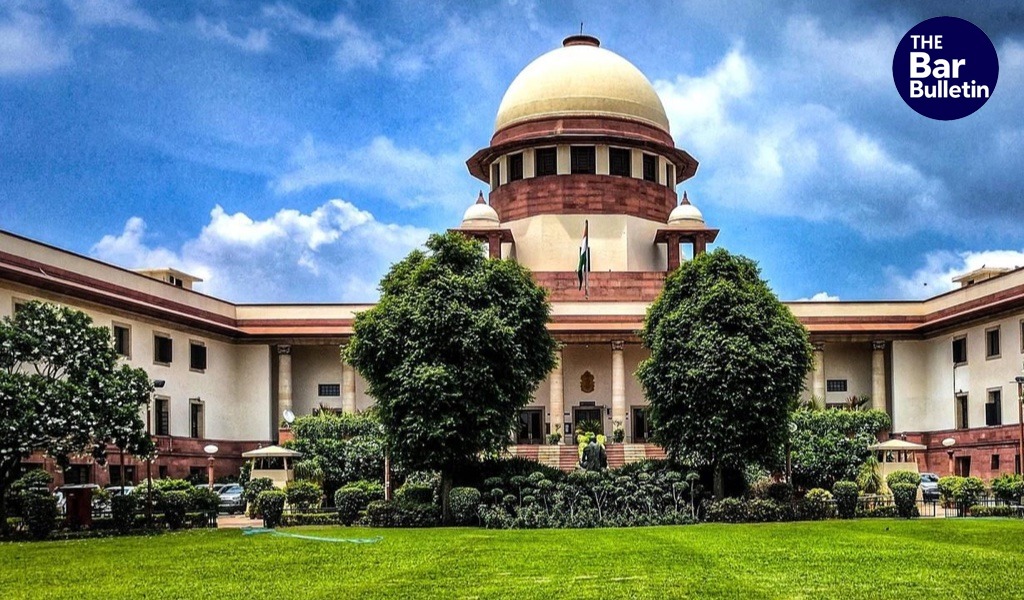

The Supreme Court has ruled that the doctrine of ‘transnational issue estoppel’ applies to enforcement proceedings under Section 48 of the Arbitration and Conciliation Act, 1996, barring an enforcement court from undertaking a merits-based review or reopening factual issues that have been conclusively settled by the seat court. While an enforcement court must independently evaluate challenges raised on the ground of the ‘public policy of India’, a party cannot camouflage a rejected factual or contractual interpretation dispute as a public policy violation to circumvent the legislative policy of minimal interference and ‘one bite at the cherry’ in foreign award enforcement.
The Apex Court noted that the substantial relief that was granted to the Investors is award of damages at the ‘exit price’, and the FSSPL and the Mylandlas were held jointly and severally liable to pay the same. However, in the event they failed to do so, the entitlement given to the Investors to realise such damages was by way of resorting to a strategic sale. The Court pointed out that this relief, in the alternative, which was to arise only if FSSPL and the Mylandlas failed to make the payment, cannot be said to be ‘specific performance’ of a strategic sale, but it was only to secure the interests of the investors that the option of strategic sale was provided as a means of the last resort in Clause 19.6 of the a Share Acquisition and Share Holders Agreement (SASHA).
Accordingly, the Court dismissed the special leave petitions with further costs of Rs. 25 lakhs to be paid by the Mylandlas jointly to each of the Investors.
The Division Bench comprising Justice Sanjay Kumar and Justice K. Vinod Chandran observed that the doctrine of ‘transnational issue estoppel’ extends the principle underlying the concept of ‘issue estoppel’ to international commercial arbitrations and the arbitral awards that arise therefrom. The application of this doctrine would effectively curb the propensity of parties to relitigate settled factual issues taking advantage of the fact that they are before a different court in a different jurisdiction, viz., the enforcement court.
The Bench explained that in the guise of mounting an attack on ‘public policy’ grounds, it is not open to a party whose contentions on the merits of a particular issue on facts have been rejected by the seat court to seek review thereof by the enforcement court. Such a ‘merits-based’ evaluation is beyond the scope of the enforcement court’s jurisdiction under Section 48 of the Arbitration Act and would be barred by application of the doctrine of ‘transnational issue estoppel’.
Moving ahead, the Bench observed that the distinction drawn by the Judge of the Madras High Court between ‘surrender of shares’ and ‘buy-back of shares’ is unexceptionable. The Investors themselves made the offer that they would surrender their shares upon payment of the damages, so as to pre-empt an argument being advanced of unjust enrichment. There was neither a buy-back of shares by FSSPL nor was there any reduction of capital, whereby the Mylandlas can fall back on the provisions of the Companies Act and allege violation thereof. The absence of such violation being the specific finding of the arbitral tribunal, which has attained finality, it cannot be reopened for a ‘merits-based’ evaluation by the enforcement court.
The Bench also noted that the arbitral tribunal was fully justified in holding that Clause 19 visited an absolute obligation upon FSSPL and the promoters to provide an exit to the Investors. The interpretation of the clauses of the SASHA by the arbitral tribunal, being a plausible and possible one, cannot be subjected to examination by the enforcement court and, in consequence, by this Court by way of a ‘merits-based’ evaluation. The arbitral tribunal was correct in its approach in treating the termination of the rights of the Mylandlas as an interim measure, which would no longer survive after the damages were paid to the Investors.
Briefly, FSSPL is a digital payment services company with two business divisions, CashTech and PayTech, promoted by the Mylandlas and Rudhraapathy J. PI Opportunities Fund-I, Millenna FVCI Limited, and NYLIM Jacob Ballas India (FVCI) III LLC along with NYLIM Jacob Ballas India Fund III LLC (collectively, the Investors) made substantial investments in FSSPL and acquired shares through a Share Acquisition and Share Holders Agreement (SASHA) dated Oct 10, 2014.
Clause 19 of the SASHA provided an exit waterfall to the Investors if a Qualified Initial Public Offering (QIPO) did not occur on or prior to the cut-off date, viz., March 31, 2016. The exit waterfall included options for a secondary sale (Clause 19.1), buy-back/recapitalization (Clause 19.2), causing an IPO (Clause 19.3), and a strategic sale upon failure to provide an exit and material breach (Clause 19.6). The QIPO failed to materialise by March 31, 2016, prompting Investors to issue ‘secondary sale’ notices, and subsequently, notices of ‘material breach’ and ‘strategic sale’ on April 11, 2022, owing to the failure to provide them an exit.
Disputes were referred to a 3-member arbitral tribunal under the SIAC Rules with the seat of arbitration at Singapore. The Arbitral Tribunal therein passed a unanimous award on July 05, 2024, holding FSSPL and its promoters jointly and severally liable to pay damages (the exit price as of Sep 18, 2020), upon which the Investors would surrender their shares. If damages were not paid within 90 days, the Investors were entitled to proceed towards a strategic sale.
The Mylandlas challenged the award before the Singapore High Court, which dismissed the challenge, rejecting the ‘waiver defence’ and ‘buy-back defence’. The Investors therefore filed petitions under Sections 47 to 49 of the Arbitration Act before the Madras High Court for enforcement of the foreign award, where the High Court held the award to be enforceable and deemed it a decree, applying the doctrine of ‘transnational issue estoppel’ and rejecting objections raised under Section 48 of the Arbitration Act.
Appearances:
Senior Advocate Gopal Subramanian, AOR E. C. Agrawala, along with Advocates Anirudh Krishnan, Mahesh Agarwal, Ashish Kabra, Nishant Kadur, Ansh Desai, Madhavi Agrawal, Gauri Subramanium, Uday Aditya Jetley Pocha, Jayavardhan Singh, Pavan Bhushan, Adnan Yousef, Adarsh Subramanian, Anuraag Rajagopalan, Nivethithaa.S, for the Appellant
Senior Advocates Dr. Abhishek Manu Singhvi, Shyam Divan, Ritin Rai, AORs M/s. Trilegal, Anush Raajan, Rashmi Nandakumar, Balaji Srinivasan, along with Advocates Suhrith Parthasarathy, Rhia Marshall, Amritha Sathyajith, Yashmita Pandey, Ankur Singhal, Rongon Choudhary, Anuj Berry, Shalaka Patil, Anusha Ramesh, Utkarsh Srivastava, Shilpa Sengar, Gauri Pasricha, Harsh Khanchandani, Daksh Kadian, Amit Bhandari, Vishwaditya Sharma, Kanishka Singh, Harsha Tripathi, Subornadeep Bhattacharjee, Suganya T.s., Parikshit Pitale, K. Shiva, Rohan Dewan, Aakriti Priya, Garima Jain, Lakshmi Rao, S. Eshwar, Aanchal M. Niching, Rajendra Barot, Prabhav Shroff, Mrudula Dixit, Naman Nayyar, Aditi Nazre, Shivam Jain, Shivam Jain, and Sia Ganju, for the Respondent
