


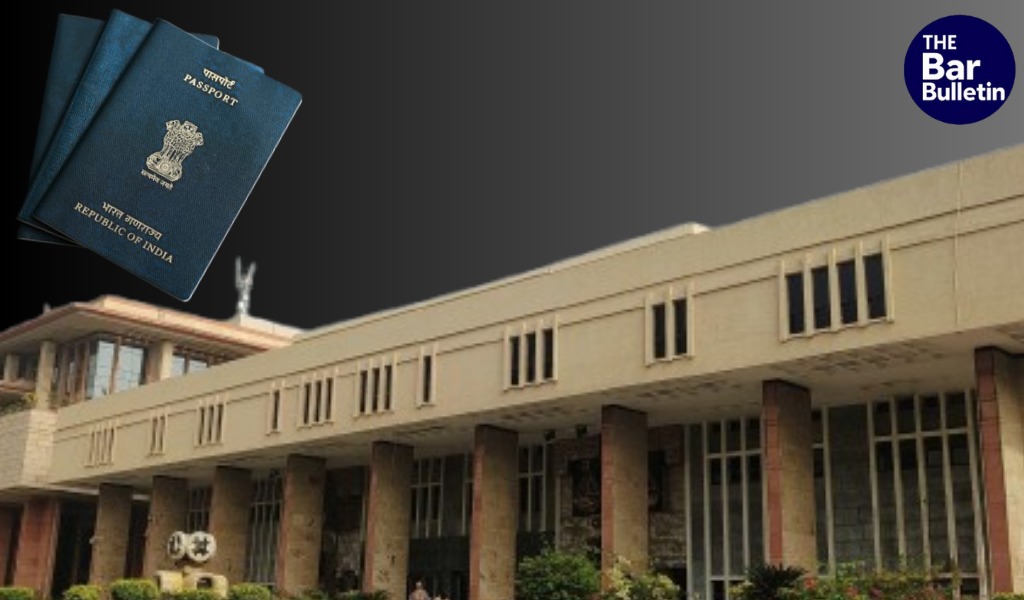

The Delhi High Court has held that a Tibetan refugee born in India in 1966 is an Indian citizen by birth under Section 3(1)(a) of the Citizenship Act, 1955, and is entitled to the issuance of an Indian passport. Justice Sachin Datta delivered the judgment on 2 February 2026 while allowing a writ petition challenging the denial of citizenship recognition and travel documents.
The petitioner was born in Dharamshala, Himachal Pradesh, and later migrated to Switzerland in 1997 to join her husband. Since 2014, she and her children have been without any valid passport after Swiss authorities declined to renew their foreign travel documents, observing that she was eligible to obtain Indian citizenship by birth. Repeated attempts to secure an Indian passport or renewal of an Indian Identity Certificate through the Indian Consulate in Geneva were unsuccessful, following which Swiss authorities also declined to recognise her as a stateless person. With no effective remedy available, the petitioner approached the Delhi High Court.
The Union of India opposed the plea, contending that Tibetan refugees and their children constitute a separate class governed by executive orders issued under the Foreigners Act and the Registration of Foreigners Act. It was argued that children born to Tibetan refugees are not automatically Indian citizens and that by holding refugee documentation and Identity Certificates, the petitioner had voluntarily renounced any deemed Indian citizenship. The Centre further submitted that citizenship status must first be determined by the Ministry of Home Affairs before a passport could be issued.
Rejecting these submissions, the High Court held that Section 3(1)(a) of the Citizenship Act is clear and unambiguous and grants Indian citizenship by birth to every person born in India between 26 January 1950 and 1 July 1987, except in cases covered by the limited exceptions under Section 3(2). As the petitioner’s birth in India during the relevant period was undisputed and none of the statutory disqualifications applied, the Court held that she was an Indian citizen by birth.
The Court reiterated that a person who is a citizen by birth does not need to apply for citizenship and that executive instructions or policy decisions cannot override statutory provisions. It further held that merely describing oneself as a Tibetan national for the purpose of obtaining an Identity Certificate does not amount to renunciation of Indian citizenship, which can occur only in the manner prescribed under the Citizenship Act.
Accordingly, the High Court directed the competent authorities to process and issue an Indian passport to the petitioner in accordance with law, reaffirming that statutory citizenship rights cannot be diluted by executive practice or administrative interpretation
Appearances:
For the Petitioner: Mr. Sanjay Vashishtha, Advocate along with Mr. Siddhartha Goswami, Ms. Geetanjali Reddy and Mr. Aditya Sachdeva, Advocates.
For the Respondent: Mr. Mukul Singh, CGSC along with Ms. Ira Singh and Mr. Aryan Dhaka, Advocates for UOI.
