
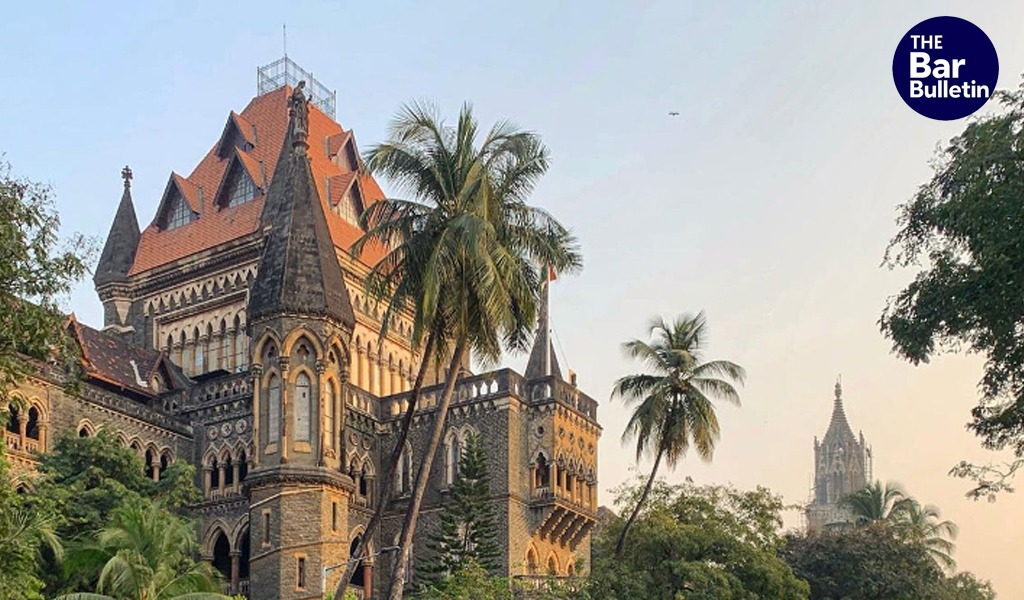

The Bombay High Court (Nagpur Bench) has held that an application for anticipatory bail is not maintainable once arrest has been effected, even if the accused is thereafter granted transit bail. The Court explained that grant of transit bail does not undo the arrest already made by the police, and an arrested accused must pursue the remedy of regular bail, not pre-arrest bail. Accordingly, the High Court rejected the bail application.
A Single Judge Bench of Justice Rajnish R. Vyas framed the issue as whether an accused, who has already been arrested, produced before a Magistrate, and released on transit bail, can still invoke Section 438 CrPC / Section 482 BNSS for anticipatory bail. The Bench rejected the applicant’s contention that his detention in Delhi was merely a “paper arrest.” On examining the Magistrate’s order, the grounds of arrest, the arrest form, the applicant’s production before court, and his submission to the court’s jurisdiction, the Bench held that the applicant was in fact arrested in the crime.
The Bench found that the investigating agency had followed the prescribed procedure, including compliance with Sections 50, 50A, 51 and 54 of the CrPC. Hence, the Bench observed that once arrest is effected, the remedy shifts from Section 438 CrPC to regular bail under Sections 437/439 CrPC, and the remedy of pre-arrest bail is no longer available. It also clarified that what had been sought before the Delhi Magistrate was transit remand by the investigating agency and transit bail by the applicant, and not anticipatory bail.
The Bench accepted the State’s submission that the applicant, having been produced before the Magistrate and having submitted to the jurisdiction of the court, could at least be said to be in custody, including constructive custody. Thus, setting aside a transit remand does not wipe out the prior deprivation of liberty and custody already undergone.
Briefly, an FIR was registered for offences under Sections 387, 342, 294, 506, 120B and 326 of the IPC, along with Sections 39 and 44 of the Maharashtra Money-Lending (Regulation) Act, 2014. The applicant was not named in the FIR initially; however, during investigation, he was arraigned as an accused, and Sections 18 and 19 of the Transplantation of Human Organs and Tissues Act, 1994 and Sections 143(1)(a)(f), 143(2) and 143(3) of the BNS, 2023 were added by station diary entry dated December 21, 2025.
The applicant was arrested in Delhi and produced before the Duty JMFC, on December 30, 2025, when transit remand was sought by the investigating agency. The Duty Magistrate recorded that the accused had been apprehended, noted the request for transit remand, and instead granted transit bail on a personal bond of Rs. 50,000, subject to the condition that he appear before the concerned CJM, on January 02, 2026 and not leave the country or tamper with evidence.
Instead of appearing before the Chief Judicial Magistrate, Chandrapur, the applicant filed an application under Section 482 of the BNSS on January 01, 2026 seeking anticipatory bail. The Additional Sessions Judge granted interim bail on January 01, 2026 and finally rejected the anticipatory bail application on January 07, 2026. Thereafter, the applicant approached the High Court, and ad interim anticipatory bail was granted on February 12, 2026.
Appearances:
Advocate S.V. Sirpurkar, for Applicant
Senior Advocate D.V. Chauhan and APP U.R. Phasate, for non-applicant/ State
