
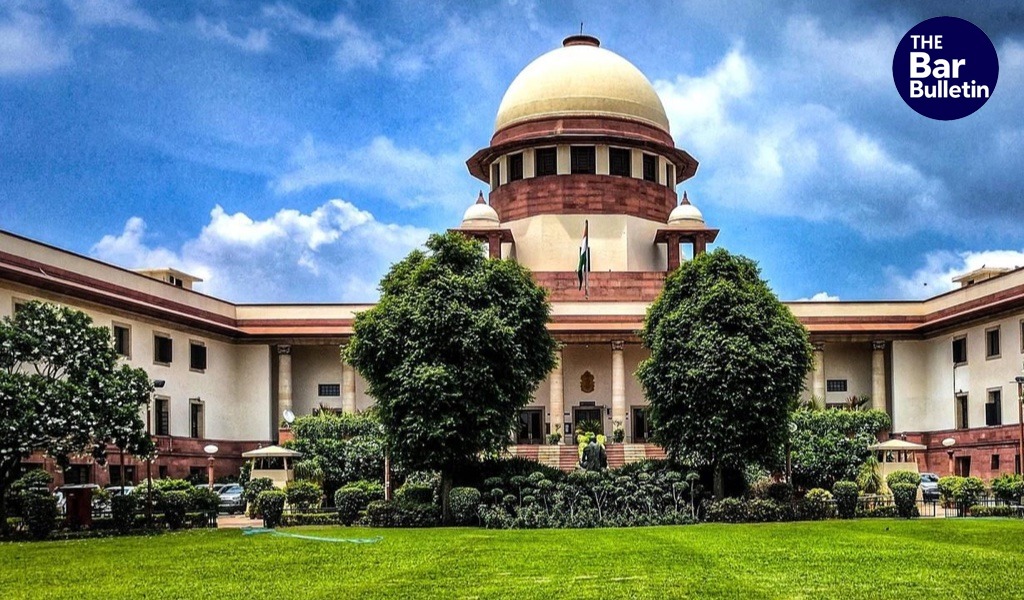

The Supreme Court has held that an application under Section 7 of the Insolvency and Bankruptcy Code, 2016 is governed by Article 137 of the Limitation Act, 1963, and limitation commences from the date of default, i.e., the date of NPA classification. Exclusion of time under Section 60(6) of the Code and under the Covid-19 extension orders must be strictly computed, and if the petition is filed after the expiry of the remaining limitation period, it is barred.
The Court further held that admission of a claim by an IRP/RP during CIRP does not amount to an acknowledgment of liability under Section 18 of the Limitation Act, 1963, because such admission is only an administrative act of collation of claims and does not reflect a conscious and unequivocal admission of subsisting liability by the corporate debtor or its duly authorized representative. Such admission cannot extend limitation for filing a Section 7 petition. Accordingly, the Supreme Court quashed and set aside the impugned judgments of the NCLAT and NCLT
The Division Bench comprising Justice Pamidighantam Sri Narasimha and Justice Alok Aradhe observed that limitation for filing an application under Section 7 of the Code is governed by Article 137 of the Limitation Act, 1963, and begins to run from the date of default, namely the date on which the account is classified as NPA, and not from any subsequent recovery proceeding. Since the accounts were declared NPA on December 06, 2016, the right to file the Section 7 petition accrued on that date itself.
The Bench examined the intervening events affecting computation of limitation, namely the CIRP of DHFL from December 03, 2019 to June 07, 2021, the exclusion of limitation during the Covid-19 period pursuant to the orders of the Supreme Court, and the first CIRP against the corporate debtor from December 23, 2021 to July 29, 2024. After excluding these periods, the Bench found that only three days of limitation remained as on July 29, 2024, and therefore the limitation expired on August 01, 2024. Since the Section 7 petition was filed only on September 23, 2024, it was beyond limitation.
On the issue of acknowledgment, the Bench held that for Section 18 of the Limitation Act, 1963 to apply, the acknowledgment must be made by the party against whom the right is claimed, or by a person duly authorized on its behalf, before expiry of limitation, and it must indicate a conscious and unequivocal intention to admit a subsisting jural relationship and existing liability. The Bench observed that the RP/IRP has no adjudicatory power and merely performs an administrative function of collation and admission of claims under Section 18 of the Code. Therefore, admission of a claim by the IRP/RP is only an administrative or clerical act and is akin to a mere recital or reference to debt, which does not amount to acknowledgment under Section 18 of the Limitation Act, 1963.
The Bench further observed that an acknowledgment under Section 18 can extend or renew limitation only if it is made within the subsisting period of limitation. In any event, the admission of the secured financial creditor’s claim by the IRP on May 02, 2022 did not benefit the secured financial creditor because it was not made within the limitation period.
Briefly, two loans were sanctioned by Dewan Housing Finance Corporation Ltd. in September 2014 for Rs. 12 crores and Rs. 11 crores, out of which Rs. 11.50 crores and Rs. 11 crores respectively were disbursed to the corporate debtors. The accounts of the corporate debtors were classified as NPA on December 06, 2016. Thereafter, DHFL itself underwent CIRP, and a resolution plan submitted by Piramal Capital & Housing Finance Ltd. was approved on June 07, 2021. The subject loans were thereafter assigned to Omkara Asset Reconstruction Pvt Ltd., the secured financial creditor.
After termination of the earlier CIRP against the corporate debtor, the secured financial creditor filed the Section 7 application on September 23, 2024. The NCLT held the application to be within limitation, and the NCLAT affirmed that view by holding that admission of the claim by the Resolution Professional in the earlier CIRP on May 22, 2022, and its subsequent updating on January 21, 2024, constituted acknowledgments extending limitation.
Thus, the appeals under Section 62 of the Insolvency and Bankruptcy Code, 2016 were filed against the NCLAT judgment dated October 15, 2025, which had affirmed the NCLT order dated January 22, 2025 admitting two separate Section 7 petitions and initiating CIRP against the corporate debtors. The central issue before the Supreme Court was whether the Section 7 application filed by the secured financial creditor was within the period of limitation.
Appearances:
AOR Shubham Jain, for the Appellants
Senior Advocates Neeraj Kishan Kaul and Gaurav Agarwal, AOR Himanshu Shekhar Tripathi, along with Advocates Sejal Jain, Kaarunya Lakshmi, Nakul Patwardhan, Dhanya S Krishnan, and Raghav Agarwal, for the Respondents
