
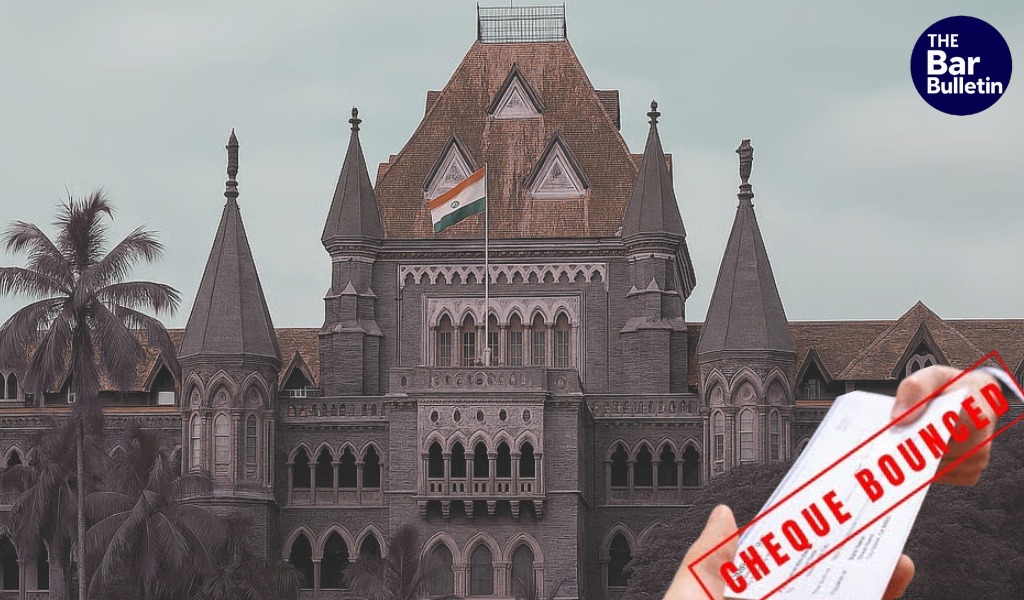

The Bombay High Court has held that excessive imprisonment in default of payment of compensation in cheque dishonour cases is unjust and disproportionate, and cannot result in incarceration far exceeding the substantive sentence.
Justice N. J. Jamadar was hearing a petition by a convict under Section 138 read with Section 141 of the Negotiable Instruments Act, who had been sentenced in 17 complaints arising from dishonoured cheques. While the substantive sentence of 15 months’ imprisonment was directed to run concurrently, the trial court had imposed 12 months’ imprisonment in default of compensation in each case, to run consecutively, exposing the petitioner to prolonged incarceration.
The Court held that such default sentences were contrary to Section 65 of the IPC, which limits imprisonment in default to one-fourth of the maximum punishment prescribed for the offence. It emphasised that default imprisonment is not a substantive sentence but a penalty for non-payment, and must not be used to impose an unduly harsh or disproportionate punishment.
Observing that prolonged detention solely due to inability to pay compensation would be “ex-facie unreasonable and shockingly disproportionate,” the Court underscored that such outcomes would fail the test of fairness under Article 21.
Taking note that the petitioner had already undergone over nine years of imprisonment (including remission), the Court held that further detention would be unjustified. It accordingly modified the sentence, directing that the period already undergone be treated as the total default sentence across all cases, and ordered the petitioner’s release.
The Court also clarified that reduction of default imprisonment does not extinguish the liability to pay compensation, which may still be recovered in accordance with law.
Appearances:
For the Petitioner: Mr. Mohit Bharadwaj.
For State: Mr. P.P.Malshe.
For Respondent 2: Ms. Snehankita M. Munj with Mr. Shraddha Kamble i/by Mr. Jatin Karia (Shah).
