
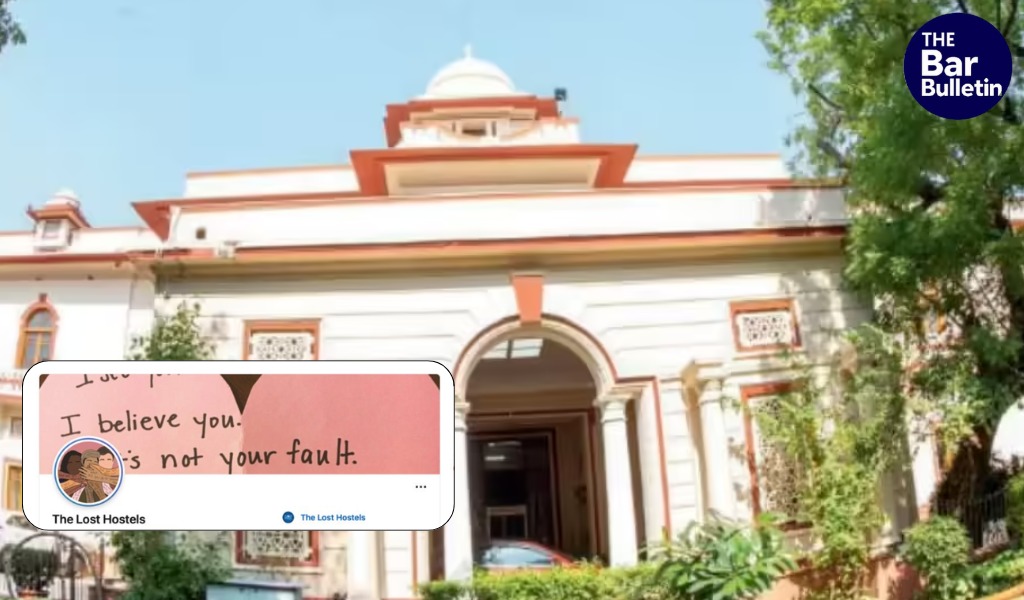

A Delhi Court has granted ex parte interim relief to a Kerala-based hostel and its proprietor in a defamation suit against anonymous online accounts, holding that the anonymity of the internet cannot be allowed to become a weapon for reputational attacks outside the boundaries of law.
Civil Judge Vaibhav Pratap Singh, Patiala House Courts, was dealing with a suit filed by The Lost Hostels and another plaintiff alleging that unknown individuals had created online profiles in the hostel’s name and were publishing defamatory and disparaging content targeting both the business and its proprietor.
The plaintiffs contended that the impugned posts were causing continuing reputational and commercial harm, with prospective customers allegedly indicating reluctance to make bookings after seeing the content online.
On a prima facie assessment, the Court observed that the material on record suggested that anonymous persons had created a page/profile in the plaintiff hostel’s name to publish allegations, while concealing their identities.
Emphasising the constitutional balance between free speech and reputational rights, the Court observed that while freedom of speech and expression is protected under Article 19(1)(a), it remains subject to reasonable restrictions including defamation. Referring to Subramanian Swamy v. Union of India, (2016) 7 SCC 221, the Court reiterated that the right to reputation is a facet of Article 21 and one fundamental right cannot be elevated at the cost of another.
“The anonymity of the internet cannot be allowed to be turned into a weapon and a free for all, independent of the law of defamation,” the Court observed.
While noting that it would ordinarily have issued notice before granting interim relief, the Court found that the alleged original uploaders had deliberately remained anonymous, making prior hearing impracticable. It observed that if the anonymous operators are eventually identified, they remain free to approach the court for appropriate relief.
Holding that the tests for interim injunction stood satisfied, the Court found a strong prima facie case in favour of the plaintiffs and noted that continued availability of the posts online would cause irreparable harm due to the wide digital reach of the content.
Accordingly, the Court directed social media intermediaries and online platforms to forthwith take down, remove, block, delist, de-index, dereference and disable access to the impugned posts and ensure that the same are not republished or made accessible pending disposal of the suit.
Search engines including Microsoft Bing and Google LLC were specifically directed to de-index and remove cached links, URLs, snippets, and preview text relating to the defamatory material.
The Court also directed the intermediaries concerned to disclose all available identifying details of the anonymous account operators including IP addresses, email addresses, phone numbers, registration information, and KYC data to facilitate their identification and substitution in the proceedings.
The matter has been listed for further proceedings on July 23, 2026.
Appearances:
Mr. Nakul Gandhi with Ms. Siddhi Sahu, Learned Counsel for the Plaintiffs.