
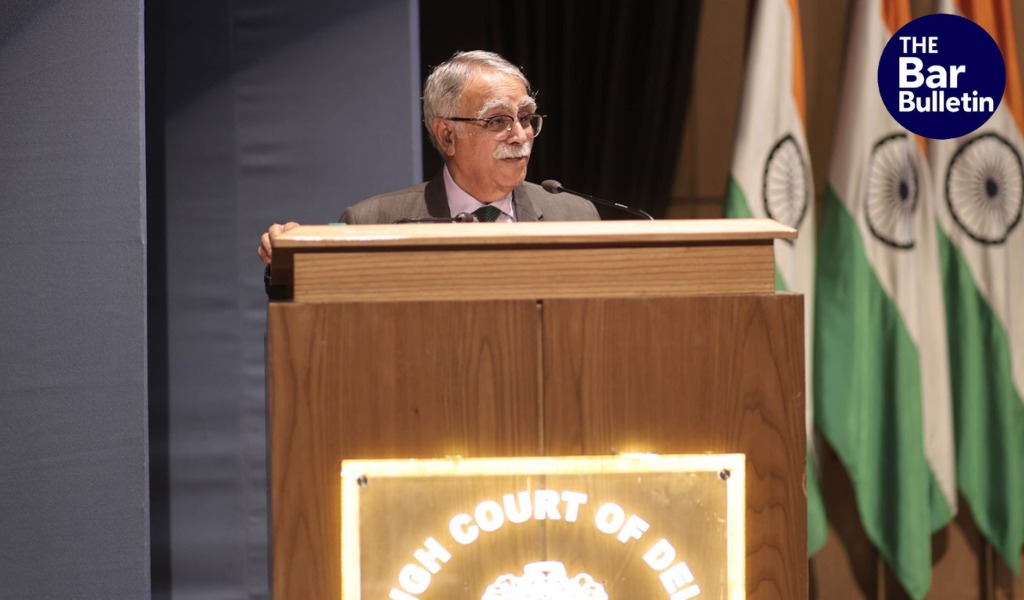
A workshop was organised on “Rational Use of Artificial Intelligence in the Legal Ecosystem” at the Delhi High Court on May 6, 2026. The event brought together judges, senior advocates, technology experts, and members of the Bar to deliberate on the opportunities and challenges posed by artificial intelligence in the legal profession.
Supreme Court judge Justice Sanjay Karol, who attended the event as Chief Guest, stressed that artificial intelligence must remain an aid to the legal profession and cannot replace human reasoning, ethics, or compassion.
“AI is a tool and no more,” Justice Karol said, adding that while artificial intelligence is undoubtedly “here to stay,” the application of law ultimately requires human judgement, integrity, discipline, and empathy.
Highlighting the human-centric nature of the justice delivery system, Justice Karol remarked:
“Behind every file is a human being. Compassion will not come from AI. It can come only from human intelligence.”
Justice Karol observed that AI can significantly enhance efficiency and assist lawyers and judges in legal research, drafting, and court administration. However, he cautioned against overdependence on technology and urged legal professionals to exercise discipline and responsibility while using AI tools.
Addressing younger members of the Bar, Justice Karol noted that AI could help create a level playing field by giving young lawyers access to research and drafting capabilities previously available largely to bigger law firms.
“For younger members of the Bar, it can bring a level playing field,” he said.
Justice Karol also reflected on the judiciary’s technological transition during the COVID-19 pandemic, recalling how courts rapidly adapted to digital hearings and e-filing systems.
Speaking at the event, Delhi High Court judge Justice Vivek Chaudhary cautioned that AI is fundamentally predictive in nature and should not be mistaken for independent intelligence.
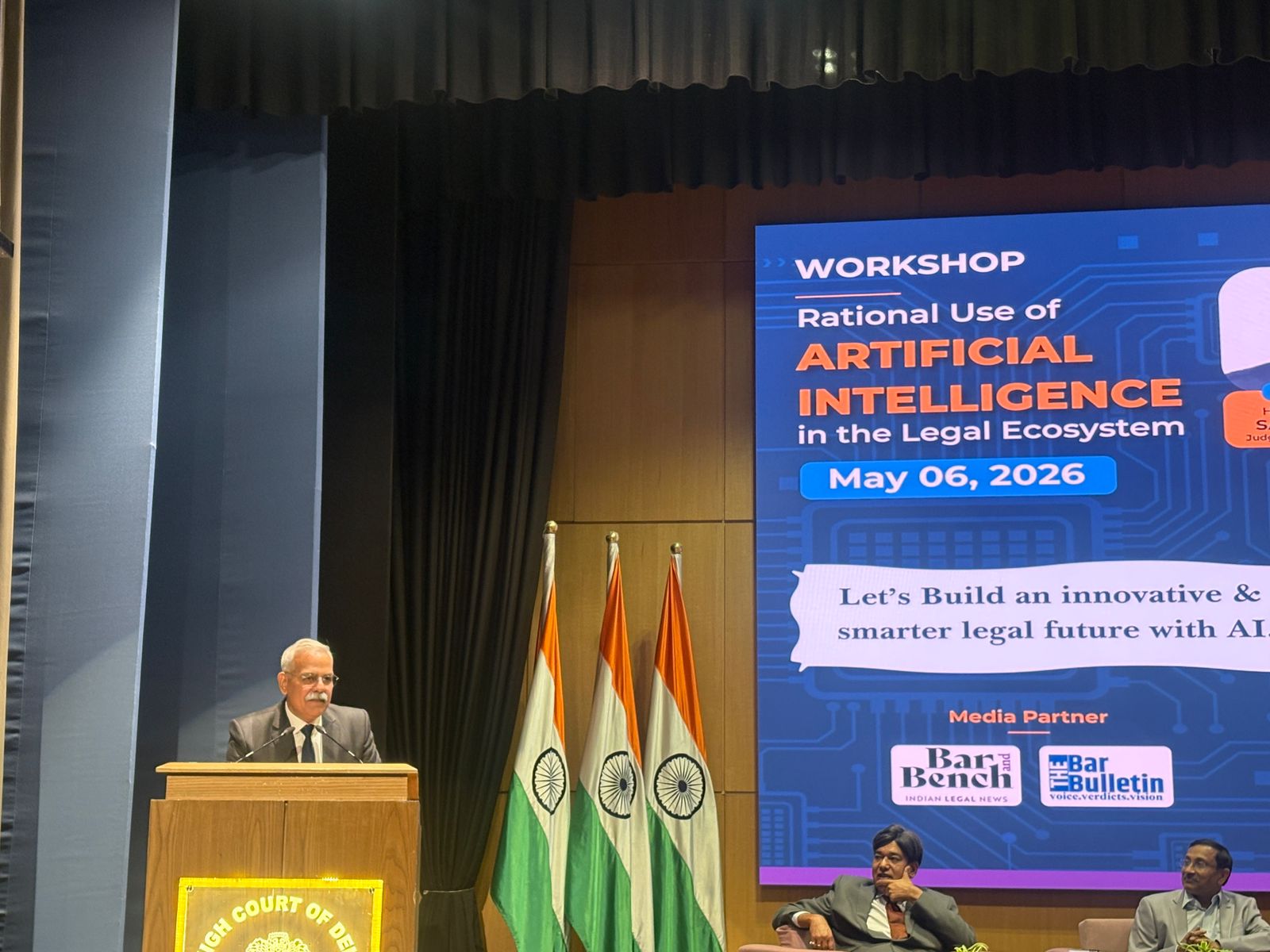
“It merely predicts using probability,” Justice Chaudhary said, while warning about issues such as hallucinations, confidentiality concerns, jurisdictional limitations, and the need for human verification of AI-generated material.
Justice Chaudhary also underlined that lawyers may increasingly be required to disclose the use of AI tools in pleadings and ensure compliance with Indian data protection norms.
Senior Advocate Mohit Mathur, former President of the Delhi High Court Bar Association, also addressed the gathering and emphasised the need for caution while using AI in legal practice, especially in criminal matters involving privacy and liberty.
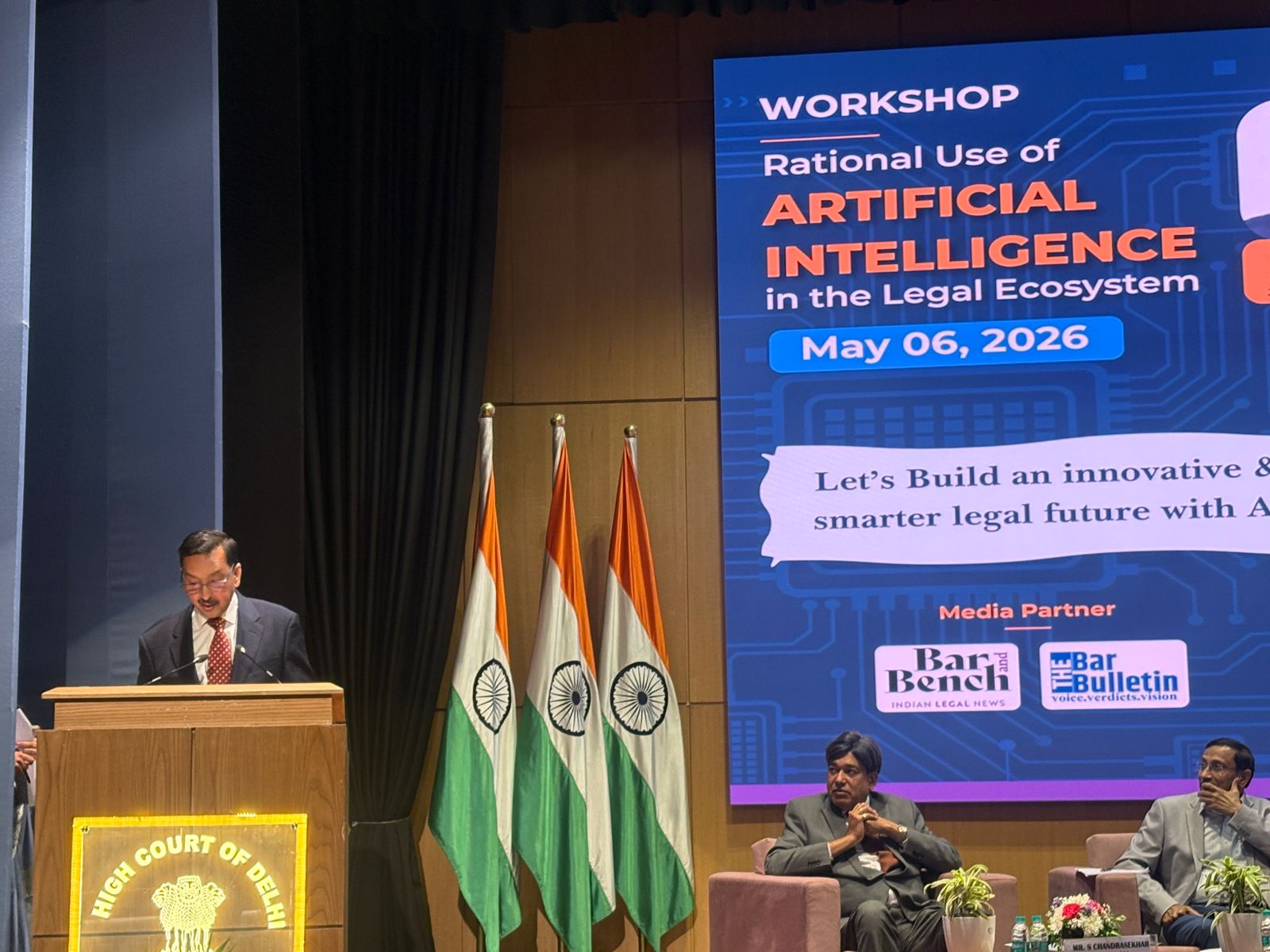
He warned lawyers against uploading confidential client information onto AI platforms and stressed that AI-generated outputs must always be independently verified before being relied upon in court proceedings.
The workshop also featured discussions on AI-assisted legal drafting, ethical concerns surrounding generative AI, court management systems, and the future integration of AI into judicial administration.
The event was attended by members of the Bar, technology professionals, law students, and judicial officers.
The workshop was organised by Advocates Nikita Bhagat, Rohan Sharma and Ruchika Sharma, with support from Advocate Amit Choudhary.
Advocate Nitesh Mehra delivered the welcome address, while Advocate Shrey Sherawat proposed the vote of thanks. The event was anchored by Advocate Shachi Kothari.